
Kathryn W. Davis Projects for Peace
THE $10,000 DAVIS PROJECTS FOR PEACE GRANT
Upon the occasion of her 100th birthday, international philanthropist Kathryn W. Davis chose to celebrate by committing $1 million to Projects for Peace.
The following information is taken from the Davis Projects for Peace website:
Davis Projects for Peace is an initiative for all students at the Davis United World College Scholars Program partner schools to design grassroots summer projects - anywhere in the world - which promote peace and address the root causes of conflict among parties. We encourage applicants to use their creativity to design projects and employ innovative techniques for engaging project participants in ways that focus on conflict resolution, reconciliation, building understanding and breaking down barriers which cause conflict, and finding solutions for resolving conflict and maintaining peace. Through a competition on over 90 campuses, projects will be selected for funding at $10,000 each.
PROPOSAL TIMELINE FOR 2026-2027 Cycle
|
Summer |
Summer: by appointment |
|
September 21, 12:30-1PM |
Zoom Info Session, RSVP here! |
|
September 23, 12:30-2PM |
Drop in hours at the CCE House |
|
October 8th, 12:30-1:15pm
|
In Person Information Session, Collaborative for Community Engagement office, RSVP here |
| November 1st (midnight) | Intent to Propose, apply here (submit in Summit) |
| November 5th @1:00-5:00pm (20 min slot each) | Feedback Session with Committee, In person |
| November 30th (midnight) | Final applications due, application here |
| December 10th, 1:00-5:00pm (20 min slot each) | Presentations to Committee, In person |
If you are interested in being part of the process, please email Sarah Elsey.
CRITERIA
The selection committee will evaluate proposed projects according to the following dimensions:
Following the recommendations of the Davis Foundation, proposals will be assessed according to five key dimensions: preparation, implementation, outcomes, sustainability and feasibility. Below, applicants can find the types of questions that the committee will use to evaluate the strength of proposals within these dimensions.
Preparation - To what extent do students' knowledge, relationships, skills, and personal narratives prepare them for the project?
- To what extent do students have place-based, local, contextualized knowledge? Or, to what extent can students draw on relationships with individuals or organizations with such knowledge?
- To what extent was the project co-designed with community members/organizations in order to leverage local expertise, and under the guidance of academic mentors?
- To what extent do students have the capacities needed to implement the project?
- To what extent do students' personal backgrounds and identities prepare them for the project?
Implementation - To what extent does the project follow best practices of community-engaged work?
- To what extent does the project…
- address community-driven needs, those identified by the people most impacted by the issue?
- engage local citizens and organizations as collaborators in the design and implementation of the project?
- provide opportunity for community-building among diverse stakeholders?
- To what extent is the project …
- asset-based, building on existing ideas, initiatives, organizations, relationships, or structures within communities?
- place-based, in which the location of the project is justified by the need (rather than vice versa)?
- To what extent is the plan thorough and comprehensive, detailed and practical?
- To what extent does the project acknowledge the complexity and nuance of the social world? Can the plan adjust to unforeseen circumstances and challenges, and are the applicants adaptable?
Outcomes - To what degree can the project meaningfully influence communities and student participants?
- To what extent can the project "promote peace and address the root causes of conflict among parties"?
- To what extent does the project provide opportunity for student development and growth, building students' capacities as engaged citizens?
Sustainability - To what extent can the project lay the groundwork for more long-term, sustainable work?
- To what extent do applicants propose a thoughtful, realistic plan to transition the project into a sustainable initiative (if assessment of the project supports this need)?
- To what extent does the project enable the local community to continue the work?
- To what degree will the project's impact be lasting?
Feasibility - To what degree can applicants do what they propose to do?
- To what extent are the goals of the project obtainable?
- To what extent is the project design, timeline, and budget realistic?
- To what extent is the project safe? Does the project minimize risk for all stakeholders?
PROPOSAL PROCESS
Each year, Colorado College is invited to submit one proposal to the Davis Foundation for consideration, as well as an alternate proposal.
To be considered, a student (or group of students) must prepare a written statement which describes the project (who, what, where, how) including expected outcomes and prospects for future impact (not to exceed two pages) as well as a budget (one separate page).
All written project proposals require a heading to include the following: name of the participating institution, name of all student participants, title of project, country where the project will be take place. Proposals should include pre-approval of all parties and organizations involved in the project. The two-page proposal and one-page budget should be submitted electronically via Summit (coming soon).
Please refer to the website for more details: http://www.davisprojectsforpeace.org.
The selection committee is comprised of faculty and staff across campus who have experience and knowledge to help applicants strengthen their proposal. You are encouraged to leverage these resources and reach out for mentorship and guidance!
Davis Projects for Peace Selection Committee
- Laura Hines, Director, Corporate & Foundation Relations
- Janna Jones, Associate Director, Corporate & Foundation Relations
- Kate Holbrook, Chaplain
- Jiun Bang, Assistant Professor, Department of Political Science
- Phoebe Lostroh, Associate Professor, Molecular Biology
- Allen Bertsche, Director, Center for Global Education and Field Study
- Shelby Tibuni, Administrative Assistant for CCE and Global Education & Field Study
- Sarah Elsey, Program Manager Campus Engagement, CCE
Previous Proposals and Reports
We hope to encourage student initiative, innovation and entrepreneurship focusing on conflict prevention, resolution or reconciliation. Some of the most compelling projects to date have reflected one or more of the following characteristics: contributing to conflict prevention; ameliorating conditions leading to violence/conflict; looking for and building on shared attributes among differing peoples, races, ethnicities, tribes, clans, etc.; fostering diplomacy or otherwise contribute to advancing peace processes underway; promoting economic opportunity and entrepreneurship among those in post-conflict areas; finding creative ways to bring people on opposite sides of issues together, such as through art, sports, music or other techniques to promote a common humanity; developing leadership and mediation skills training for those in conflict or post-conflict societies; starting or leveraging initiatives, organizations (e.g. education, health) or infrastructure projects to build/rebuild community.
| Date | Name of Project | Recipient(s) | Location | Proposal | Report |
|---|---|---|---|---|---|
|
2026 |
Weave the Net-–Constructing Community Power for Single Female Fishers | Kaviya Chidambaram | Chennai, India |
Available by request, cce@coloradocollege.edu |
|
|
2025 |
Pull up a Chair: Art workshops and health education to promote peace among people living with HIV and AIDS | Skye McCrimmon | Kenya |
Available by request, please email cce@coloradocollege.edu |
|
|
2024 |
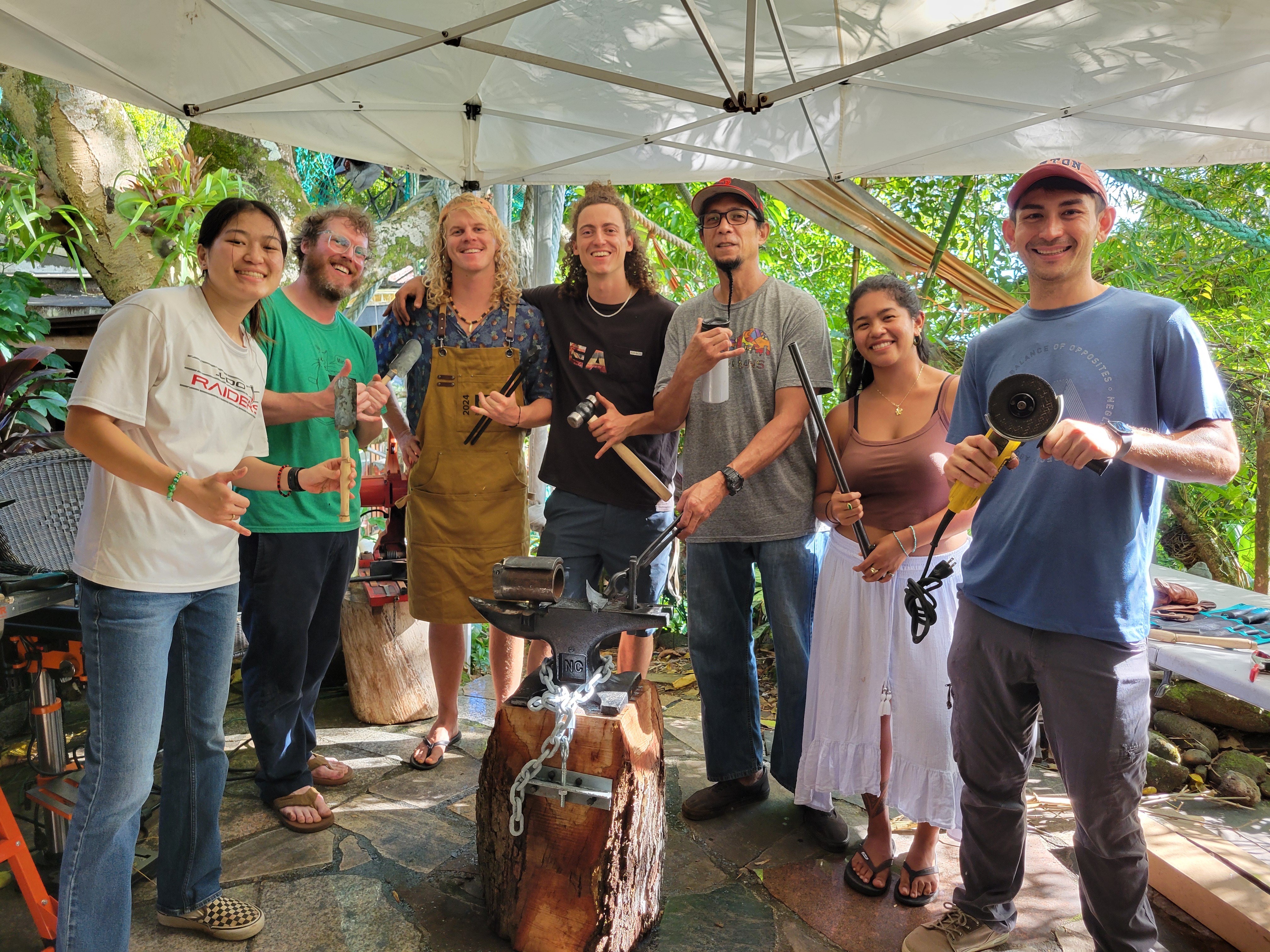
Forging for Peace: Weapons into Plowshares through Community-Based Art | Kupai Marx and Kieran Blood | O’ahu, Hawai’i |
Available by request, please email cce@coloradocollege.edu |
|
|
2023 |
Painting for Peace | Cormac Mccrimmon, Andres Madrigal and Manuel Uribe | Salvador, Brazil |
Available by request, please email cce@coloradocollege.edu |
|
|
2022 |
Moving the Needle: Conversations About Gun Safety and Suicide Prevention | Maddi Schink and Fer Juarez Duran | Colorado |
Available by request, please email cce@coloradocollege.edu |
|
|
2021 |
Cultivating Youth Advocacy: Civics Education in Colorado |
Deksyos Damtew, Ben Gellman | Colorado | x | |
|
2020 |
Digital Storytelling by Sex Workers in Singapore (Postponed or Cancelled) |
Fiachra MacFadden | Singapore |
Available by request. Please email cce@coloradocollege.edu |
|
|
2019 |
Sumak Kawsay: Peace and the Writing Experience |
Megan Bott, Jessica Ramos | Ecuador | ||
| 2018 |
Los Pocitos Outdoor Community Center |
Mitra Ghaffari, Evyn Papworth | Cuba |
y - blog |
|
| 2017 |
Chaupimonte Community Mill: Supporting Education Through Coffee Development in Oxapampa |
Lucy Marshall, Eva Mckinsey | Peru | x | x |
| 2016 |
A Generation for Peace: Creating Opportunities for Nepali-Tibetan Youth Engagement |
James Daudon, Anna Kelly and Lauren Schmidt | Nepal | x | x |
| 2015 |
BINAT: Bethlehem Inter-Camp Athletics |
Baheya Malaty, Mary Jones | Palestine | x | x |
| 2014 |
The "Shaanti" Project |
Tashbid Shafat Sattar | Bangladesh | x | x |
| 2013 |
Building Peace through Building People |
Ashleigh Don | Zimbabwe | Unavailable | Unavailable |
| 2012 |
Viajana Amkeni Sasa Initiative: Creating a Peaceful Society in Kenya |
Benjamin Munyao, Collins Mukaria, Eddy Oketch | Kenya | x | x |
| 2011 | The Zuia! Initiative | Akie Mochizuki, Nikhil Ranadive, Melissa Serafin | Kenya | x | x |
| 2010 | Ain't No Stoppin' Da Bus: Travelling Art Workshops for Peace | Shire Brown, Eddie Hazera, Jody Joyner | USA | x | x |
| 2009 | The Prozor Project | Joseph Hauck, Max Stein, Antonio Skarica, Melissa Serafin | Bosnia | x | x |
| 2008 | Solar Water Disinfection | Valerie Grosscup, Jonathan Spear | Ecuador | x | x |
| 2008 | Cover One in Honduras: Promoting Athletics and Healthcare | Ericka Baer, Alina Ford, Max Green, Misael Fernandez, Jocelyn Corbett, Jason Steiert, Billy Blaustein | Honduras | x | x |
| 2007 | Unheard Voices for Peace | Michael Shum | Nigeria | x | x |