

Generative AI Hub
Generative AI in Practice and Perspective
Students Turn AI Impact on Education Analysis into Campus Recommendations
By Julia Fennell ’21
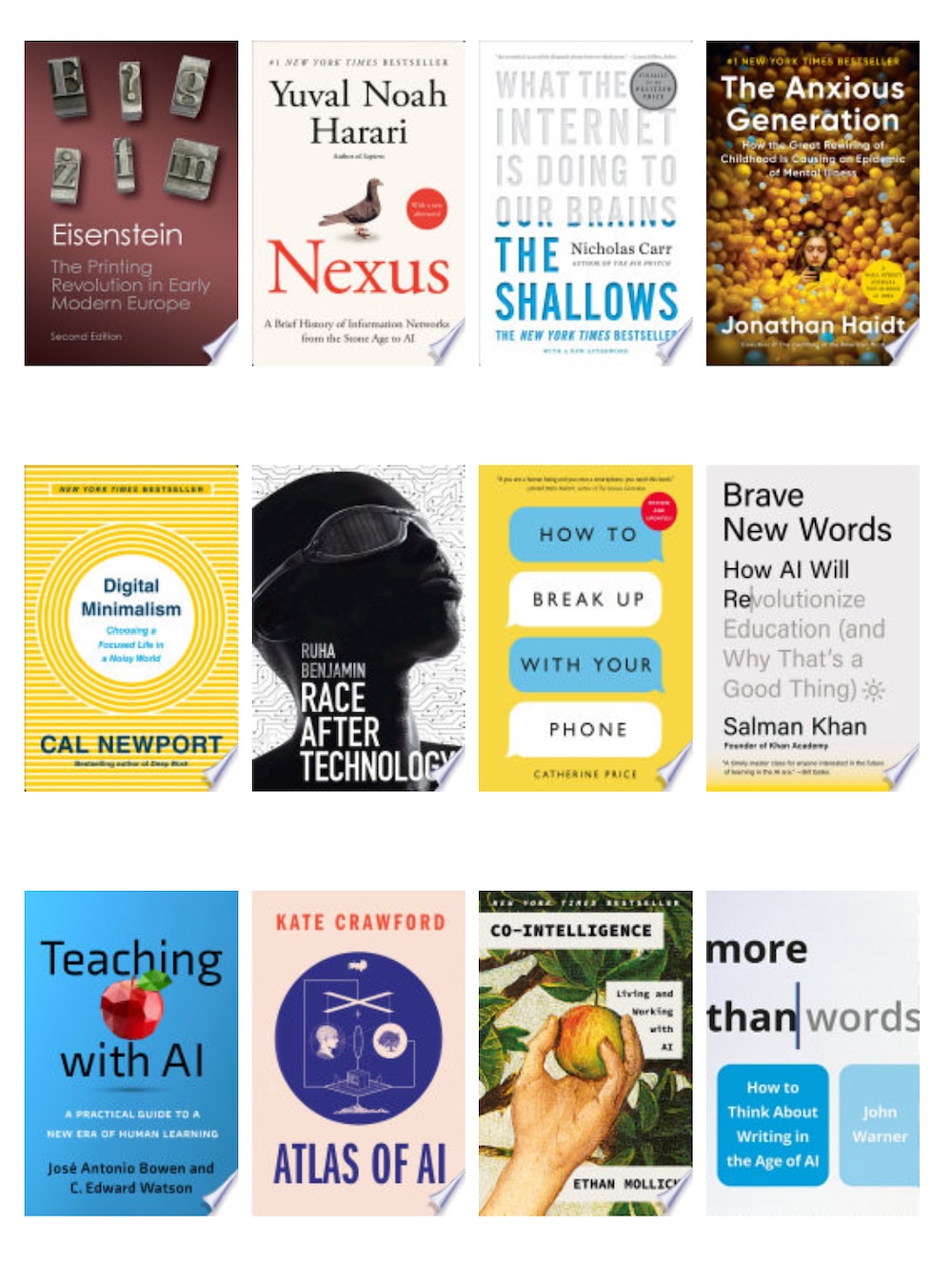
Students in the newly created Topics in Education: New Tech Impacts on the Brain, Schooling, and Society Block 8 class learned about AI’s impact on education—and then got the opportunity to recommend and present their on-campus AI protocols to CC’s AI Task Force.
Assistant Professor of Education and class instructor Juan Miguel Arias ’12 led students through examining the ethical and pedagogical implications, opportunities, and limits of AI in education.
“Our class focused on the big pedagogical question of process and product, especially when it came to how AI was revealing the need for educators and students to clarify this distinction,” says Arias, who designed the curriculum from scratch. “In short, one big element that distinguishes learning environments from other worlds of work and creation is that the point of a learning environment is often not necessarily the final product that is created by students, but rather the process of growth and learning that students go through in order to get to that final deliverable product.”
Arias gives the example of essays: He doesn’t actually need papers written on a particular education topic. “What I ‘need’ is for each cohort of individual students to go through the work of writing the essays, so that they get better at researching, thinking, synthesizing, and writing,” he explains.
AI has the potential to short-circuit this relationship between process and product, as it can offer an easier, less anxiety-producing option for quickly arriving at final products.
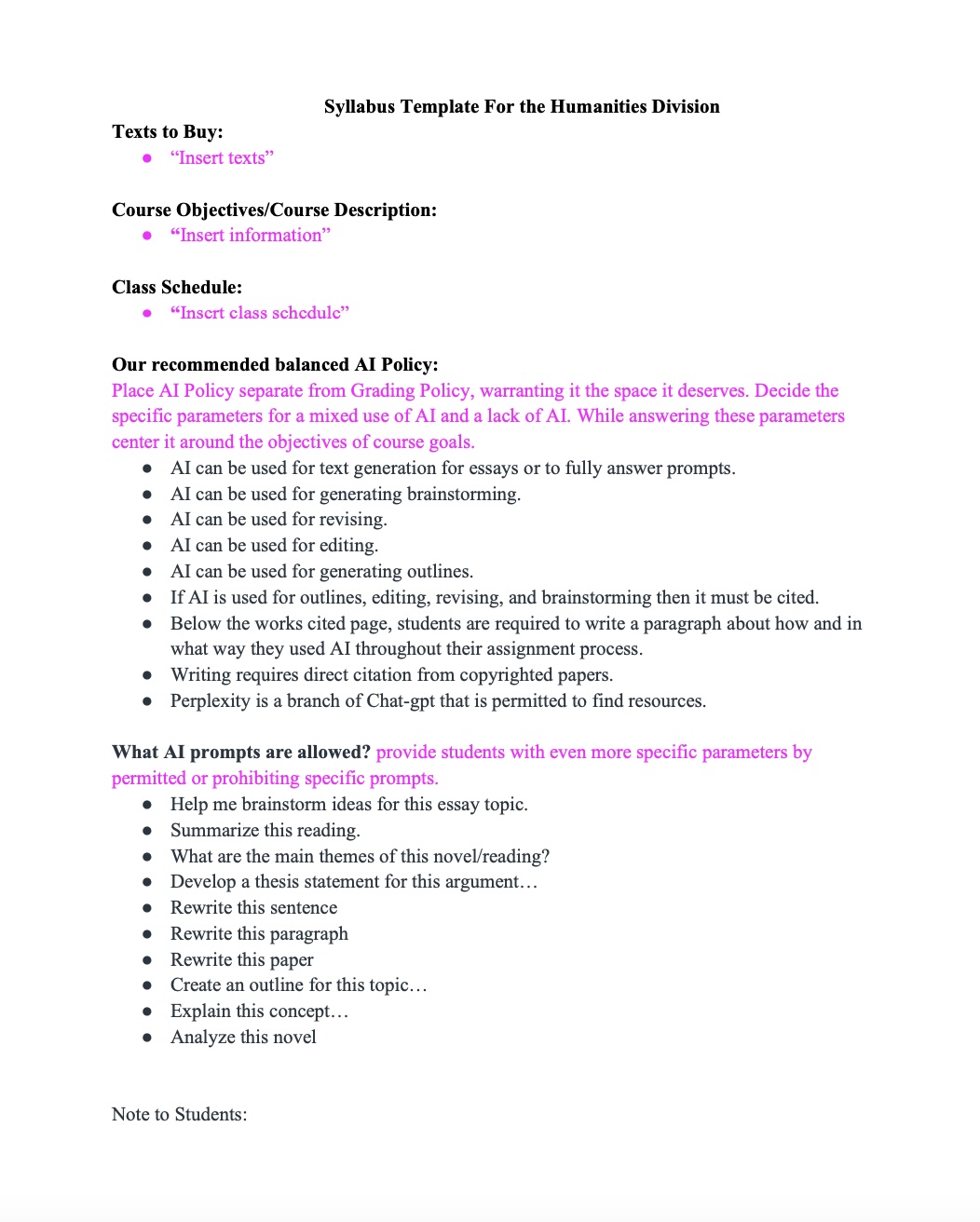
For one of their assignments, students were divided into groups focused on one of the three main academic divisions at CC—Natural Sciences, Social Sciences, and Arts & Humanities—and were tasked with conducting an AI syllabus audit for their division, accompanied by a syllabus recommendation report. In addition to submitting the report for a grade, they also presented their reports to members of the AI Task Force.
Arias had hoped that the reports would be incorporated into ongoing AI considerations for the campus, and based on feedback from the group, Arias believes they are being considered.
“A big takeaway I had from that part of the class was that there needs to be more conversation and education around AI and less shaming,” says Lucia Metz ’28, a Sociology major and Education minor. “We encouraged professors to be open about their AI use, and to keep an ongoing discussion about AI throughout the class.”
Arias emphasizes that colleges like CC have the opportunity to acknowledge AI is here, and consider what skills matter most for graduates to develop—not only the ones AI can’t replicate, but also the judgment needed to evaluate the work AI produces.
“We have a responsibility to continue educating critical thinkers that can actually work with or without AI outputs so that, independent of how they got there, they can take work and determine what is right and what isn’t,” Arias adds. “I absolutely think continuing to teach about, explore, interrogate, and think deeply about AI at CC is necessary, and I am excited to be part of that interrogation.”
Generative AI in Practice and Perspective


Report an issue -
Last updated: 04/07/2026