

Generative AI Hub
Generative AI in Practice and Perspective
Musicologist and Software Engineer Alum Returns to CC to Teach Music and Coding
By Julia Fennell ’21
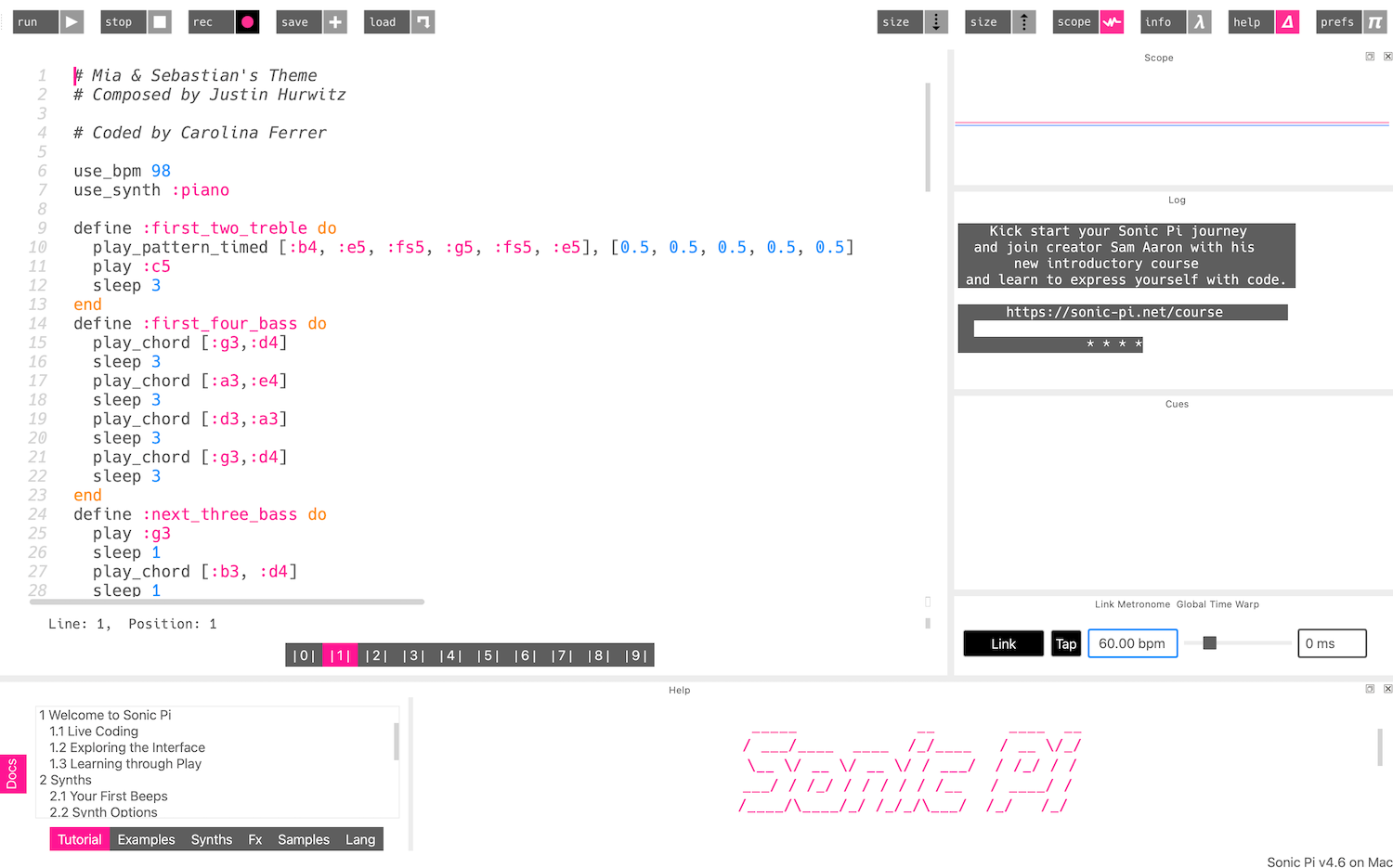
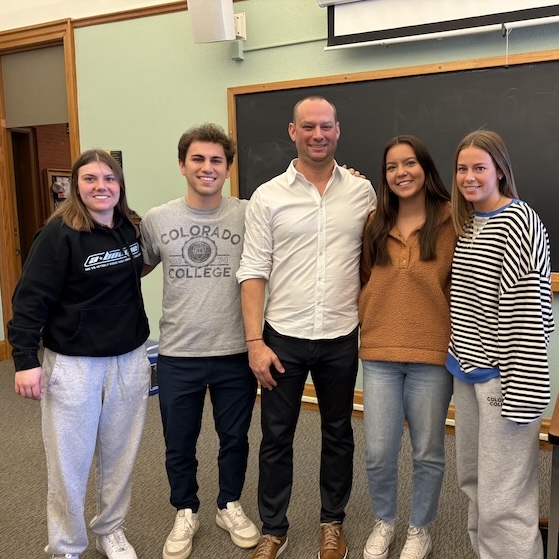
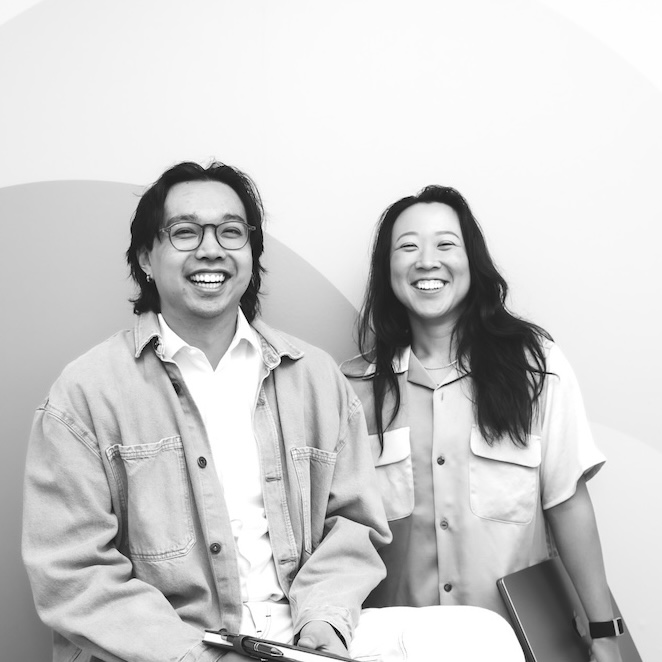
Students say they could not have had a better instructor than Dr. Sienna Wood ’05 for their Block 3 Music and Coding class. She is both a musicologist and a software engineer who writes code, and she graduated from CC with a degree in Music. Wood’s students learned about the fundamentals of computer programming by writing programs and creating projects that explored the different ways code can be used to generate, transform, interact with, and organize music. They also analyzed the interactions and similarities between computer science and music.

“Coding languages are just that—languages,” Wood says. “Music is also a language, both as sheet music and as sound. Being able to understand and apply the systems underlying one language can help prepare you to do the same in another language.”
There has been debate recently surrounding the ethics of AI in the music industry. Wood believes AI can be used productively to reduce or eliminate drudgery for humans, but it becomes problematic when used to eliminate human creativity or expression.
“I think of AI slop as the junk food of the arts: it's quick and cheap; it's shiny and attention-grabbing; it might go down easy, but it's not offering much nourishment,” Wood says.
Carolina Ferrer ’28 developed a more critical perspective of AI in the music industry after taking this class. She learned when streaming services use AI to suggest songs, it tends to recommend songs and artists who are already popular, which limits the exposure of new artists and songs.
“Because AI simply regurgitates human creations that already exist, it does not encourage people to think for themselves and learn to express their ideas creatively,” Ferrer adds. “Instead, it limits them to what has already been created.”
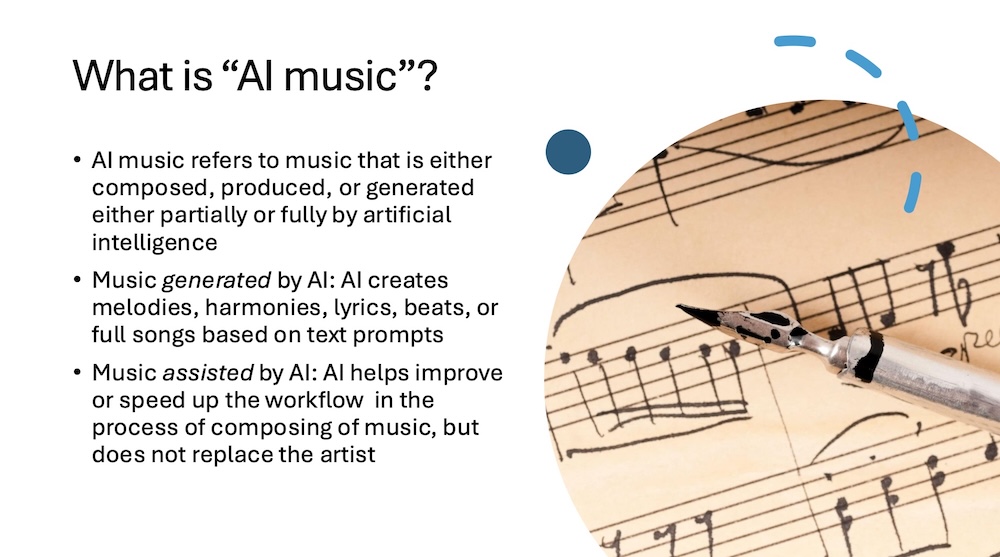
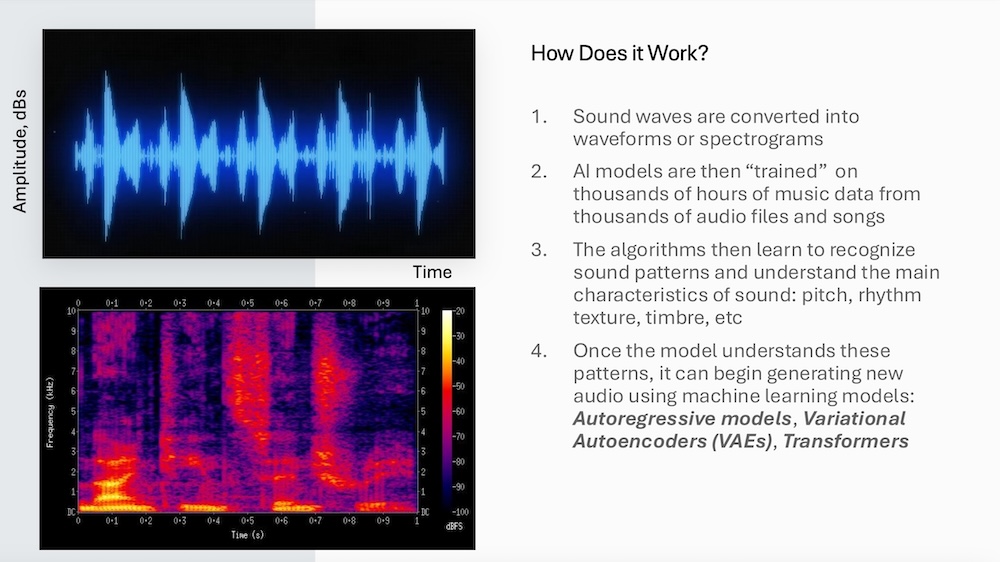
For his final project, Jorge Luis Miranda ’28 presented research on the state of AI in the music industry. Through this, he learned how generative AI tools work and the different stages involved, as well as the positive and negative aspects of using AI tools to create music.
“I also discovered several websites and resources that use generative AI to produce full songs, including both vocals and instrumentals; websites that offer voice cloning for commercial or narrative purposes; websites that create ‘background music’ for short-format videos; and websites that create AI-composed music for orchestral, cinematic, and soundtrack-type uses,” says Miranda, a Music major who plans to become a music educator.
Miranda learned some positive aspects of these resources include accessibility and affordability—as even those with the most basic understanding of music, who may be lacking expensive equipment or technology, can create tracks using AI tools.
“On the other hand, cons include the loss of human touch in music, job displacement for musicians and producers, the over-saturation of music, copyright issues, dependency on technology, lack of authenticity, and more,” Miranda adds. “Nonetheless, we're only at the beginning stages of AI in music, and we can probably expect many more cases to come in the near future.”
Wood encourages students to always exercise their agency when it comes to AI.
“Don't be passive and assume that others will decide what AI will or won't be in the future; exercise your right to participate in shaping that future,” Wood advises. “Use your judgement to decide what role you want AI to play in your life and take action to make it so.”
View Slide Show 3 Photographs
Generative AI in Practice and Perspective

Report an issue -
Last updated: 04/07/2026