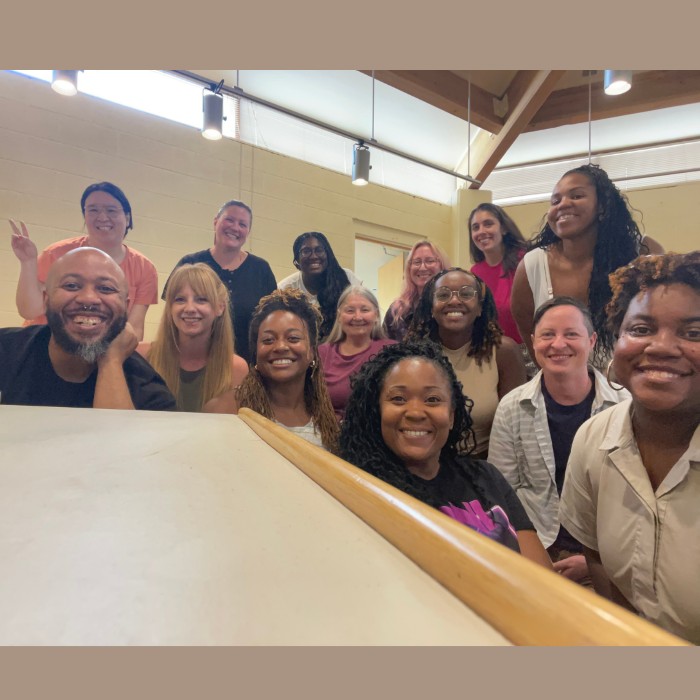
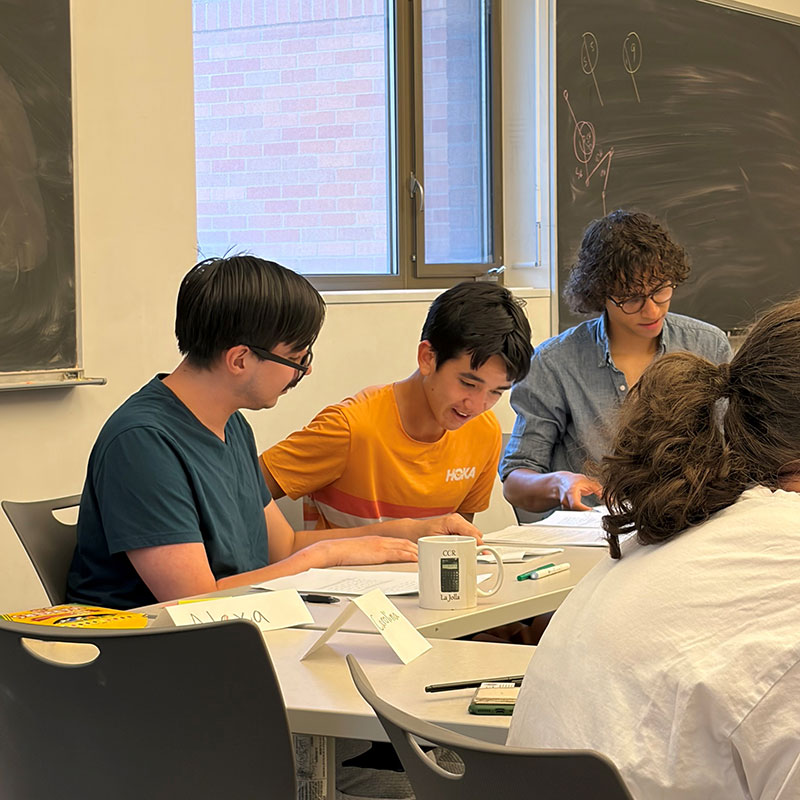
This summer, nine undergraduate researchers spent eight weeks using mathematics and computer science to explore one of democracy’s biggest challenges: how to make voting districts fairer.
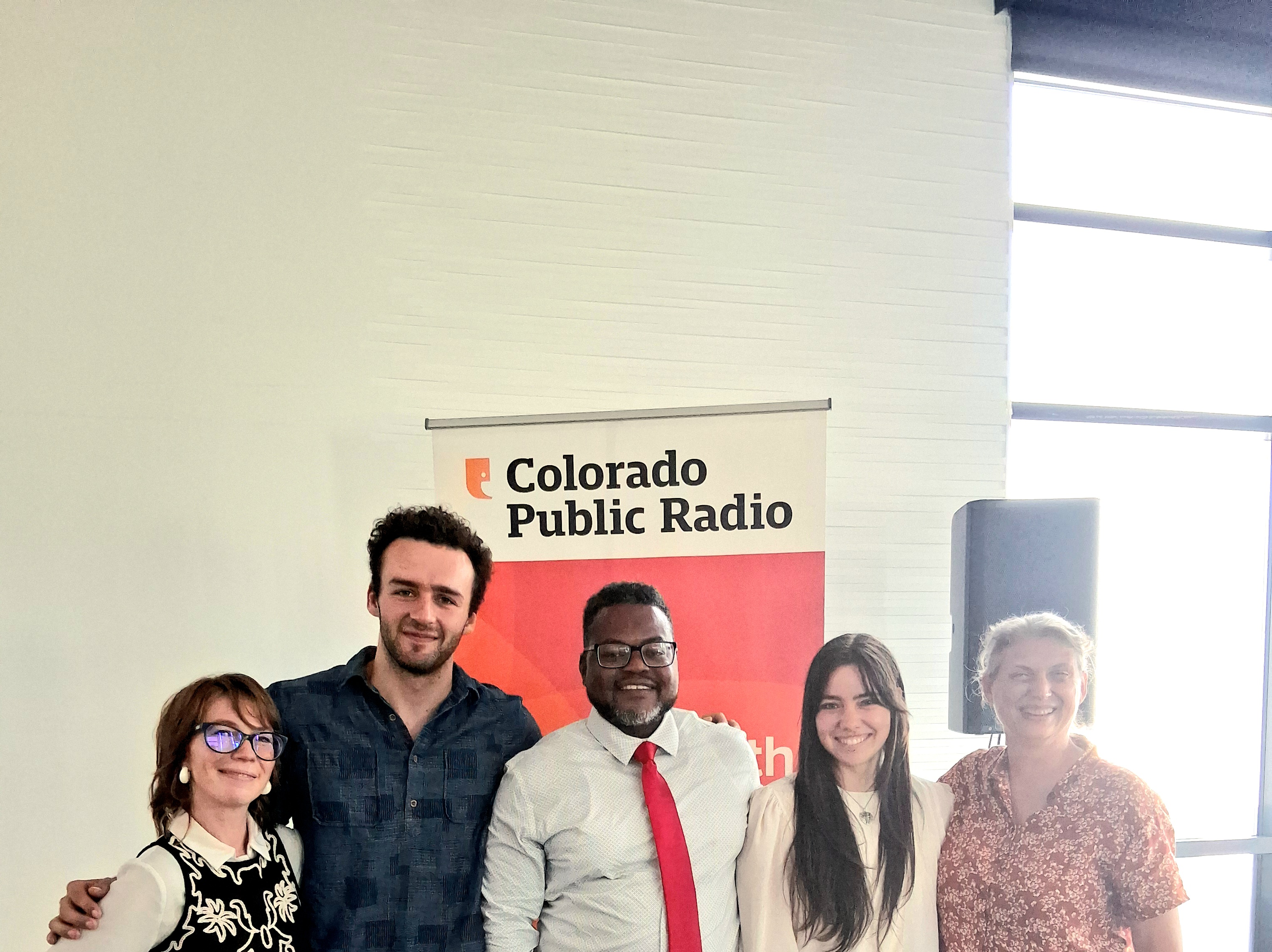
Hosted by Colorado College’s Mathematics & Computer Science Department through the Mathematical and Computational Undergraduate Research Experience (MCURE), the program brought together five CC students and four students from universities across the Rocky Mountain region for eight weeks to investigate how mathematical models and computational tools can help answer complex questions about fairness, representation, and democracy.
Working in teams, students examined different aspects of redistricting, including strategies to reduce gerrymandering, the role of communities of interest in drawing district boundaries, and how different analytical methods influence redistricting results.
One research team—Julien Lee ’28, Finn Braun ’29, and Joaquin Campos of the New Mexico Institute of Mining and Technology—studied a redistricting approach inspired by the classic “cake-cutting” problem. In that example, one person cuts the cake while the other chooses the first slice, encouraging a fair outcome.
The students explored whether a similar approach could produce fair voting maps, even when participants acted only in their own self-interest.
“Even when both parties act against each other, focusing only on optimizing personal gain, in the cake cutting problem, the cut is still ‘fair,’” Braun explains. “We were essentially trying to play the Define-Recombine game in an intentionally selfish way to see if the game remains fair.”
For Braun, the experience demonstrated how abstract mathematical concepts can be applied to real public policy questions.
“Often in math classes, when the material gets abstract it’s easy to forget that what you’re studying is meaningful,” says Braun, a Mathematics major. “Using advanced math to study important problems is a good reminder to how math can be meaningful, even when you’re not the one who figures out how to use it on a real-world problem.”
Beyond the research itself, students participated in professional development workshops, networking opportunities, and conversations with graduate school leaders and industry professionals.
“This experience has given me the chance to work with amazing people,” Lee says. “The faculty did a great job setting up opportunities for us to talk to graduate school directors and students, as well as people who have gone into industry.”
Lee says participating in MCURE motivated him to seek out other research opportunities and events within the Mathematics & Computer Science Department during the upcoming academic year.
Faculty designed MCURE to mirror the immersive nature of Colorado College’s Block Plan. During the program’s first two weeks, students completed an intensive academic “boot camp” before transitioning into full-time collaborative research with daily faculty mentorship.
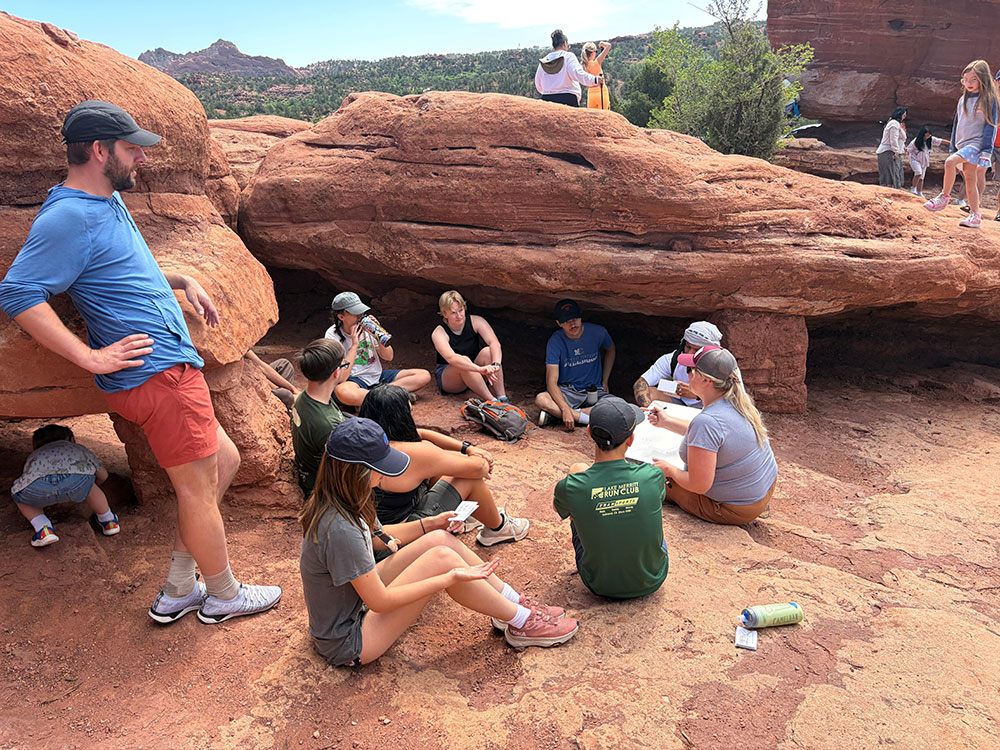
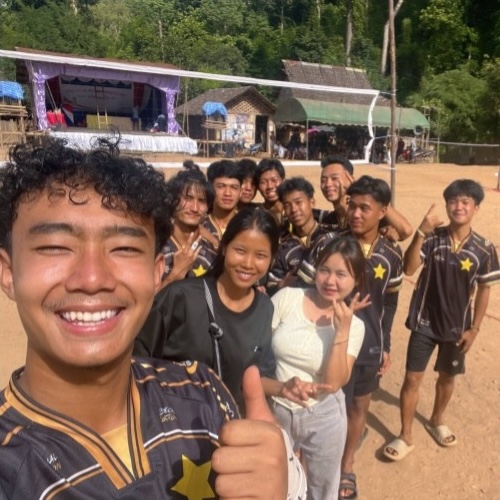
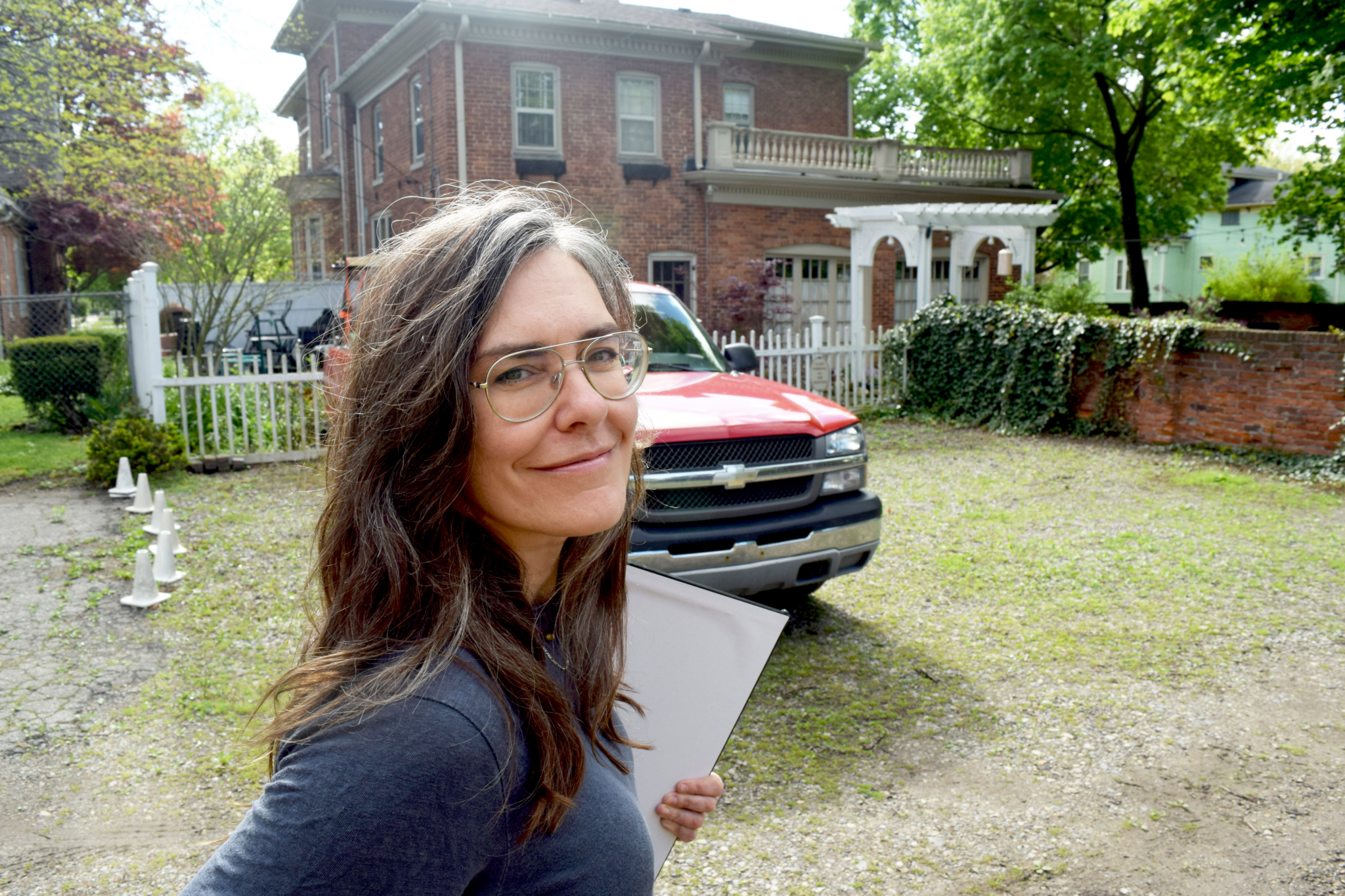
Equally important was building a supportive research community. All nine students lived together in Arthur House and participated in a background bootcamp for the first two weeks of the program. The background bootcamp was designed like a block: professors taught from 9:30 a.m.-12:30 p.m. every day and then students participated in a lab or problem session in the afternoon. Starting in the third week, students began working on research and would meet with professors daily. During the week, after working from 9:30 a.m.-5 p.m., students participated in numerous fun activities, including Friday night BBQs, skating at Ed Robson Arena, playing pickleball, attending CC’s Summer Music Festival, and going on hikes around the city.
“Colorado College is an ideal place for a program like this,” says Molly Moran, Associate Professor of Mathematics & Computer Science and the program’s director. “Students benefit from the College’s collaborative research culture, outstanding campus resources, and the many opportunities available through programs like SCoRe.”
Carolina Ferrer ’28, a Computer Science major, applied for the program because she is interested in the intersections of computer science and other fields, including sociology and political science, which she says were both key to this program.
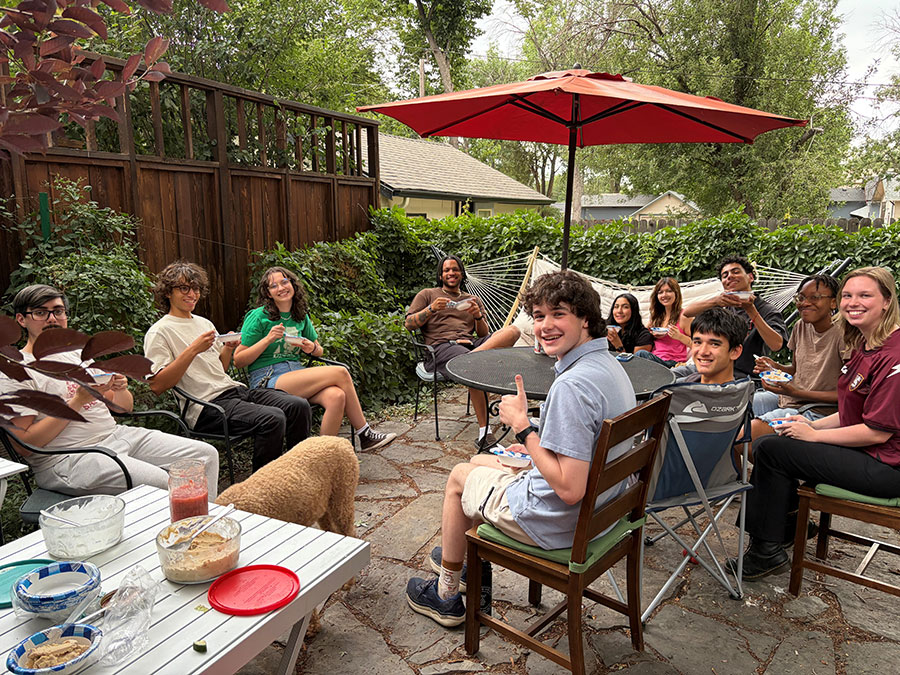
“My favorite part of the project was working together with my research group,” Ferrer says. “We all have different majors, and it has been really interesting and fun to see how our different perspectives intersect and allow us to explore our research in new ways.”
MCURE was created to expand undergraduate research opportunities throughout the Rocky Mountain region. This year’s participants represented Colorado College, the New Mexico Institute of Mining and Technology, Western Colorado University, and the University of Colorado Colorado Springs. There are plans to reach more schools next year.
The program is funded for the next two summers. Students will study machine learning for biological patterns next summer and probabilistic and statistical modeling in finance in 2028.
This year’s MCURE cohort will present their research in January at the 2027 Joint Mathematics Meetings (JMM) in Chicago, the world’s largest annual mathematics conferences. Applications for MCURE 2027 will open in the fall. Students interested in applying for MCURE 2027 can contact Molly Moran with questions.