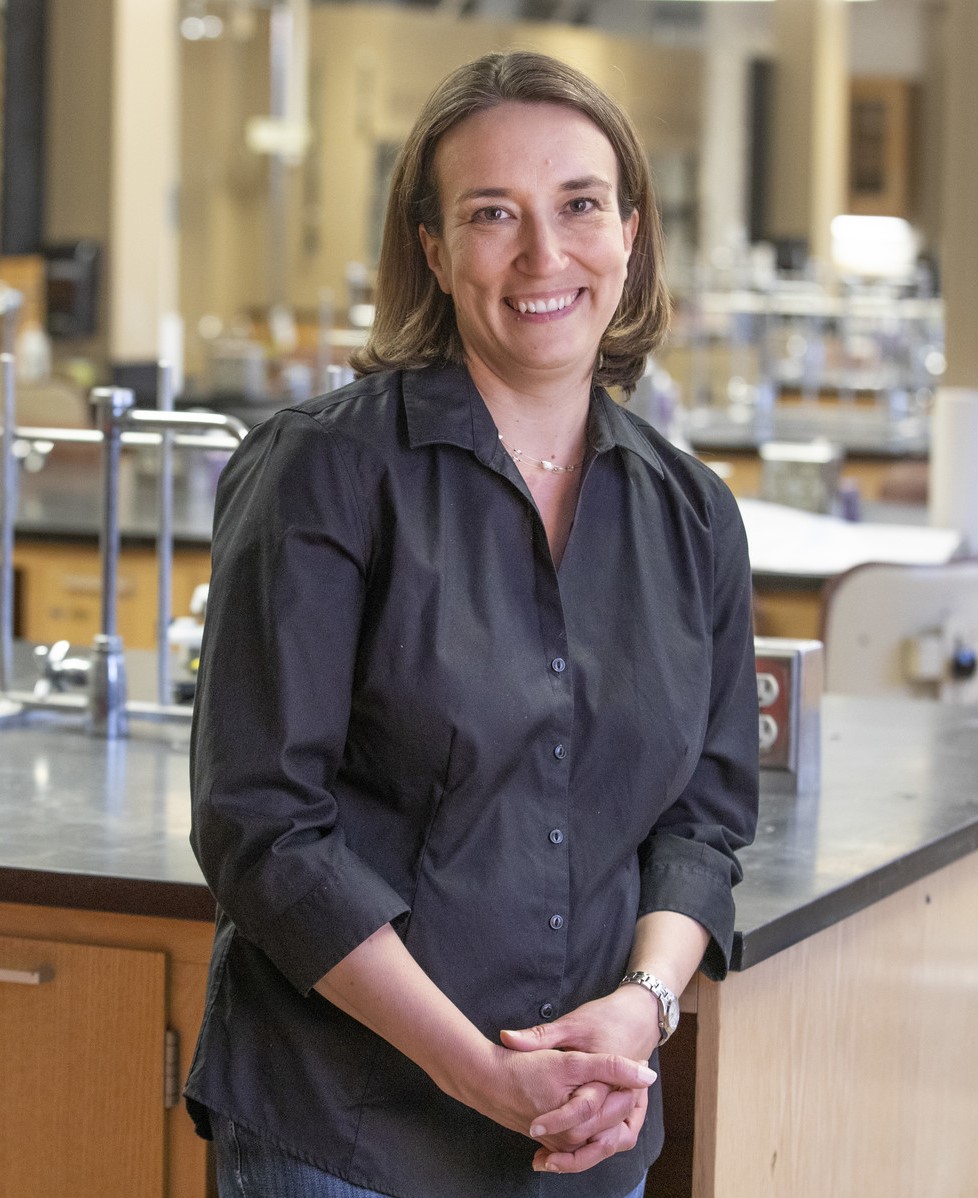
After more than five years of hard work, collaboration, and dedication, Colorado College professor of Chemistry and Biochemistry Amy Dounay ’96, senior lecturer Jared Harris, and 13 CC students and alumni published research in the Journal of Chemical Education earlier this year.
The CC co-authors of Greener Solid Phase Peptide Synthesis: Improved Procedure for Distributed Drug Discovery in Undergraduate Laboratories were Callista Tran ’24, Aleesa Chua ’22, Markus Bergstrom ’22, Justin Tee ’22, Dahlia Brasuel ’20, William Abbey ’22, Allison Beizer ’22, Alondra Reyes Diaz ’23, Ethan Grant ’23, Saket Mereddy ’22, Emily Mitchem ’22, Anusha Vajrala ’23, and Jiarun Wang ’21. The majority of these CC alumni are enrolled in or recently graduated from graduate programs or medical school.
Since 2014, Dounay has been working on the Distributed Drug Discovery project, a multi-institutional collaboration initiated by researchers at Indiana University Indianapolis. This project is aimed at involving undergraduate chemistry and biology students in early-stage drug discovery for “neglected” diseases, which are diseases that are underfunded by the pharmaceutical industry due to lack of commercial potential.
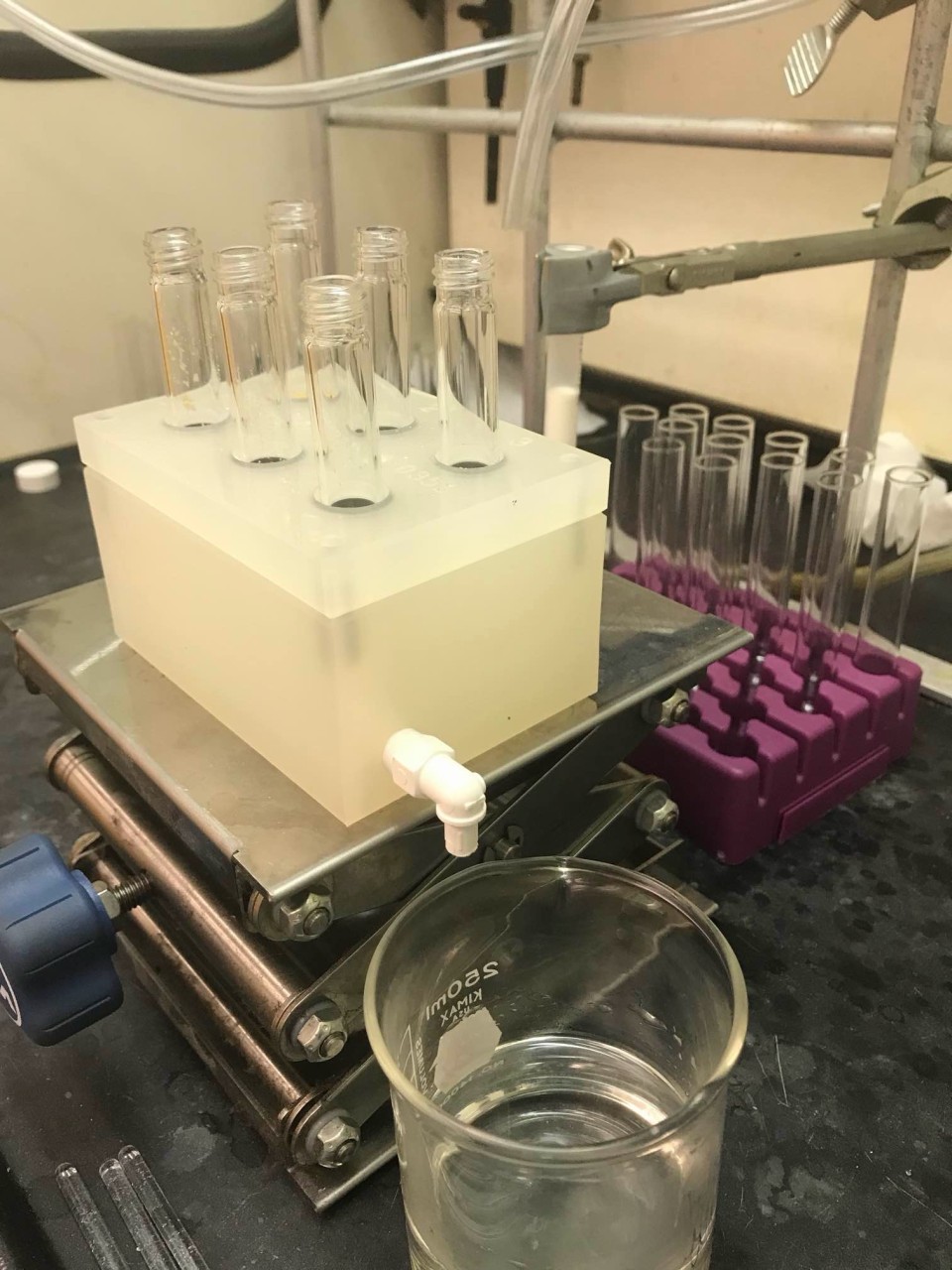
In the Distributed Drug Discovery project, researchers create potential new drug compounds. The traditional methods for doing this, however, have relied heavily on the use of toxic and/or hazardous solvents and reagents. Therefore, Dounay started a side Green Chemistry Optimization project in 2019 to identify greener methods that could produce the potential drugs more safely and with lower environmental impact. In the summer of 2019, Dounay had students begin working on the Green Chemistry Optimization research project, which she initially thought would take a few months and result in a short paper.
However, it slowly turned into a multi-year research endeavor that changed the lives of over a dozen CC students and alumni.
“It took more time than anticipated to identify optimal experimental procedures and reaction conditions that were robust and reproducible by novice student chemists in the Reactions of Organic Molecules teaching lab setting,” Dounay explained.
During the first summer, Saket Mereddy ’22 worked on the background literature review and identified possible modifications to make the synthesis process more environmentally friendly. To get him started on this, Dounay identified several papers with possible reagent options for Mereddy to pursue. Mereddy then researched those and, based on the literature, came up with a few reagents to test within their synthesis protocol.
Mereddy was one of the first students to become involved in the research with Dounay and helped her with the initial testing of alternate greener reagents on the synthesis outcomes.
“I would say working alongside Dr. Dounay was a big pivot in my learning,” said Mereddy, who majored in Biochemistry and is now in his second year at the University of Colorado Anschutz School of Medicine. “I hadn’t really had a research project I grappled with before working with her. I really gained a great fundamental basis for how to do literature review, proper lab technique, and what it takes to succeed in the lab.”
In Fall 2020, Emily Mitchem ’22 worked on developing an early version of the green chemistry worksheet that is described in the published research, due to limitations on doing laboratory research at that time, due to the pandemic.
The mentored student research component of the project took place from the summer of 2019 through the fall of 2023. The largest mentored student research part of the project took place in 2021, when Dounay was working hard to help students catch up on missed research opportunities from the pandemic lab closures.
“Since the research alternated between mentored student research in the lab, with students trying to identify optimal reaction conditions and protocols, and validation of the new protocols in the teaching lab in the Reactions of Organic Molecules courses, we iterated through several cycles, as some initial protocols worked well in the research lab but were not successful in the teaching lab, indicating that we needed to make the process more robust,” Dounay said. “We also received ‘peer-review feedback’ when I presented some of our early protocol results at a virtual conference in Summer 2020, which assisted in redirecting our method development toward the greenest methods.”
From 2019 through 2023, students in Dounay’s research lab helped develop greener, more sustainable protocols for students in the Reactions of Organic Molecules courses to utilize in the larger Distributed Drug Discovery collaborative research program to synthesize new compounds with potential antibiotic activity.
Senior Lecturer Jared Harris worked with Dounay on implementing the protocols in the Reactions of Organic Molecules courses, as he taught many of the lab sections where they were piloting the new protocols. In the fall 2024, Harris and Dounay collected their final teaching lab data that they included in the paper.
Anusha Vajrala ’23 became involved in this project during her sophomore year in 2021 when she took Mentored Research in Organic Chemistry with Dounay. During this class, Vajrala worked on assessing the effectiveness of the D3 lab protocols using greener reagents to replace some of the more toxic reagents that were previously used.
“I specifically evaluated the scope of the updated protocols with the greener reagents using different starting materials, and utilized techniques like TLC, NMR, and LC-MS, to determine yield and purity,” said Vajrala, who majored in Biochemistry and was a Barnes Scholarship recipient.
The following year, Vajrala served as a mentor in Olivia Hatton, Associate Professor of Molecular Biology, and Dounay’s Discovery of New Antibiotics: From the Laboratory Bench to Bedside FYP class, where she was able to speak to students about the research she did on more sustainable lab protocols. Students in this class tested the compounds produced in Dounay’s research lab to assess their antibiotic activity.
Vajrala, who is now a fourth-year PhD student in Bioanalytical Chemistry at the University of Michigan, says her research experiences at CC were one of the biggest reasons she decided to pursue graduate school.
“Beyond the hands-on experience I was able to receive during my research, I developed a deeper scientific curiosity, learned how to effectively collaborate within a research team, and became more confident in my abilities to ask questions and think critically,” Vajrala says. “Even more importantly, the connections I made with my professors and peers were invaluable. Many of these people have provided me with mentorship, and have given me helpful advice and support, both intellectually and emotionally, during my transition to graduate school.”
Because the research took place over the course of several years, not all of the students overlapped, and the actual research process differed for each student. The ones who did overlap, however, have remained close long after their research together ended.
Markus Bergstrom ’22 and Justin Tee ’22 were lab mates when they worked on the project in Summer 2021.
“The work itself was great,” said Bergstrom, who was also a Barnes Scholarship recipient and earned his MS in Chemical Engineering from Colorado School of Mines this year. “It had a great balance of mentorship and independence where Amy could support Justin and me if we asked for help, and I would be able to organize my documentation, structure my own experiments, and plan my own workday.”
Liberal Arts Education in Action
Bergstrom and Tee presented the work they did for this project at the national meeting of the American Chemical Society in the spring of 2022, which Bergstrom said was an incredible experience.
Bergstrom believes this research experience taught him crucial skills that will stick with him for life, such as documenting and analyzing data, conducting proper literature research, using certain scientific tools and instruments, and gaining knowledge and experience with drug discovery and pharmaceutical research.
“I believe I now have the skills to be a good intermediary between scientists and engineers, because I've learned both languages,” Bergstrom said. “It’s kind of like being bilingual. I have knowledge of both the small-scale research making of drugs up to the large-scale processes that can produce chemical products en masse. What I gained from this research experience, and CC's liberal arts education as a whole, was the ability to adopt different perspectives on work in the pharma and chemicals sphere.”
“All of these experiences at CC exemplify skills that can make you stand out if you take full advantage of a liberal arts education, especially at such a unique and prestigious institution,” Bergstrom continued. “I will forever be grateful to all of my peers and faculty, and the Barnes Scholarship Committee, for giving me access to an incredible educational experience.”
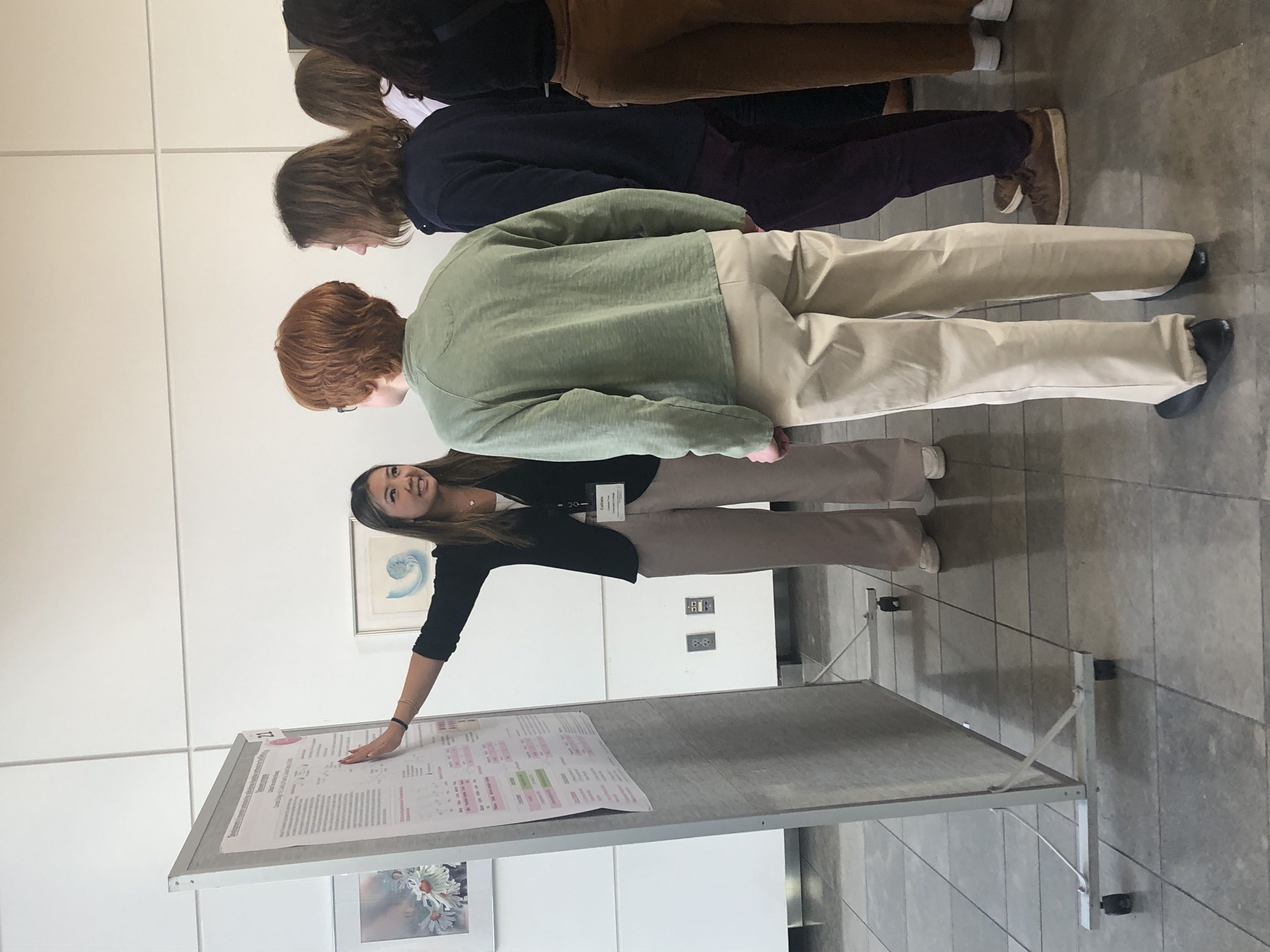
Other CC students presented their parts of the research project at various national conferences throughout the duration of the project. Callista Tran ’24 presented the research she did for this project at the Midstates Consortium for Mathematics and Science Undergraduate Research Forum in Physical Sciences at the University of Chicago in November 2023.
Dounay and Hatton recently published a follow-up paper that describes the broader scope of the synthesis work and antibacterial properties of selected compounds. Markus Bergstrom ’22, Callista Tran ’24, and Sarah Buchman ’26 were also co-authors on this paper.