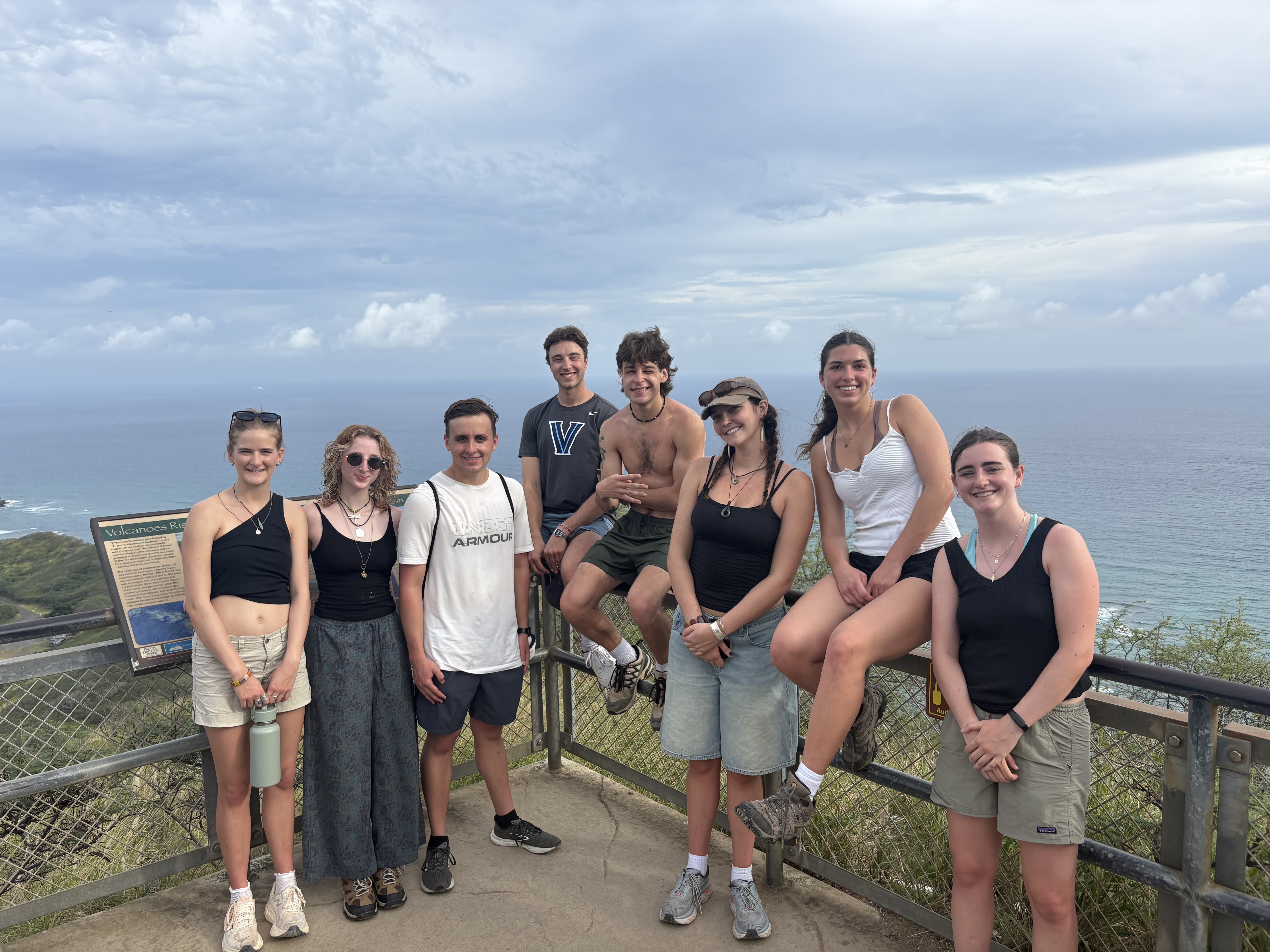
Colorado College is known for experiential learning, so when students were studying the impact of World War II on Japanese Americans in Hawaii, it is no surprise that they ended up in Hawaii, having intimate conversations with descendants of Americans of Japanese Ancestry (AJA) World War II veterans.
Before traveling to Hawaii, students in From Pearl Harbor to Honouliuli learned about Pearl Harbor and examined the different hardships Japanese Americans faced during WWII. They analyzed the role of the military in Hawaii, discussed the legacy of WWII in present time, and learned how to ask questions.
Once on the island, the class had lunch with descendants of WWII Hawaii AJA veterans, which students say was an incredible experience. The connection with the AJA veterans was made possible by Gordon Aoyagi ’67.
Kole Petersen ’27 met with Ken Inouye, whose father Lieutenant and Senator Daniel K. Inouye served in the 442nd Regimental Combat Team and received a Medal of Honor, as well as became the first Japanese American to serve in the U.S. House of Representatives.
“Talking with Ken gave me incredible insight on the role of Japanese cultural values on Daniel's political virtues and parenting practices, as well as how these values have been passed down and reinterpreted across generations,” Petersen says.
A major theme of the course was on humanizing history.
Class instructor and Associate Professor of Psychology Jason Weaver says that instead of thinking about, “here’s what happened to Japanese Americans,” the class talked about how a particular person may have experienced events and how in present day a particular person is affected by high-level policy, as well as that person’s relationship with their neighbors and everything else in the world.
“In order to do that, we have to think about people in all of their messiness,” Weaver explains. “Sometimes we want to choose a side, and that side is made up of a whole bunch of messy people who are problematic and imperfect. But getting to know them as individual people is an important part of thinking about how we relate to history as well as politics.”
This lesson resonated with students, especially after they were able to speak with AJA descendants directly.
“Our experiences with descendants of Nikkei who were interned, as well as working with archives of specific individuals, helped me humanize a history that has largely been ignored,” Petersen says. “Rather than assuming all Nikkei experienced World War II in the same way, the humanization of history afforded from this class helped expand our understanding of how communities form, diverge, and unite during tough periods.”
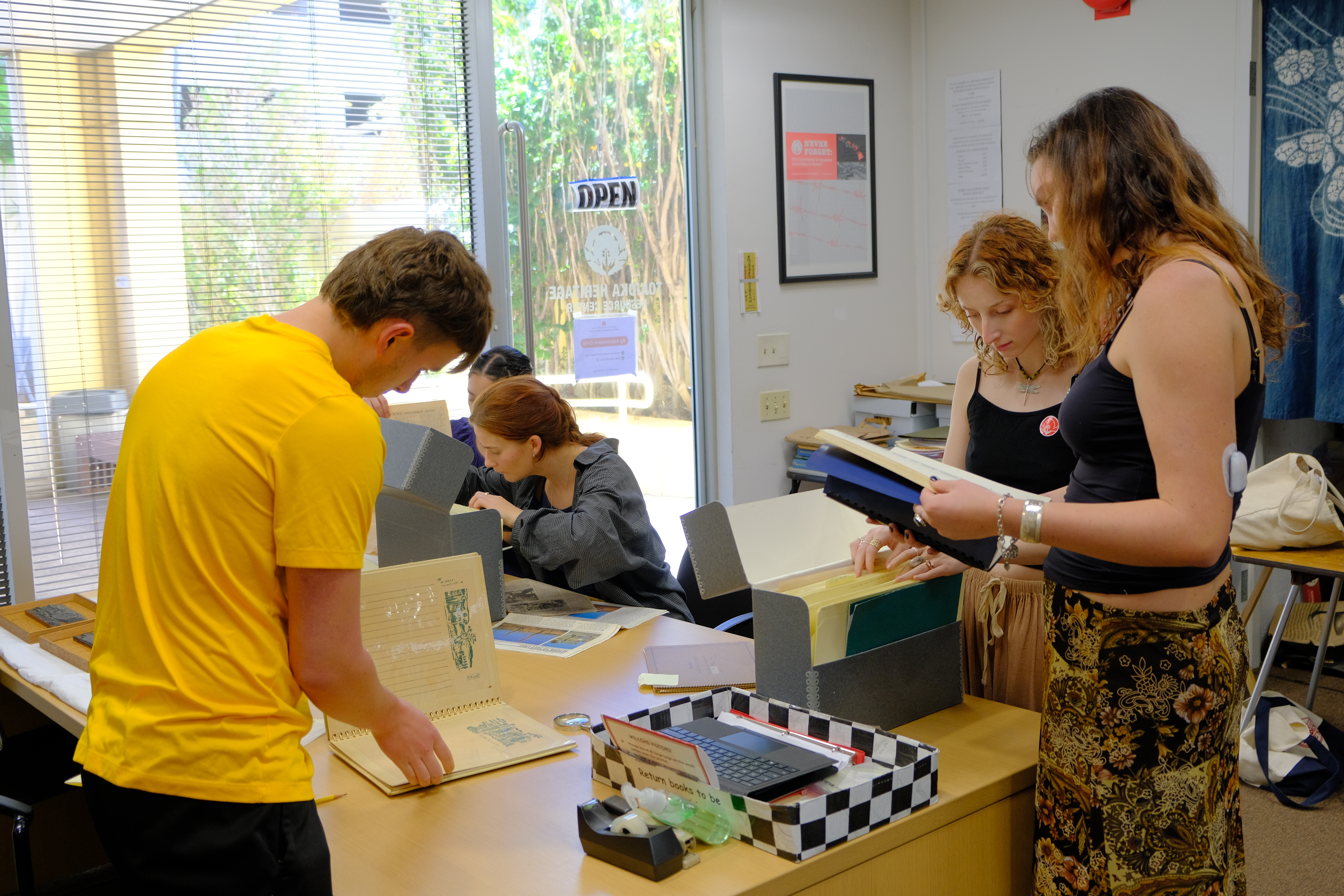
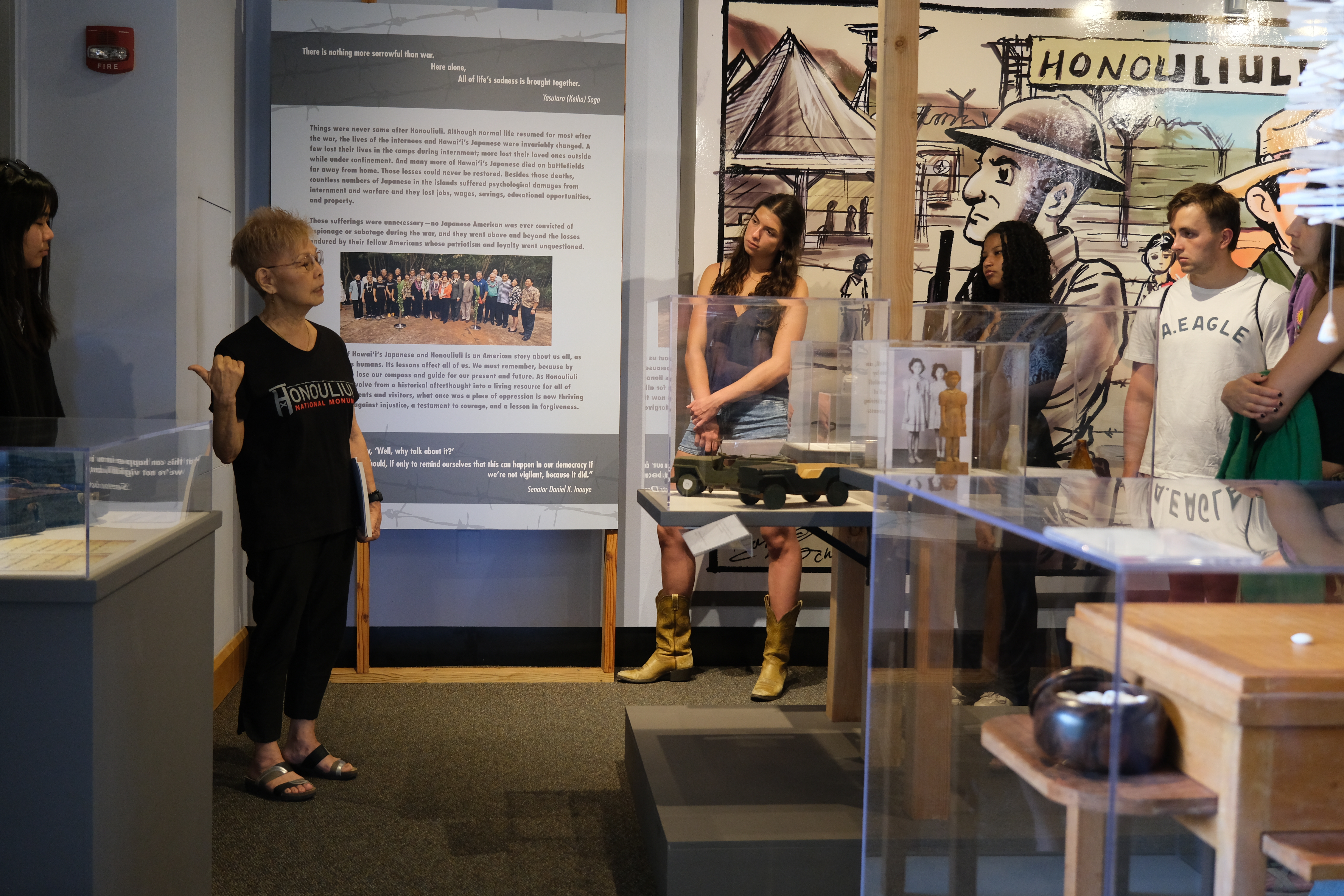
Another significant part of the course was visiting the Japanese Cultural Center of Hawaii (JCCH).
“Visiting the JCCH was an amazing opportunity to see the concepts we had been learning across the class in a much different lens,” Petersen says. “We had read books and first-person accounts compiled from resources at the JCCH, but combing through the archives myself was a much different experience. Reading report cards, legal documents, letters, and other personal documents from Japanese Americans interned at camps gave me a more comprehensive understanding of their experiences and how they perceived their incarceration.”
Ellison Namba ’28 says getting to do archival research at the JCCH was her favorite part of the class because she was able to learn about the Japanese Internment camps from primary sources.
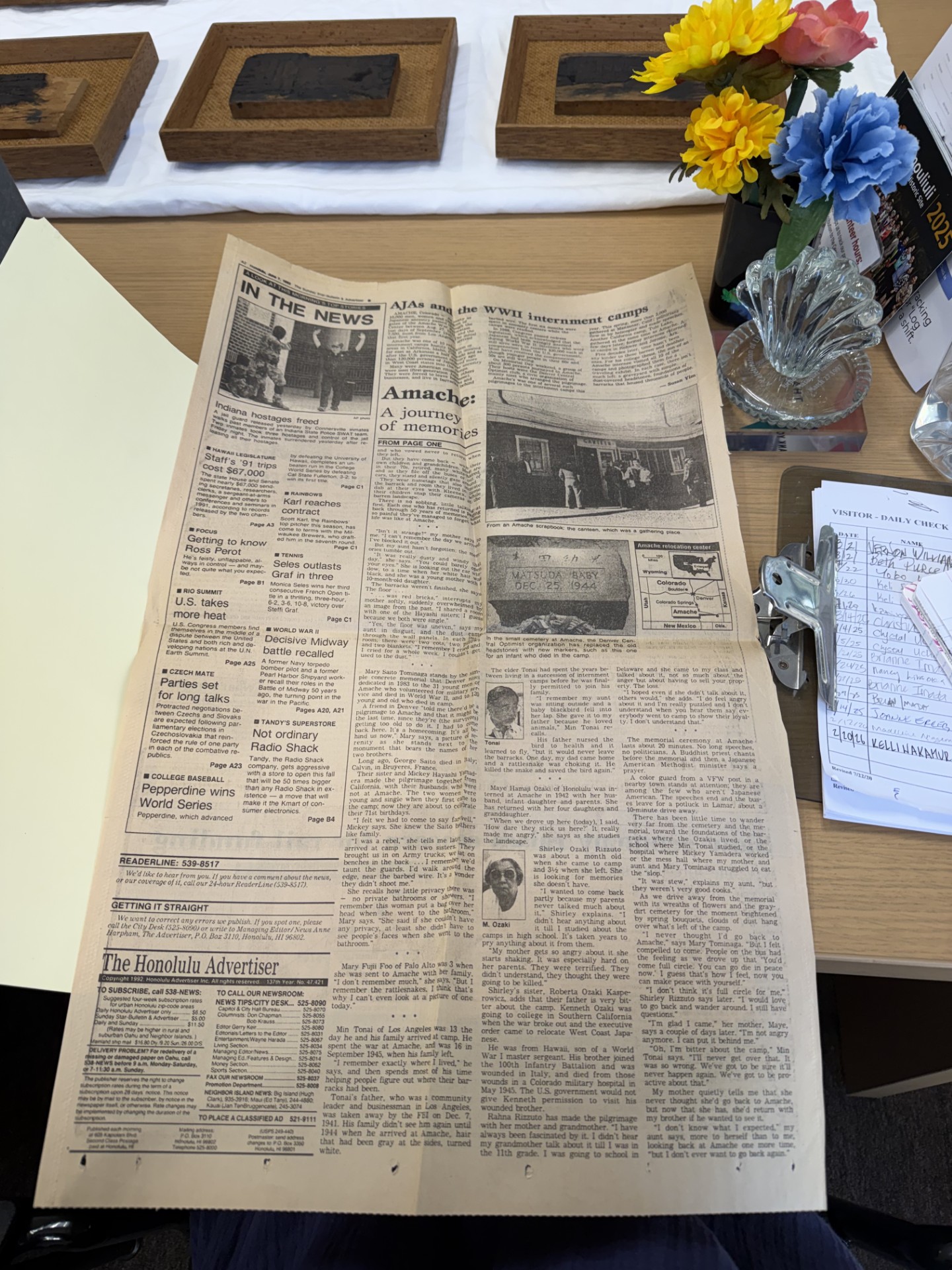
“A couple of years ago, I was able to visit Camp Amache, a Japanese Internment camp in Colorado,” Namba says. “However, most of the buildings have been destroyed. This archival research allowed me to get a better idea of what the camps actually looked like and what it was like to be interned in camp.”
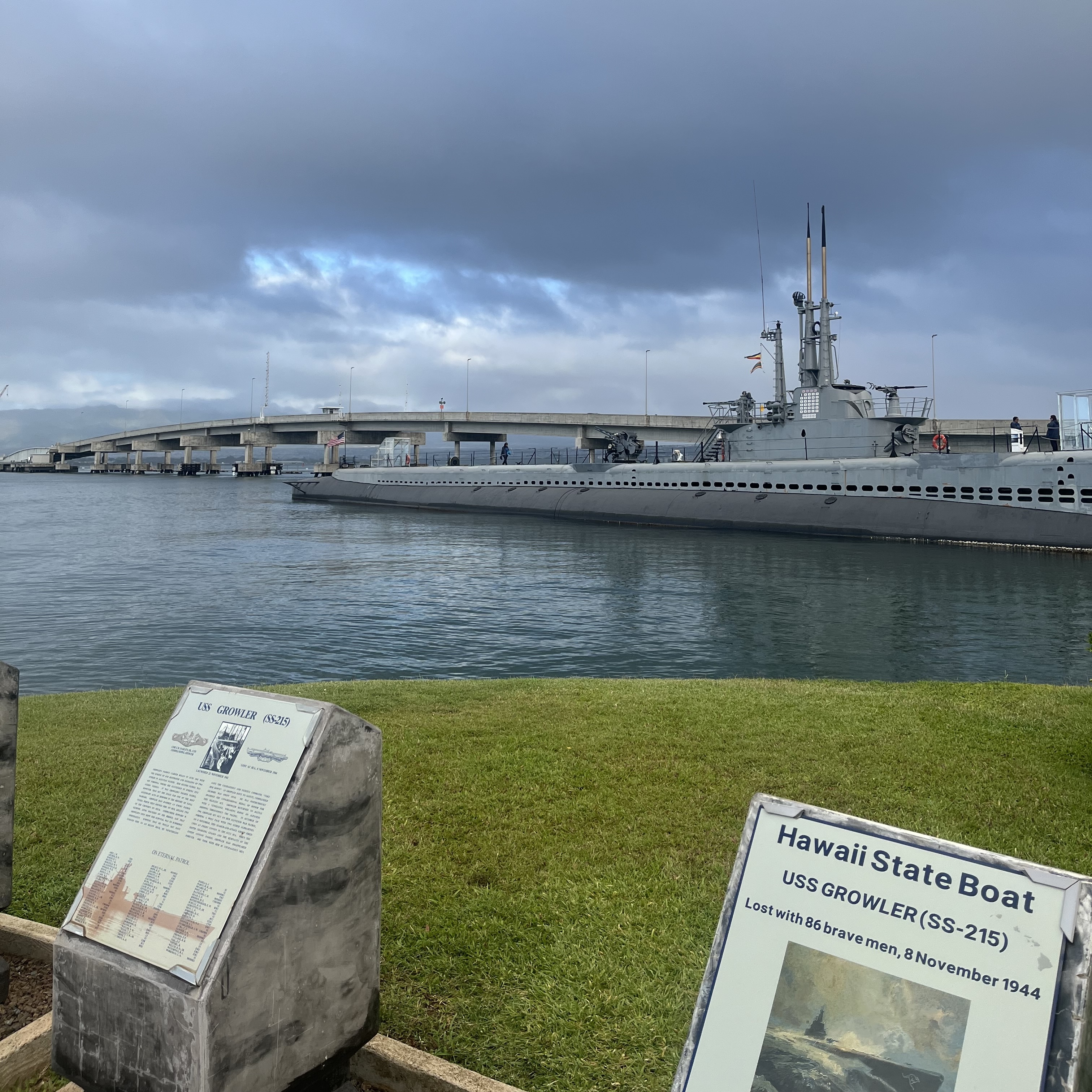
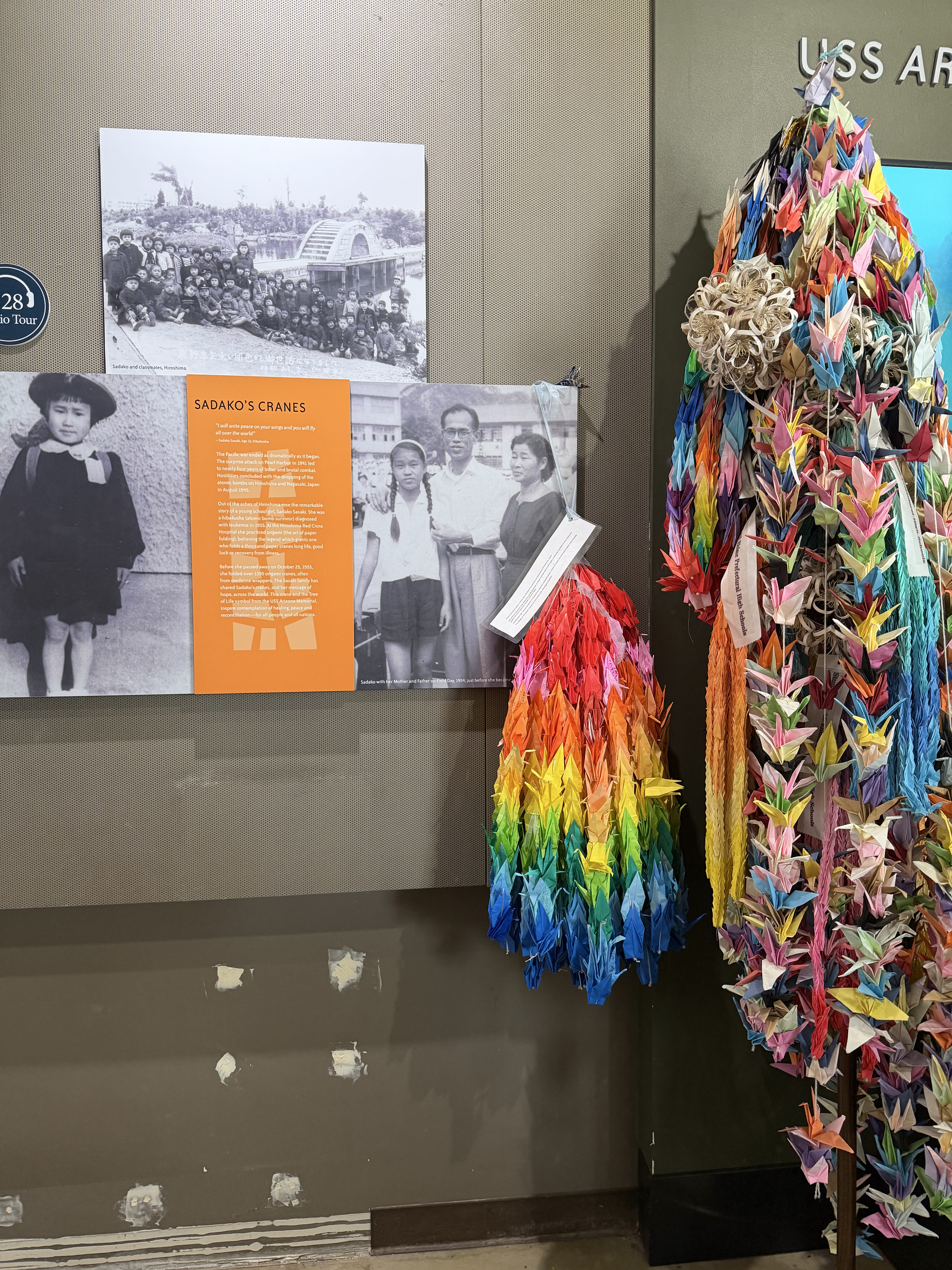
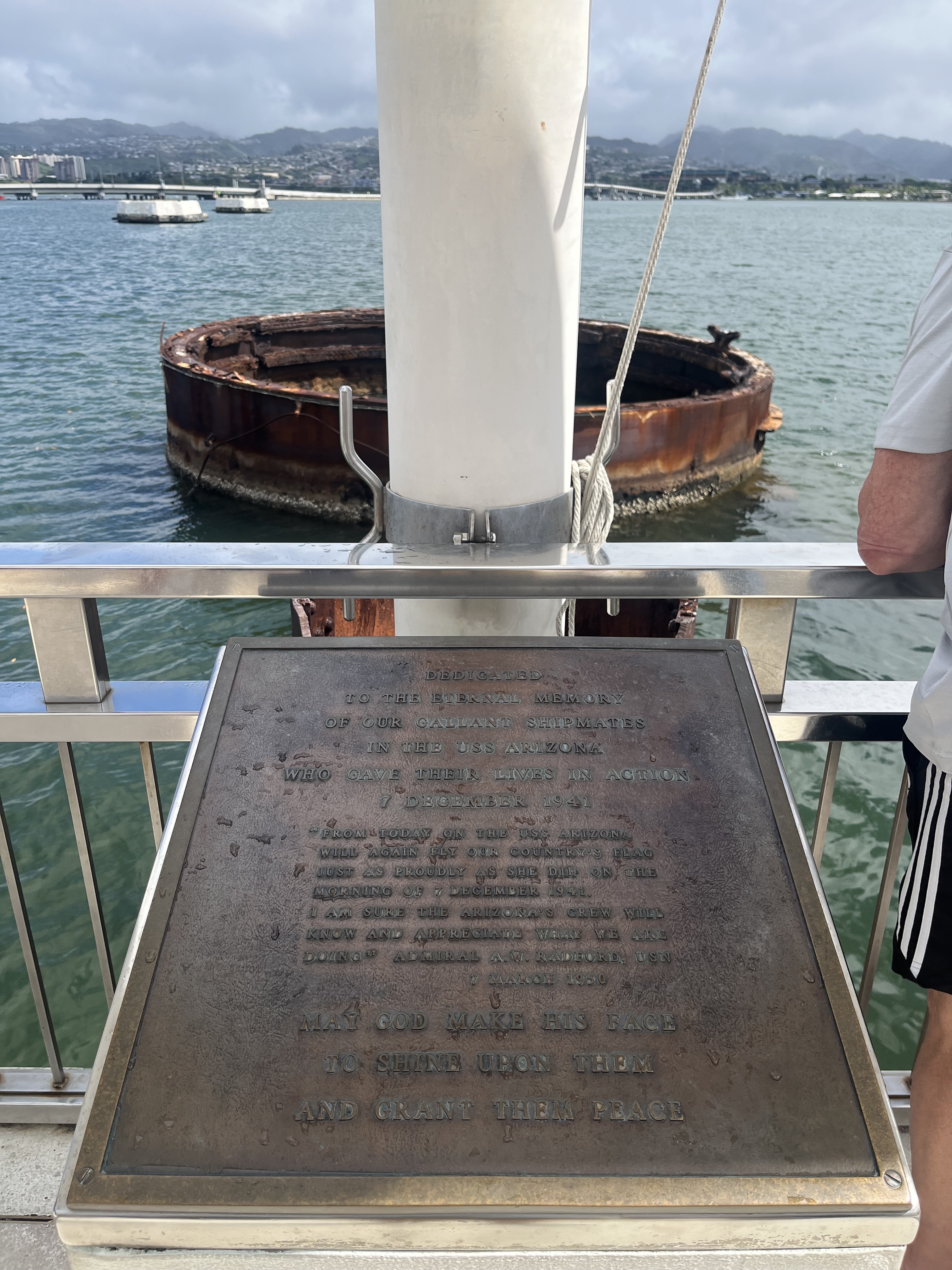
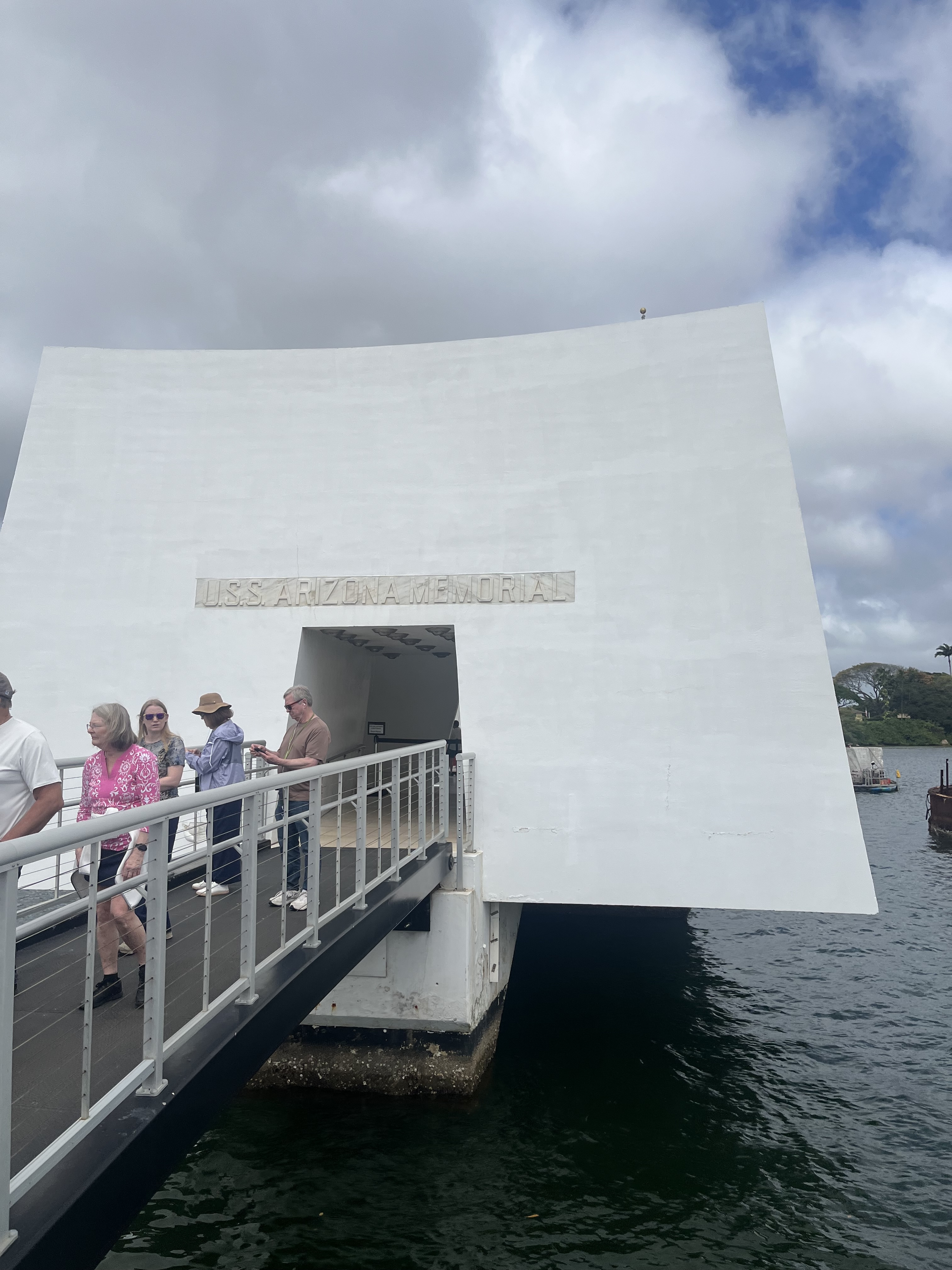
Students say their visit to the Pearl Harbor National Memorial was enlightening and something that will stick with them.
“I learned a lot about how the ways in which narratives are constructed can shape how we perceive an event,” Petersen says. “This experience gave me the chance to reflect on my own positionalities and recognize the difficulties in telling an objective history, especially about such a sensitive topic.”