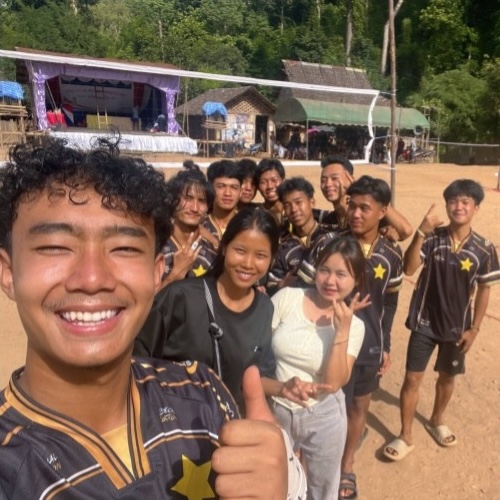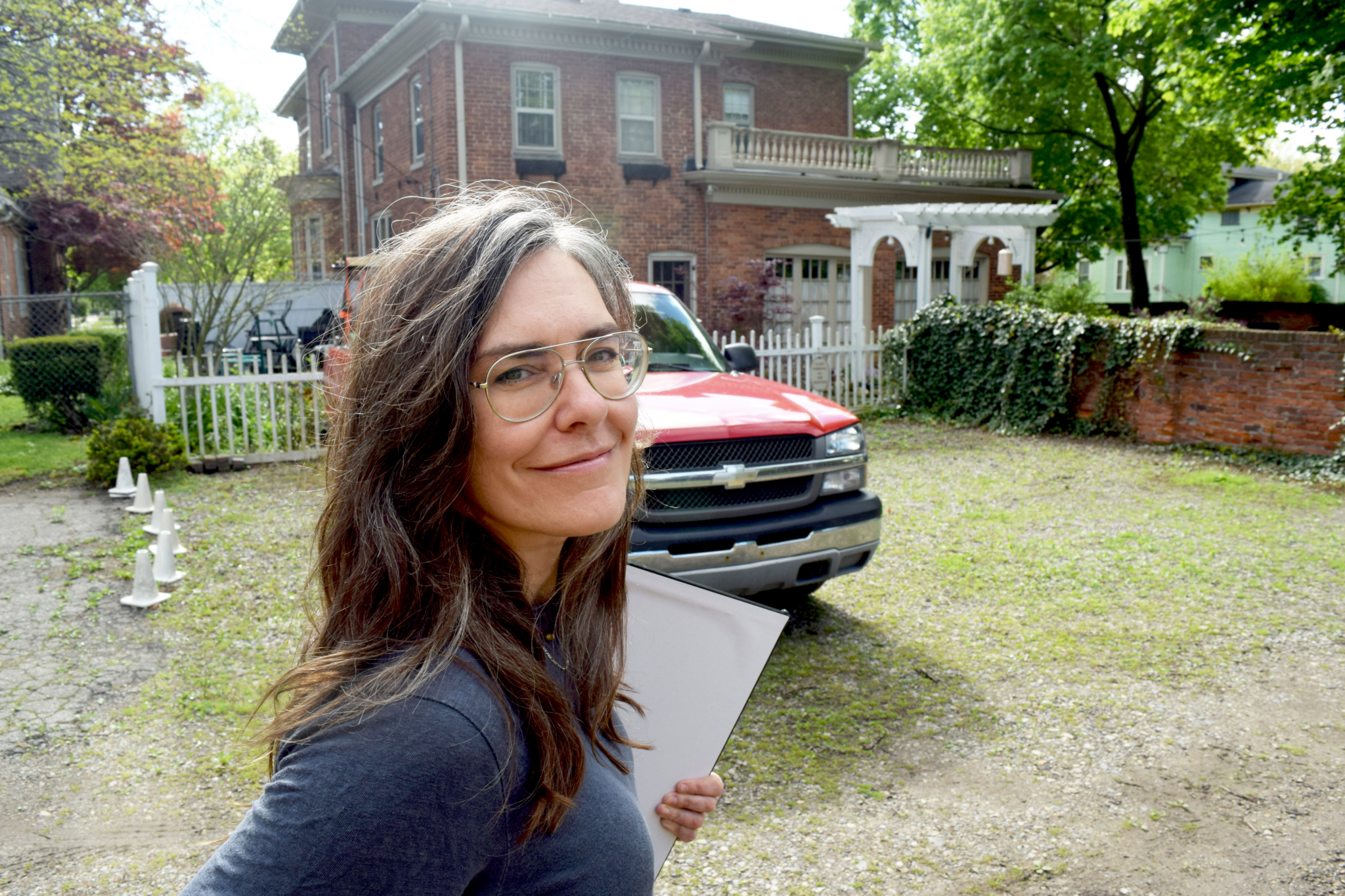
Zachary Ginn '23 | Jordan Cosgrove '24 | Owen Rask ’24 | Heather Rolph ’21
Four recent alumni have been named 2026 winners of the prestigious National Science Foundation Graduate Research Fellowship Program.
“The National Science Foundation Graduate Research Fellowship is a prestigious, highly competitive award that enables graduate students to focus more deeply on their studies,” says Rachel Jabaily, Associate Professor and Chair of Organismal Biology & Ecology (OBE). “A committee of scientists has evaluated their approach to science and plans for their projects and has deemed these recipients worthy of full support. We should be proud to have four recipients this year from Colorado College, but we shouldn’t be surprised because our students learned how to focus, hone and communicate their original ideas through the myriad classes they excelled in on the Block Plan while they were with us.”
The Graduate Research Fellowship Program (GRFP) supports graduate students who are pursuing master or doctoral degrees in science, technology, engineering, and math fields. The National Science Foundation (NSF) established the GRFP in 1952 to recruit and support people who have demonstrated the potential to make contributions to STEM fields, STEM education, or scientific innovation.
Of almost 14,000 applicants, fewer than 2,600 people were named to the 2026-27 GRFP cohort.
“The NSF GRFP is the gold standard for recognizing graduate-level scientific research of high creativity, intellectual merit, and widespread impact,” says Writing Center Specialist Roy Jo Sartin, who specializes in helping students with graduate school, fellowship, and grant applications. “For CC to produce multiple scientists of this caliber — not just this year, but most years — is a testament both to their talents and to the mentorship they received at the College."
Zachary Ginn ’23 Life Sciences – Ecology
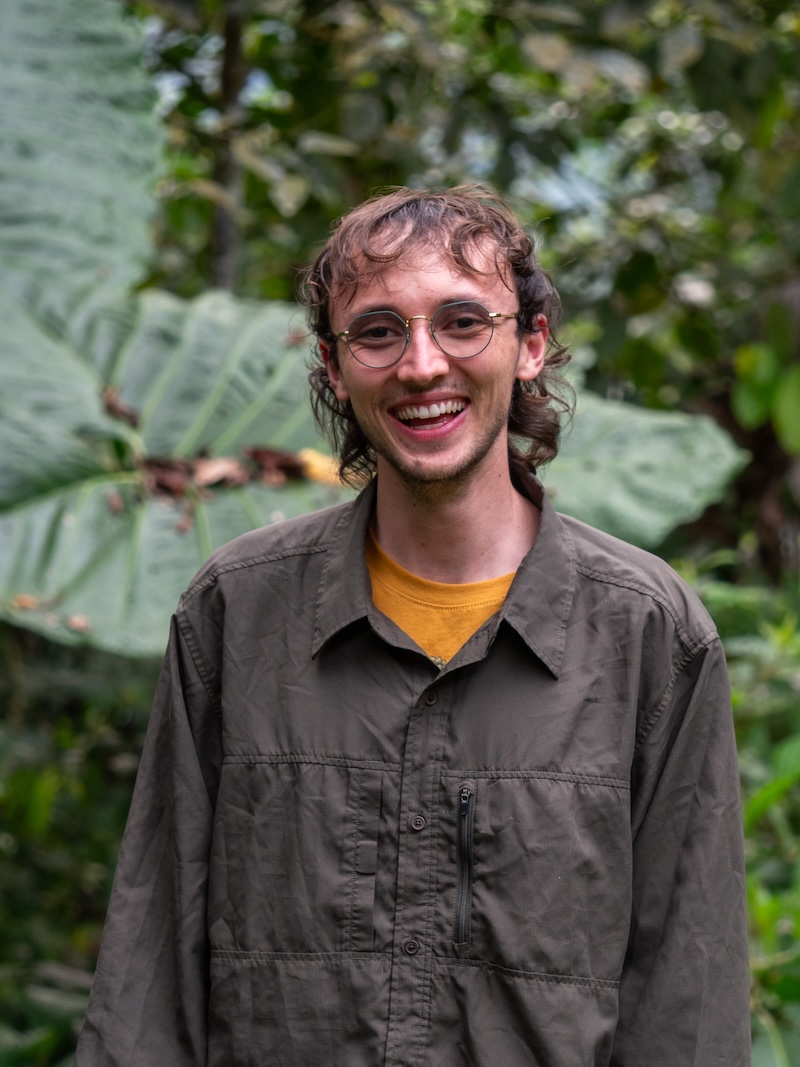
Zachary Ginn ’23 is a field ecologist with a background in avian and pollination ecology, and after graduating with a degree in OBE, began pursuing seasonal field research positions across the United States and in Ecuador, Panama, and Honduras.
This fall, Ginn will begin a PhD program in the Graduate Group in Ecology (GGE) at the University of California, Davis, where he will seek to untangle the drivers of elevational range shifts in montane birds in Central and South America.
Ginn was inspired to begin researching birds after taking Ornithology with OBE Professor Brian Linkhart during his junior year.
“On our extended field trip to remote mountains in southern Arizona, Zach was an Eveready Bunny, just as eager to hunt down hummingbirds at sunrise, work on field projects with other students for hours during the day or go on hunting expeditions to capture owls at night,” Linkhart says.
Ginn is grateful for the OBE faculty who inspired and prepared him for his ecology career as well as for their help in applying for the GRFP.
“Many of my upper-level classes involved mock grant proposals as midterm or final projects, which significantly helped in learning concise scientific writing and in thinking about independent research,” Ginn shares. “Along with this practice, my mentors from CC, mainly Dr. Roxaneh Khorsand, helped me brainstorm and revise my proposal.”
Ginn spent Summer 2022 and 2023 at Toolik Field Station in Alaska, conducting research for Khorsand. He returned for two weeks last summer as well, tasked with training current CC students.
Ginn worked with Khorsand and Associate Professor of Mathematics and Computer Science Flavia Sancier-Barbosa on research documenting temporal patterns of plant-insect interactions in different tundra plant communities, and published their research in September 2025.
While his work on plants isn’t directly related to Ginn’s current research, it helped to inspire it.
“Both the work in Alaska and my current research with birds fits under the umbrella of global change ecology- thinking about how species respond to anthropogenic change,” Ginn says. “My research in Alaska was also great training in field work, experimental design, analysis, and writing.”
Ginn is interested in applied bird conservation in Central and South America and hopes that his research can inform conservation strategies in montane habitats by working with local researchers, universities, and communities.
He also hopes to pursue a career as a professor at a school like CC.
“I hope to help other students find a love for field research like I have, and the close professor-student mentorship at CC played a huge part in my career trajectory,” Ginn adds.
Jordan Cosgrove ’24 Life Sciences – Ecology
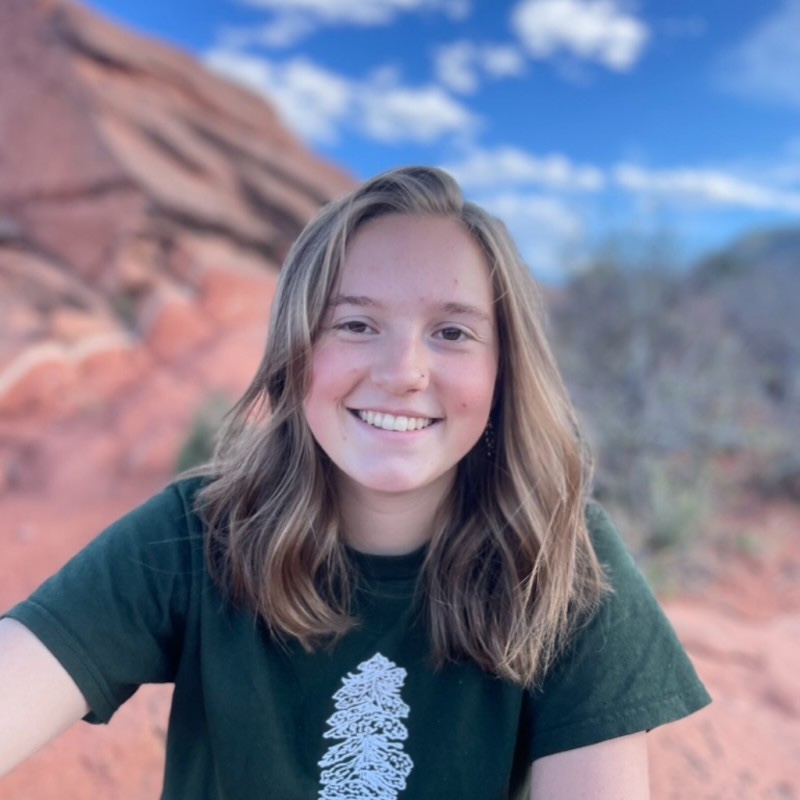
“Being awarded the NSF GRFP is a huge honor,” says Jordan Cosgrove ’24, who majored in Environmental Science and now works as a paraprofessional in that department. “It will not only allow me to focus on research in graduate school, instead of TAing my way through, but it provides enough financial support to pursue a PhD right out of the gate, which has always been my long-term goal. I am incredibly excited to be a student again, dive into research, and find my niche in the field of ecology.”
Cosgrove will pursue a PhD in Systems Ecology at the University of Montana, where she will be studying tree ecophysiology, forest carbon cycling, and optical remote sensing. She will use flux towers equipped with optical sensors and instruments that measure atmospheric gas exchange in the Lubrecht Experimental Forest to study how different forest management applications affect forest-wide carbon cycling. She eventually plans to scale up this work to incorporate satellite-based remote sensing, using field measurements as ground truthing for large scale carbon cycling models.
Cosgrove conducted research with Professor and Co-Chair of the Environmental Program Miro Kummel during her senior year, where they studied the shift from homogenous to patterned vegetation cover in its early stages of development in South Central Colorado due to a decrease in annual precipitation. They presented their research at the Colorado Springs Undergraduate Research Forum (CSURF) in April 2024.
“Jordan has always been exceptionally sharp and imaginative, but she also always had a keen sense of agency --- sense that if she puts her mind to it, she can do things, she can do anything,” Kummel says. “I could not be prouder of a student mentee. I am also proud of CC, as an institution, that it gives us faculty space and resources to support these extraordinary young scientists to ‘grow up’ as scholars and do absolutely amazing things.”
Prior to starting her work with Kummel, Cosgrove had originally planned to do a small independent study on the connection between microtopography and micro hydrology that underlines spatial patterning of the prairie.
“The first week was not even over yet when she told me that this was so much fun that she wanted to significantly scale it up and work on it for a thesis,” Kummel shares. “The thesis writing then turned into a second manuscript-writing block. Then came a series of conference presentations including CSURF, but more importantly, a professional presentation at the Ecological Society of America.”
Cosgrove spent the year after graduating working as a Student Services Contractor for the U.S. Geological Survey, where she studied the impact of land use change and sea level rise on critical wetland habitats. Cosgrove says this was a really formative role that gave her incredible experience working as a support scientist in a research setting.
After returning to campus to serve as the Environmental Sciences paraprofessional, Kummel and Cosgrove submitted her thesis to an ecology journal, where the manuscript is currently under peer review. Cosgrove’s GRFP builds on the research she had done for her thesis and manuscript.
Owen Rask ’24 Social Sciences – Economics
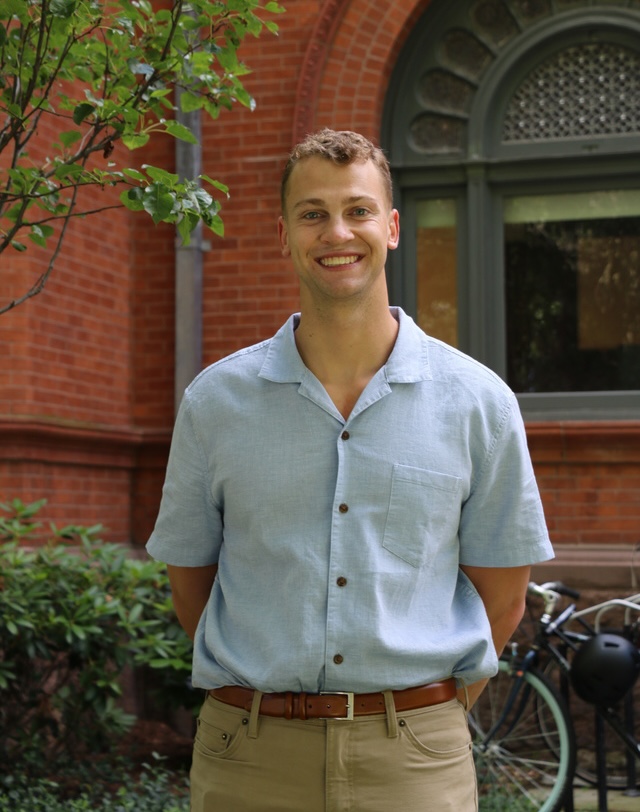
Owen Rask ’24 is pursuing a PhD in Agricultural and Resource Economics at the University of California, Berkeley. He spent the past few years conducting research on how U.S. agricultural and conservation policy, specifically the Conservation Reserve Program, shapes the land use decisions of American farmers, and was awarded the GRFP for his proposed extension on that research project.
“Being awarded the NSF GRFP signals to me that my research on U.S. agricultural and conservation policy is compelling and important enough for both the federal government and experts in the field to generously fund its continuation, and that my prior work and accomplishments in economics research are strong enough that the NSF is willing to invest in my career,” says Rask, who majored in Economics and double minored in Mathematics and Political Science. “It also means that, much as my experience as a Boettcher Scholar instilled a commitment to giving back to the state of Colorado, I will use the knowledge and expertise this fellowship supports to give back to the U.S. government for its investment in my education and career.”
Rask spent the past two years working as a Pre-Doctoral Researcher at the Tobin Center for Economic Policy at Yale University, studying the economics of higher education, specifically the impact of education on the historical development of the gender wage gap.
During his senior year, Rask was awarded a Faculty Student Collaborative Grant for his research on the influence of education and gender on intergenerational mobility in the United States. Rask and Assistant Professor of Mathematics and Computer Science Minho Kim researched the impact of female employment on the daughters’ upward mobility. This research became Rask’s senior thesis, and he was awarded the Ray O. Werner Thesis Award for it in 2024.
“Working with Owen was a true joy and reminded me how lucky I am to teach at CC, especially when I get to work closely with students like him,” Kim says. “Owen consistently brought strong analytical skills and careful attention to detail, along with a willingness to ask thoughtful questions and really engage with the material. He never settled for surface-level understanding—instead, he pushed himself to think more deeply about the data and what it might be telling us.”
Economics and Business Professor Dan Johnson says he has been lucky enough to encounter Rask in a few of his courses, so it doesn’t surprise him that a prestigious national fellowship also recognized his excellence.
“He has the hallmarks of a great scholar: curiosity, persistence, and a drive to improve himself and his skills until each challenge is solved,” says Johnson, who served as Rask’s thesis and major advisor.
Heather Rolph ’21 Life Sciences - Ecology
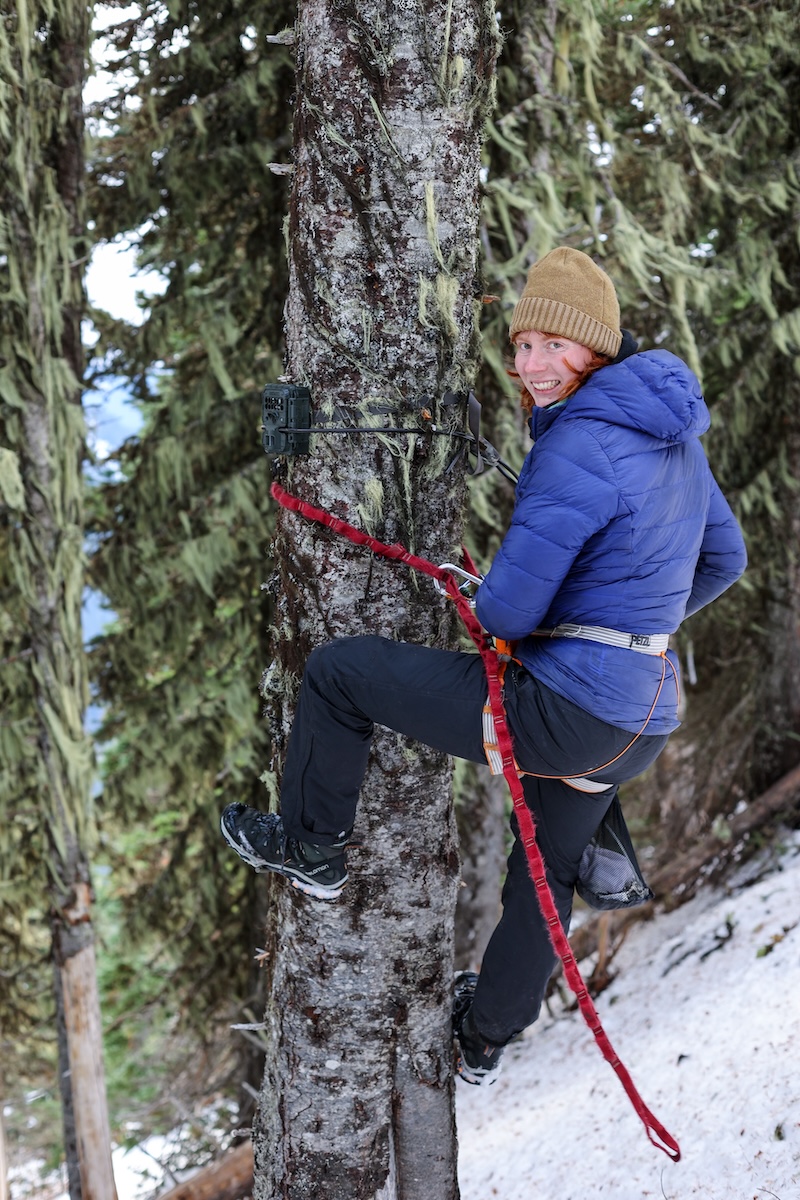
Heather Rolph ’21, who has worked as a Biological Science Technician in Yosemite National Park since 2024, wrote her GRFP application during the federal shutdown in Fall 2025, when she, a federal employee, was unable to work.
"In the five years since I graduated CC, I've spent a lot of time becoming intimately acquainted with many different ecosystems," Rolph says. "I spend nearly every day outside hiking, bushwacking, snowshoeing, and skiing to track down and understand how threatened and endangered animal populations are doing, what they're eating and how they're moving through habitats, and how anthropogenic changes might affect them. The federal shutdown provided this perfect opportunity to take a step back and think about all the questions I've built up while working in the field, and how I might use my field expertise to lead a project on something I'm really interested in."
Rolph plans to begin graduate school at the University of Washington this fall, where she will study the habitat and diet selection of Cascade red fox.
Rolph decided she wanted a career researching the natural world during her Ecology class with Linkhart, where she learned how to tell spruce trees from firs, how to identify birds, how to find tracks in the snow, and how to ask questions about the natural world and then design studies to determine the answers.
“I wanted all those superpowers, which prompted me to begin working in wildlife ecology,” says Rolph, who majored in OBE and minored in Journalism.
“It was clear to me how much Heather loved being immersed in field study, whether we were studying forest succession while snowshoeing in subalpine forests in winter, sampling fish populations in the Yampa River, or observing bull elk bugling behavior in Rocky Mountain National Park,” Linkhart says. “Heather also was an individual with a lot of grit, as evidenced during the pandemic when she conducted an independent research project in which she estimated the abundance of flying squirrels by poring through thousands of photographs taken by remote camera traps throughout Mount Rainier National Park.”
During Summer 2020, Rolph started her first paid job in wildlife ecology, where she worked for Cascades Carnivore Project (CCP), a research and conservation nonprofit. She spent the summer hiking in the North Cascades and collecting Canada lynx scat to inform population estimates. She enjoyed the position so much that instead of returning to CC for her senior year, she took a semester off to continue working for CCP, this time deploying wolverine monitoring stations.
Rolph continued working seasonal wildlife ecology jobs after graduating from CC in 2021. In 2024, she began her current position at Yosemite National Park, where she studies how Pacific fishers adjust to changing fire regimes.
A common theme in her research has been montane carnivores, which were the focus of her GRFP proposal. “I'm totally fascinated by montane carnivores -- which are often challenging to study, poorly understood, and under threat -- and a desire to develop and lead montane carnivore research is what led me to apply to graduate school and the GRFP,” Rolph says.
CC has had students or alumni named GRFP recipients every year for the past several years. Nine CC alumni were named GRFP recipients in 2023. The naming of these alumni GRFP recipient comes as a time when CC is becoming more and more known for its robust STEM education and strong research programs. Last year, CC was recognized with Carnegie Classification’s new Research Colleges and Universities (RCU) designation, which demonstrates the important research CC students and faculty do.