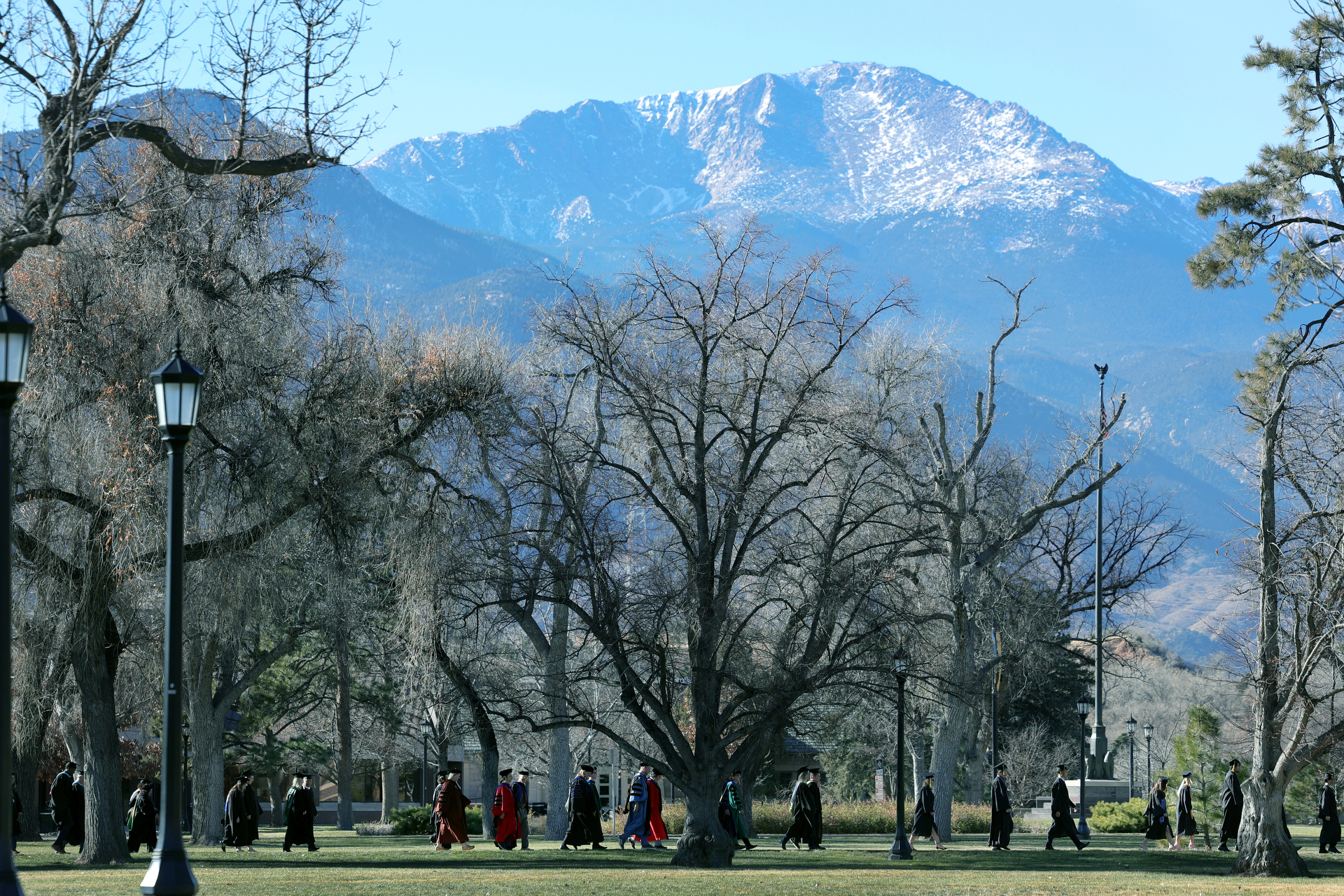


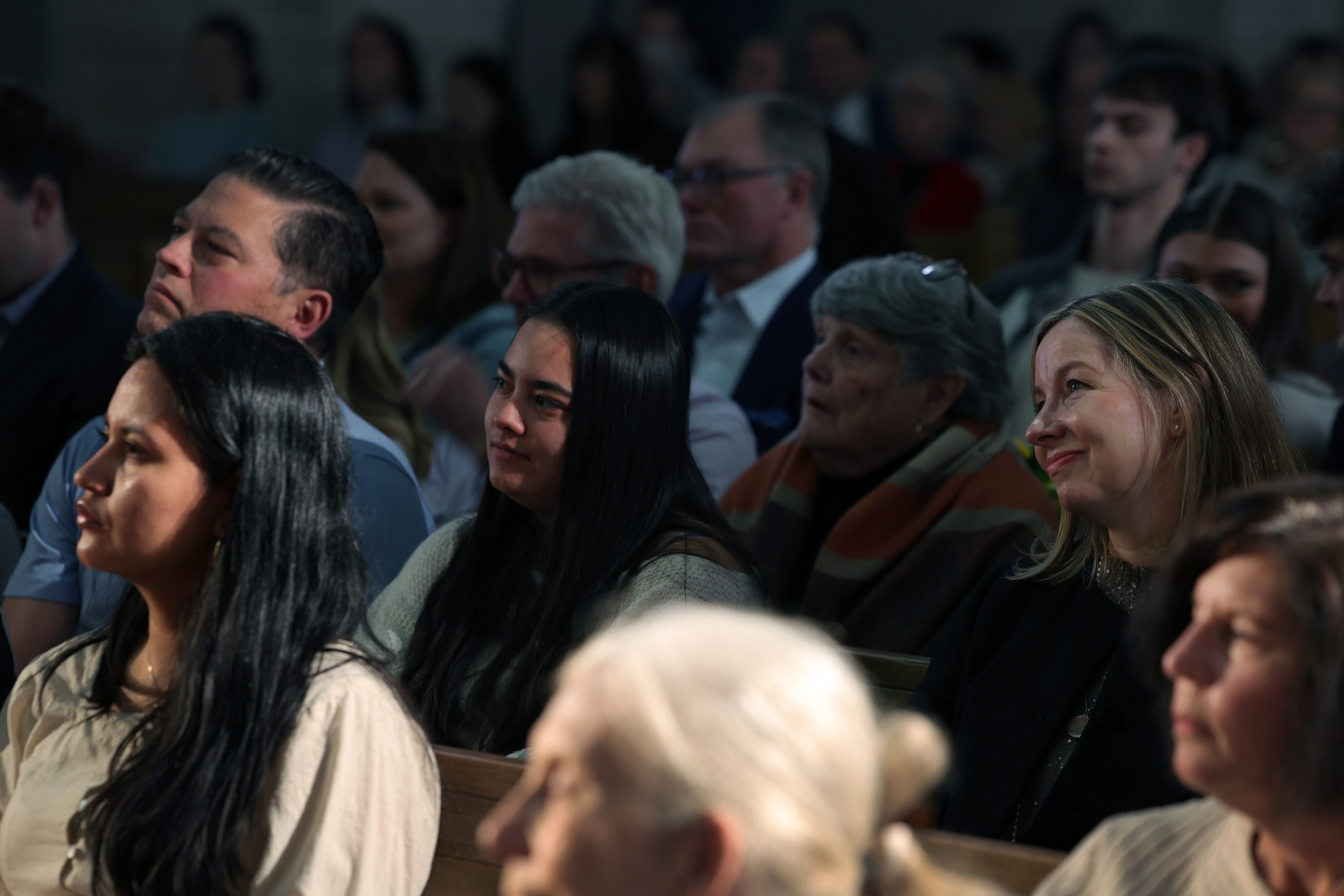
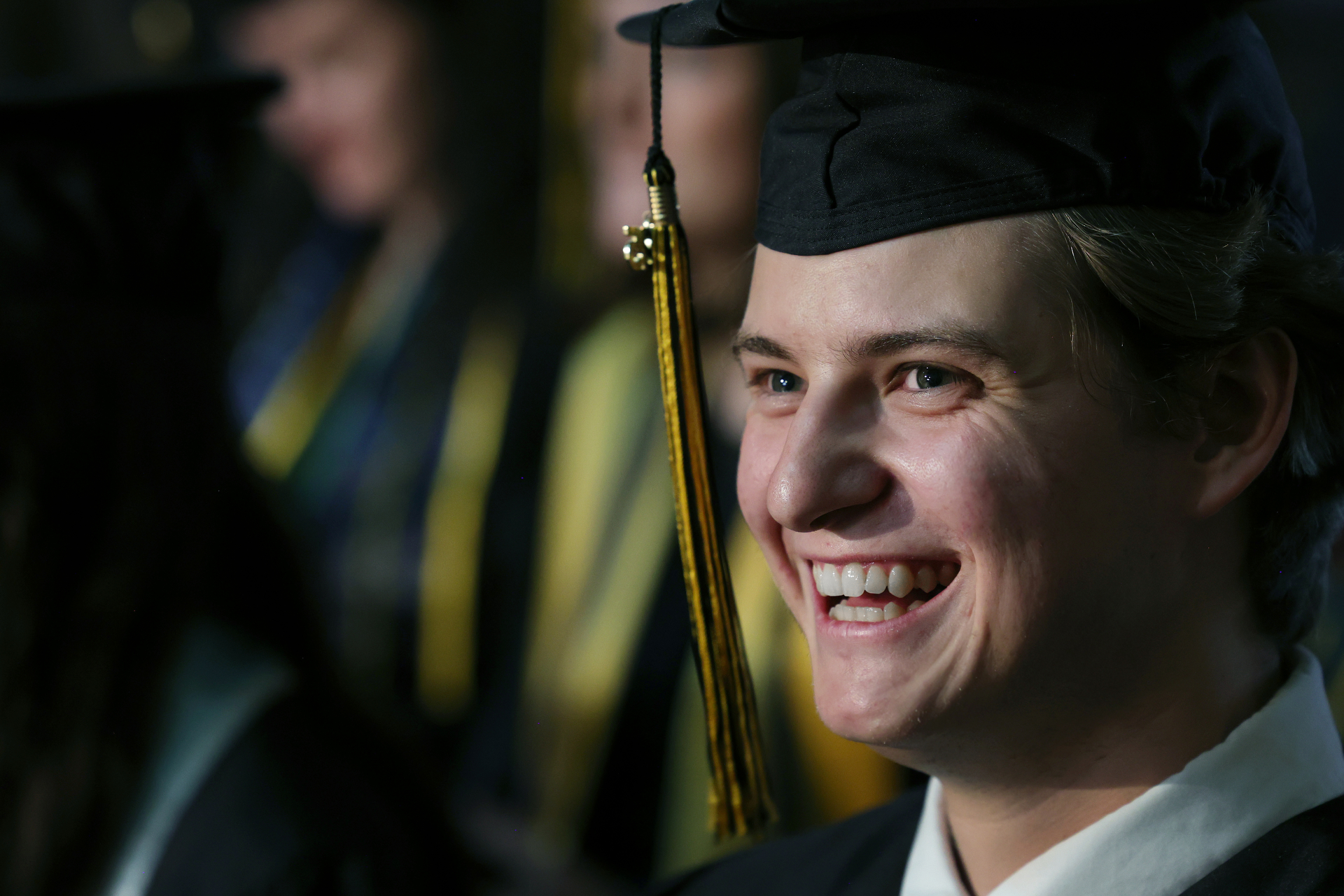
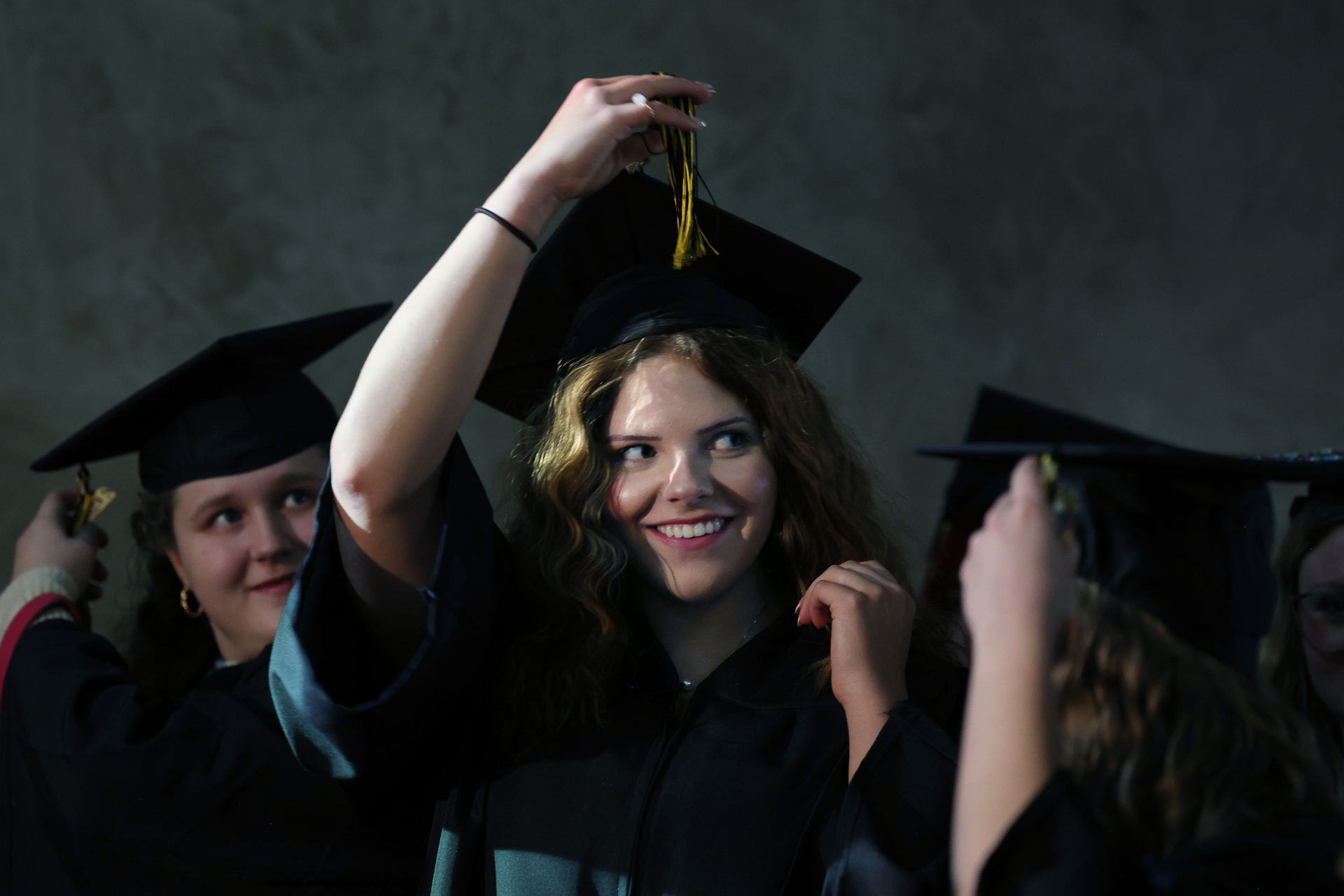
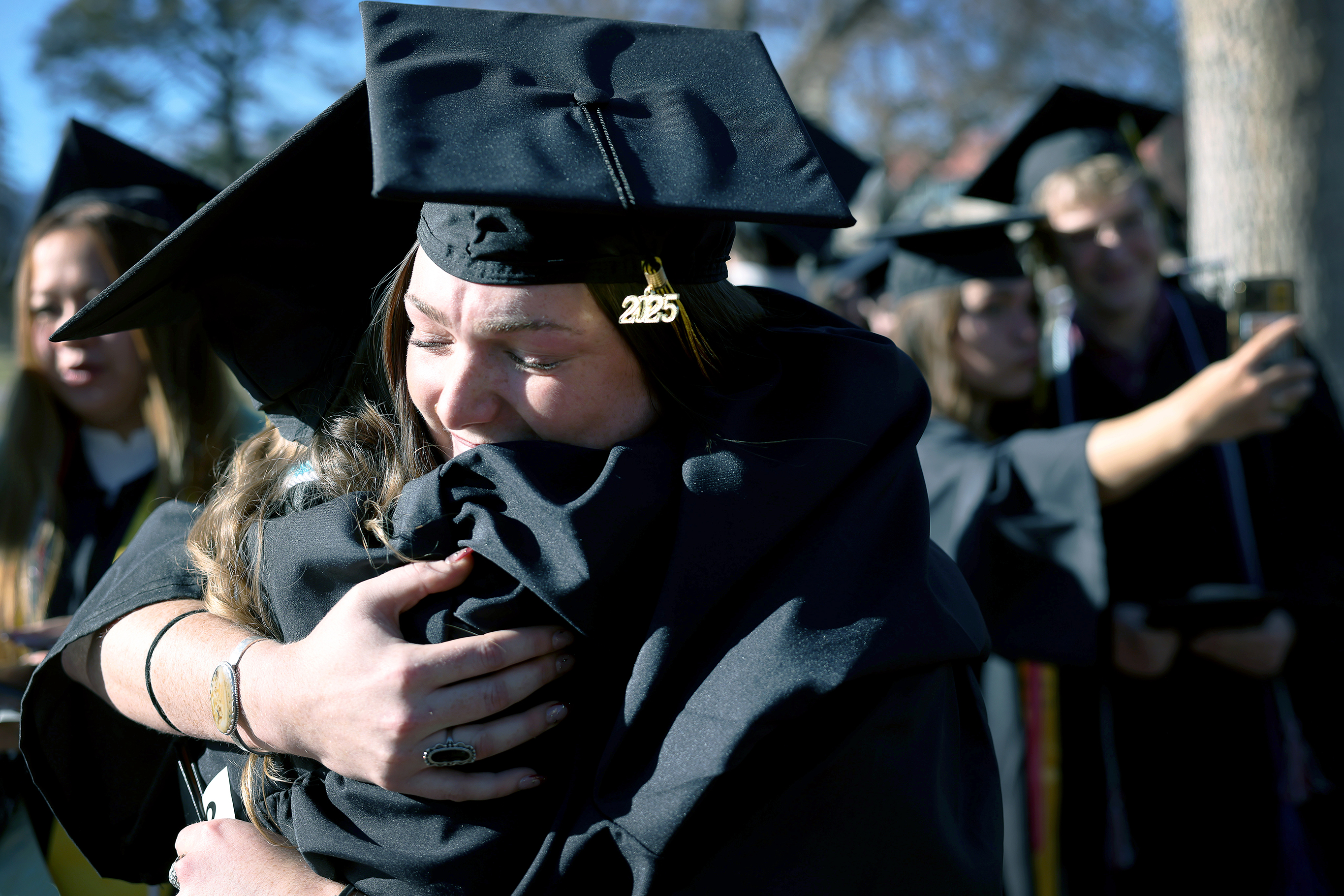

Twenty-seven students walked into Shove Memorial Chapel on Sunday, December 14, 2025, a group small in number but large in presence, to celebrate the end of their college chapter and the beginning of life outside these walls. Though the setting was more intimate than the larger ceremony in May, they received the accolades and recognition they deserved, with friends and family cheering them on.
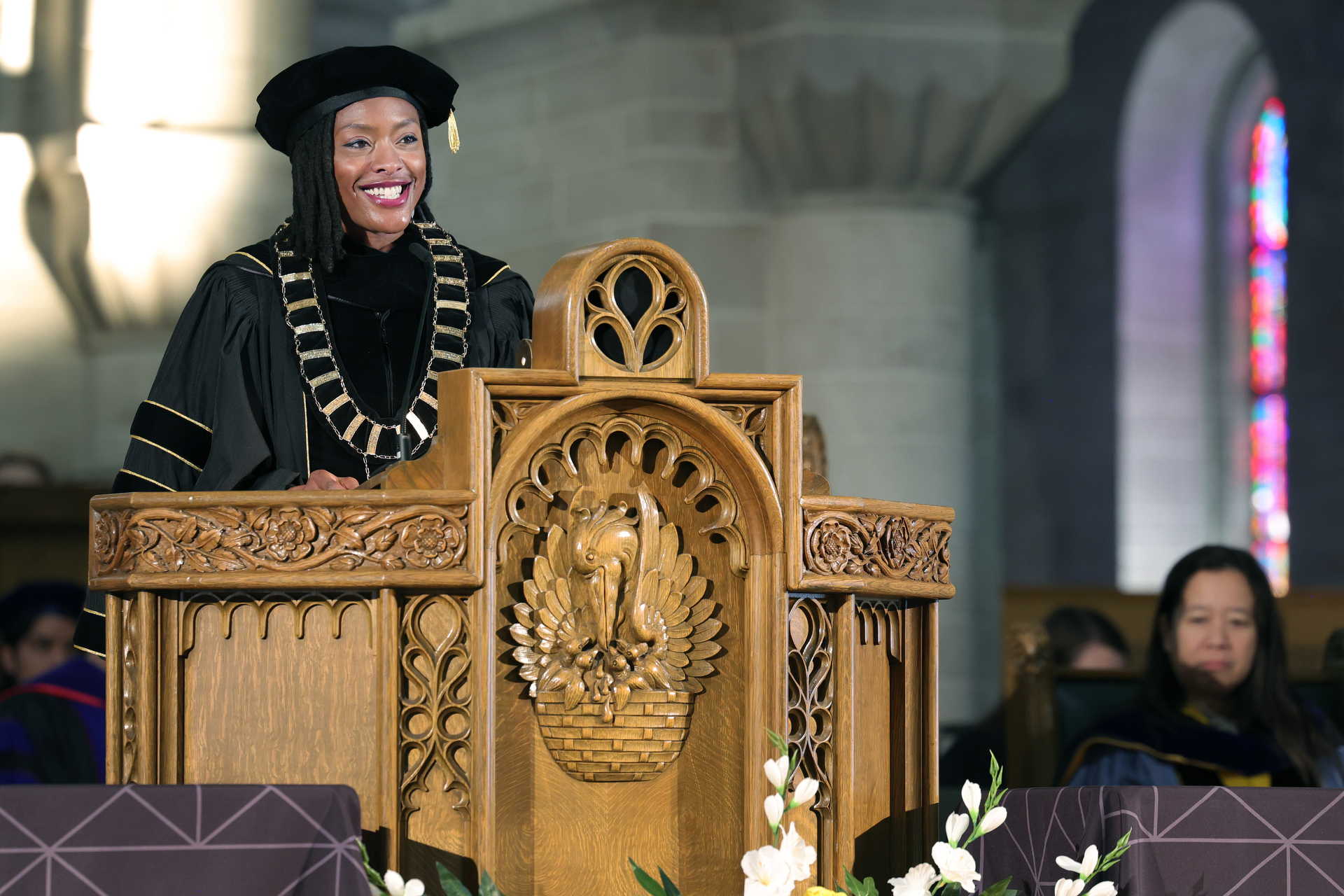
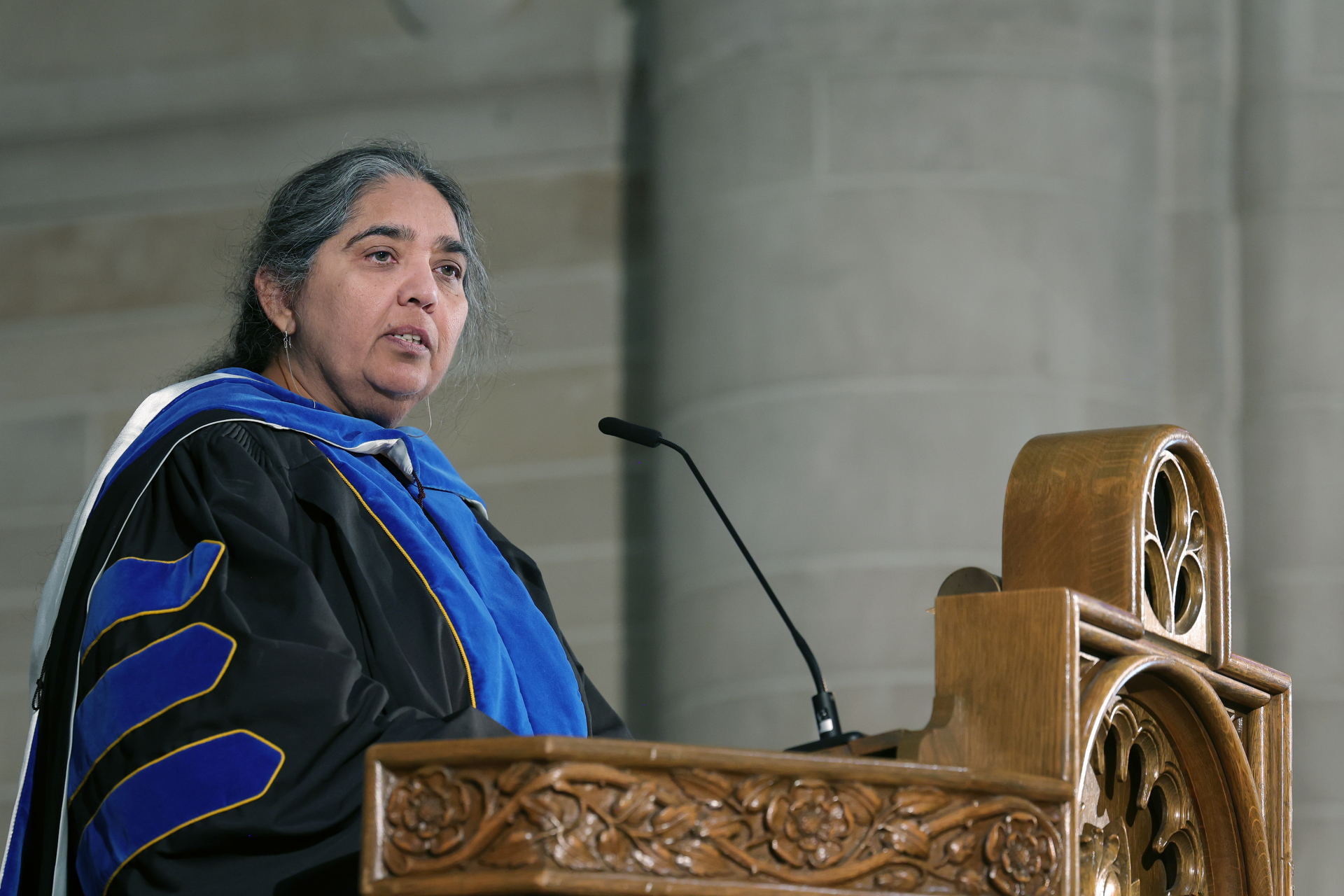
They heard powerful messages of courage from Commencement speaker Neena Grover, Professor of Chemistry and Biochemistry and RNA Biochemist, and from President Manya Whitaker, whose words inspired and uplifted despite embarking on a world filled with uncertainty.
“You are entering one of the toughest job markets in decades, shaped by economic uncertainty, industry shifts, and technological disruption, including all of the opportunities and challenges of AI,” says Whitaker. “Many graduates before you stepped into a world with much clearer paths. Your generation is stepping into a world that is still figuring itself out.”
Whitaker told the graduates their CC education has given them the skills and the analytical abilities to overcome obstacles and think through problems to find clear solutions.
“Your liberal arts foundation prepares you to learn, unlearn, and relearn, which might be the most valuable skill you can carry into an unpredictable world,” she says. “This moment is not working against you. This moment is precisely when your preparation matters most.”
The Bachelor of Arts candidates spanned a variety of fields—from the sciences to political science, to economics and business, philosophy, and more. The group included one graduate student, Mary McCauley of Loveland, who earned her Master of Arts in Teaching (MAT).
Whitaker, a teacher herself as a Professor of Education, gave them one last assignment, asking them what their impact will be.
“I challenge you to focus on the impact you can make. Impact on whom? Who needs what you can offer? The most profound impact often happens in the most ordinary ways,” she says. “Also, focus on your why. Your why will anchor you when the market frustrates you and feels uncertain.”
Chemistry and Biochemistry Professor Neena Grover shared that message of impact and took it a few steps further in her keynote address, telling the graduates that despite learning so much during college, they are more than they know.
“Knowledge, as powerful as it is, isn’t the same as critical thinking or wisdom,” Grover explains. “It isn’t curiosity, it isn’t courage, and it certainly isn’t compassion. Those qualities, the ones that can’t be tested or graded, will shape the person you become far more than any exam we could have given you.”
Grover went on to say that “knowing isn’t everything,” and that “grades validate our sense of self, but knowing is a small part of learning.”
“Knowledge gives us tools, language, the ability to solve problems and imagine new worlds, but it can make us believe that we already understand,” Grover says. “Real learning doesn’t start with certainty, it starts with questions, with not knowing, with doubt. It takes courage to ask, ‘What if I’m wrong? What if there is another way?’ Critical thinking is about staying open to what we don’t know. In a world that rewards quick opinions and fast answers, your ability to pause, to sit quietly, to think deeply, to question assumptions—that is your super-power.”
Grover has taught at CC for 26 years. She has trained more than 200 students in her research lab. And she has published a book, Fundamentals of RNA Structure and Function, coauthored by more than 20 CC students. She is recognized for her problem-based service learning work in biochemistry and was honored in 2024 by the American Society for Biochemistry and Molecular Biology (ASBMB) for her exemplary contributions to education through teaching and supporting emerging scientists.
And despite these impressive qualifications, Grover urges the graduates to use their intelligence to seek truth, not victory.
“We are more than our resumes, our grades, or our accomplishments,” she adds. “The most meaningful learning happens in the quiet moments. Those are unplanned—the time you stayed up all night helping a friend through something hard, the project that failed that taught you patience, the conversation that opened your mind to someone else’s reality. Those moments don’t show up on your transcript. But they teach you empathy, resilience, and self-awareness—lessons that no textbook, or classroom, or professor can offer. And as you move beyond these walls, those are the lessons the world needs most: knowledge connected to humanity, knowledge filtered through compassion, and knowledge that connects our hearts and our minds.
“You are part of a generation that can connect, create, and challenge like no generation before you has,” Grover says. “The task ahead of you isn’t to know more but to care more and recognize and do what is needed; to use what you know to build bridges, not walls; to use your voice to ask better questions, not just the louder ones; to use your intelligence to seek truth, not just victory.
“When the world feels divided, your critical thinking will help you see nuance. When the world feels cynical, your imagination will help you envision something better. When the world tells you to pick a side, your curiosity will remind you not to get bound up in the binaries. To find a different solution: that is what it means to live beyond knowledge. To combine what you know with who you are. It’s more than okay to not have everything figured out yet. The most interesting people you meet don’t have all the answers. They have the humility to keep searching for them.
“Carry your knowledge proudly but lightly. Let it guide you but not define you. Go change the world!”
Congratulations, Class of 2026 Winter graduates!
For a close-up look at the names of the Winter Commencement graduates and a link to the ceremony’s live stream, click here.