
Students employed different military strategies from the Roman Empire and experienced what wielding ancient Greek and Roman armor was like through hands-on simulations in their Warfare in Greece and Rome class.
Associate Professor and Chair of Classics Richard Fernando Buxton taught students in Block 5 about how warfare was conducted in ancient Greece and Rome, the impact war had on society, and the development of military strategy and technology. Students learned why some forms of combat, such as that of the Roman legions, proved to be so effective.
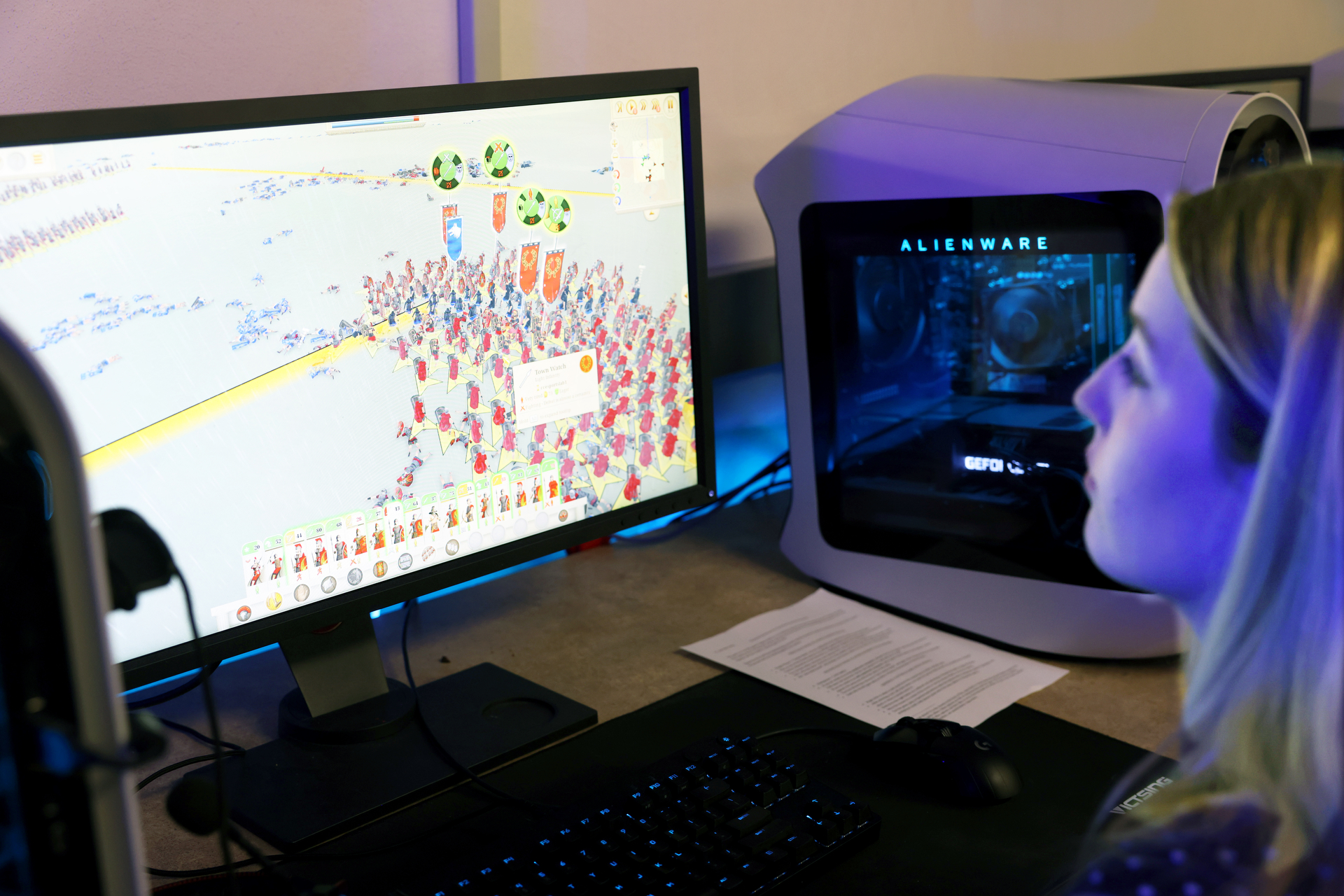
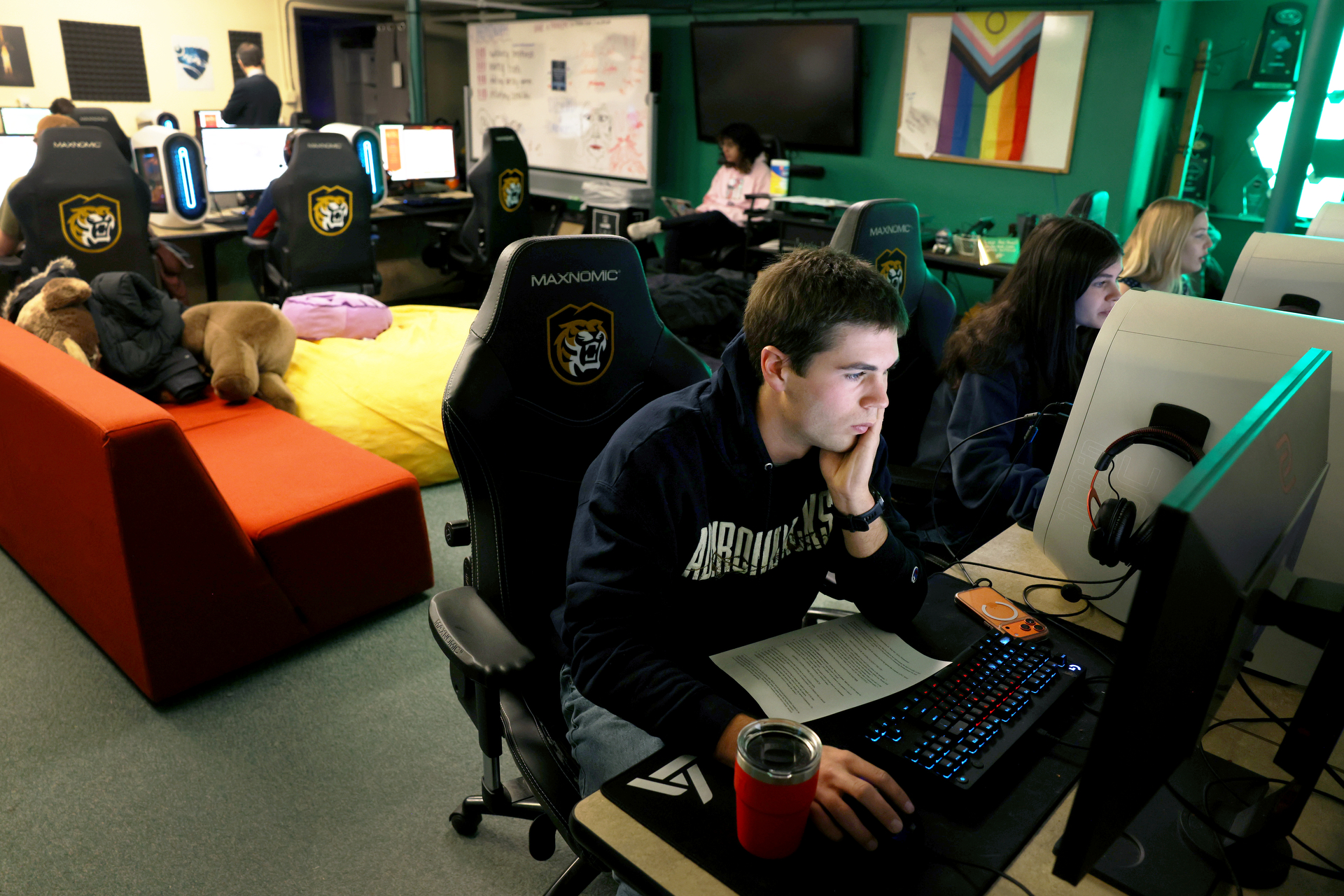
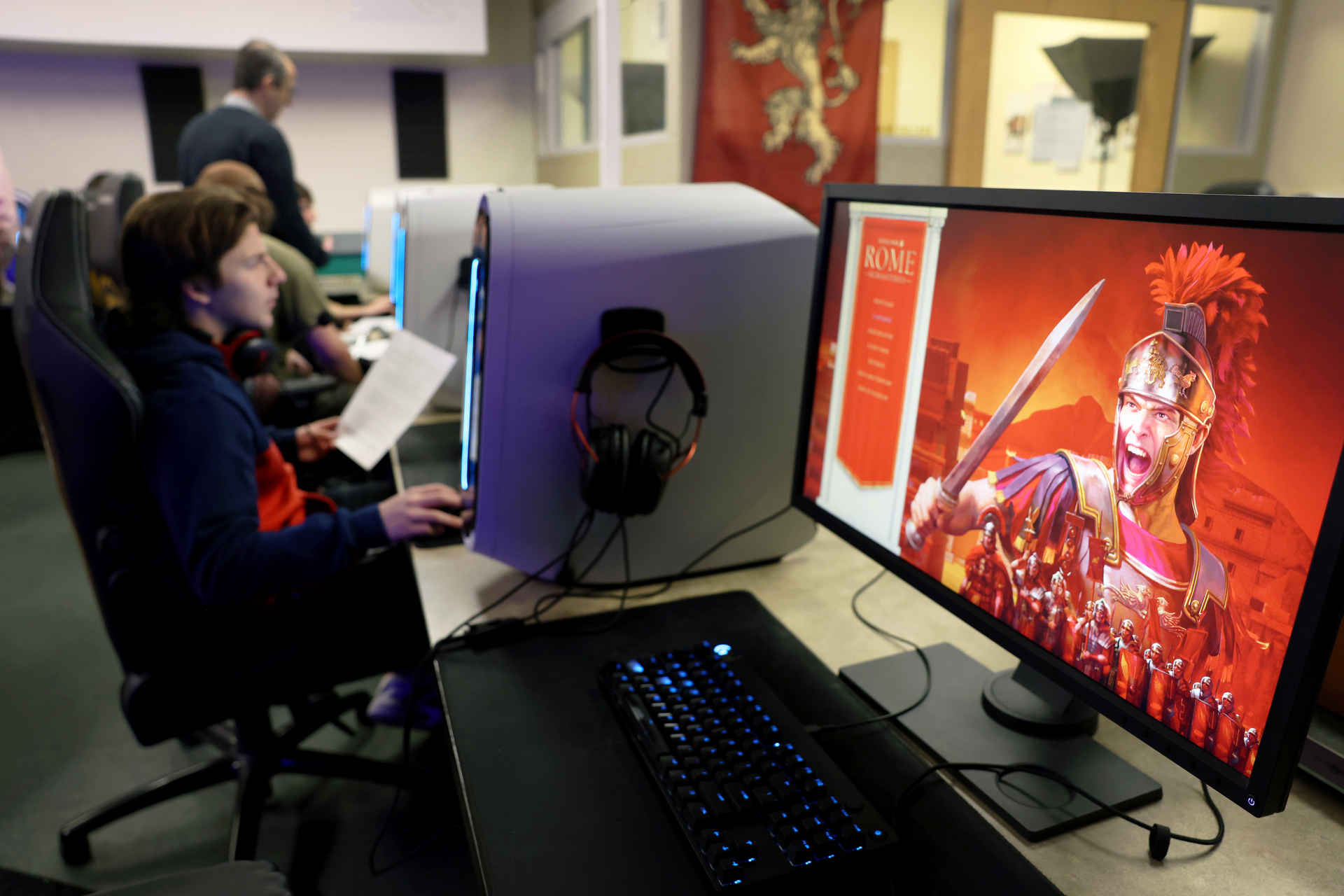
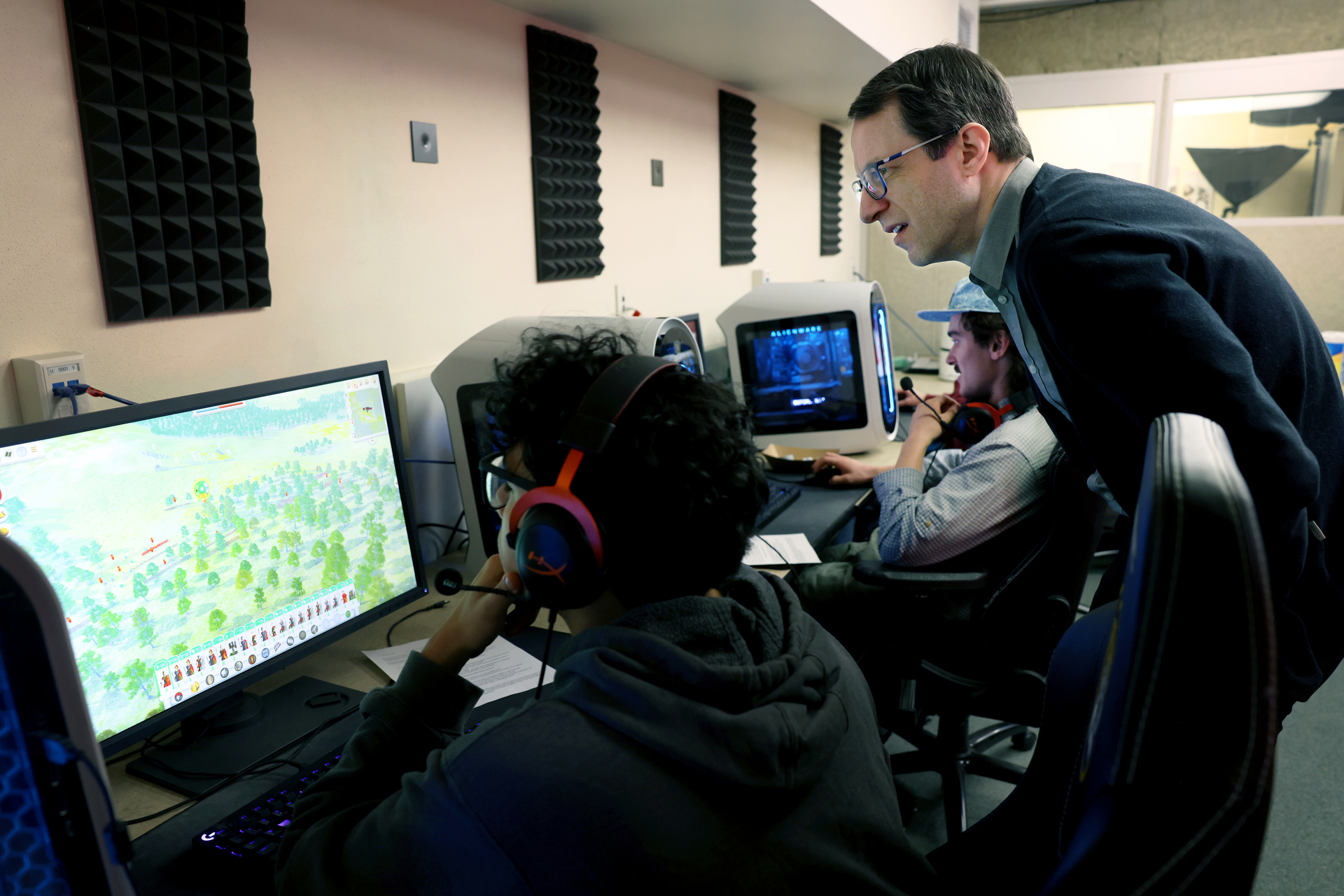
After discussions, readings, and lectures, students got to put their knowledge to the test through hands-on simulations, including a video game session in the Esports Lab.
While Buxton is not a gamer, students have told him that they have gotten interested in ancient Greece and Rome through combat video games, which is what inspired Buxton to bring these games into the classroom.
“Although now an old classic, the game I use, Total War: Rome (Remastered), is very thoughtful about its historical accuracy. It can provide a helpful visual and experiential complement to the ancient battles students read about and present on throughout the block,” Buxton says. “Just to give a simple example: it is one thing to understand in the abstract how cavalry forces aim to get around the enemy infantry's flank and quite another in gameplay to see just how much faster the horsemen start moving around your foot soldiers as you desperately try to turn these to meet their onslaught.”
Students are first given about 30 minutes to experiment with different armies and formations against an AI opponent.
“This was a great opportunity to reflect on past course content and think about which military strategies seemed to be most effective,” says Ethan Lapin ’27, a Mathematical Economics major. “I chose to style my army after Caesar, favoring troop quality over quantity, and making use of siege weaponry and the relative flexibility of the Roman military.”
Despite having grown up playing video games, Lapin says he was handily defeated by the computer.
“I realized the massive difficulty of moving troops to counter the opponent that the generals of antiquity seem to have done with such ease,” he says. “After that initial failure, I had to think about which army would be more fitting for my play style [or lack of ability].”
Students then played against each other, which really upped the stakes.
“It was fascinating to see how the knowledge I had built in class could translate to tactical prowess against a peer,” Lapin says. “I was able to successfully apply everything I knew about battlefields, cavalry, infantry, and even war elephants to dispatch the army of my classmate. Being able to direct my own pitched battle really helped me understand the [simulated] dynamics of these armies that is difficult to replicate on a whiteboard.”
After participating in the session at the Esports Lab, students worked on a written reflection, where they analyzed what the game got correct about ancient warfare and what it modified for the sake of a better game, as well as how playing the game impacted their thinking about some aspect of combat in Greece or Rome.
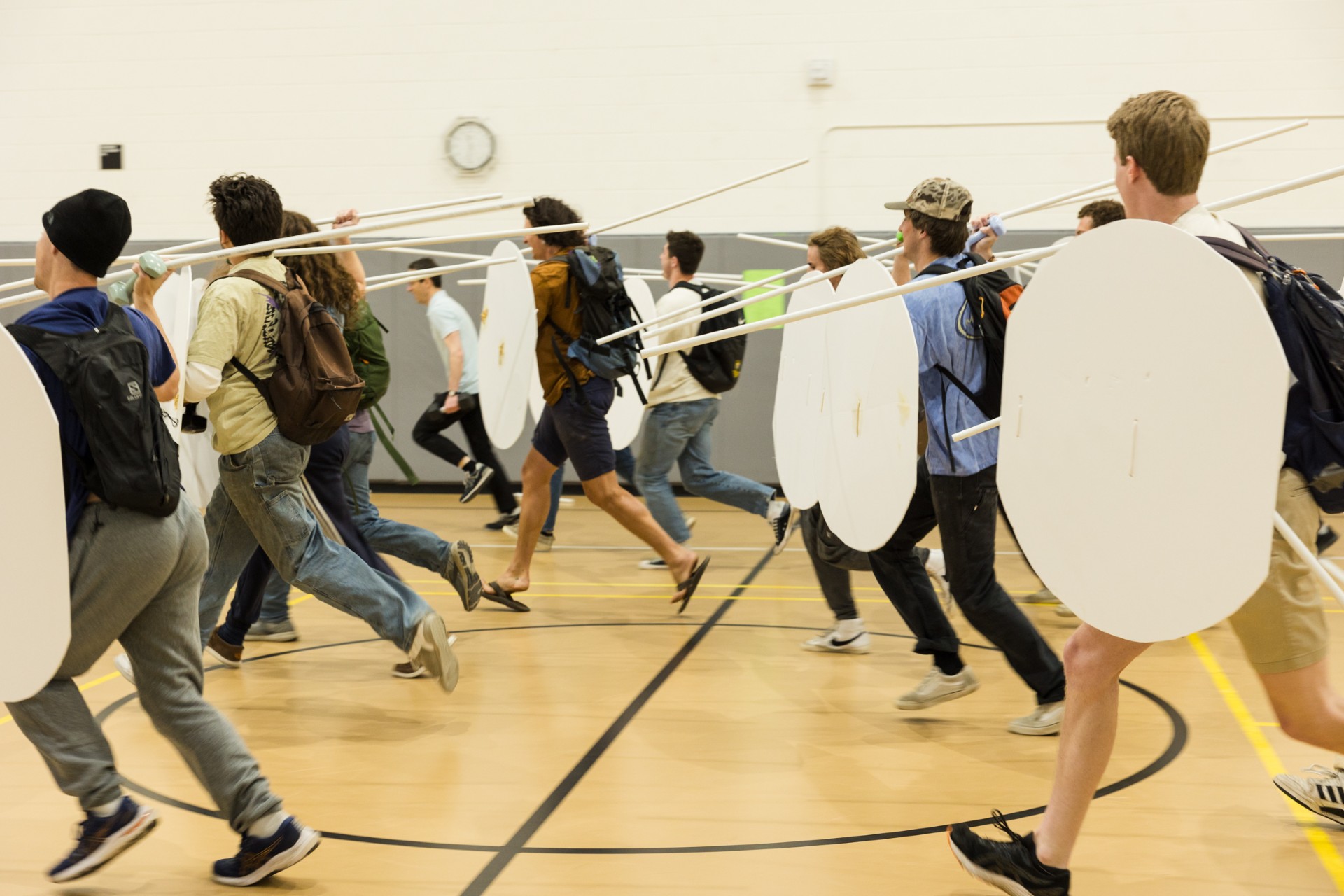
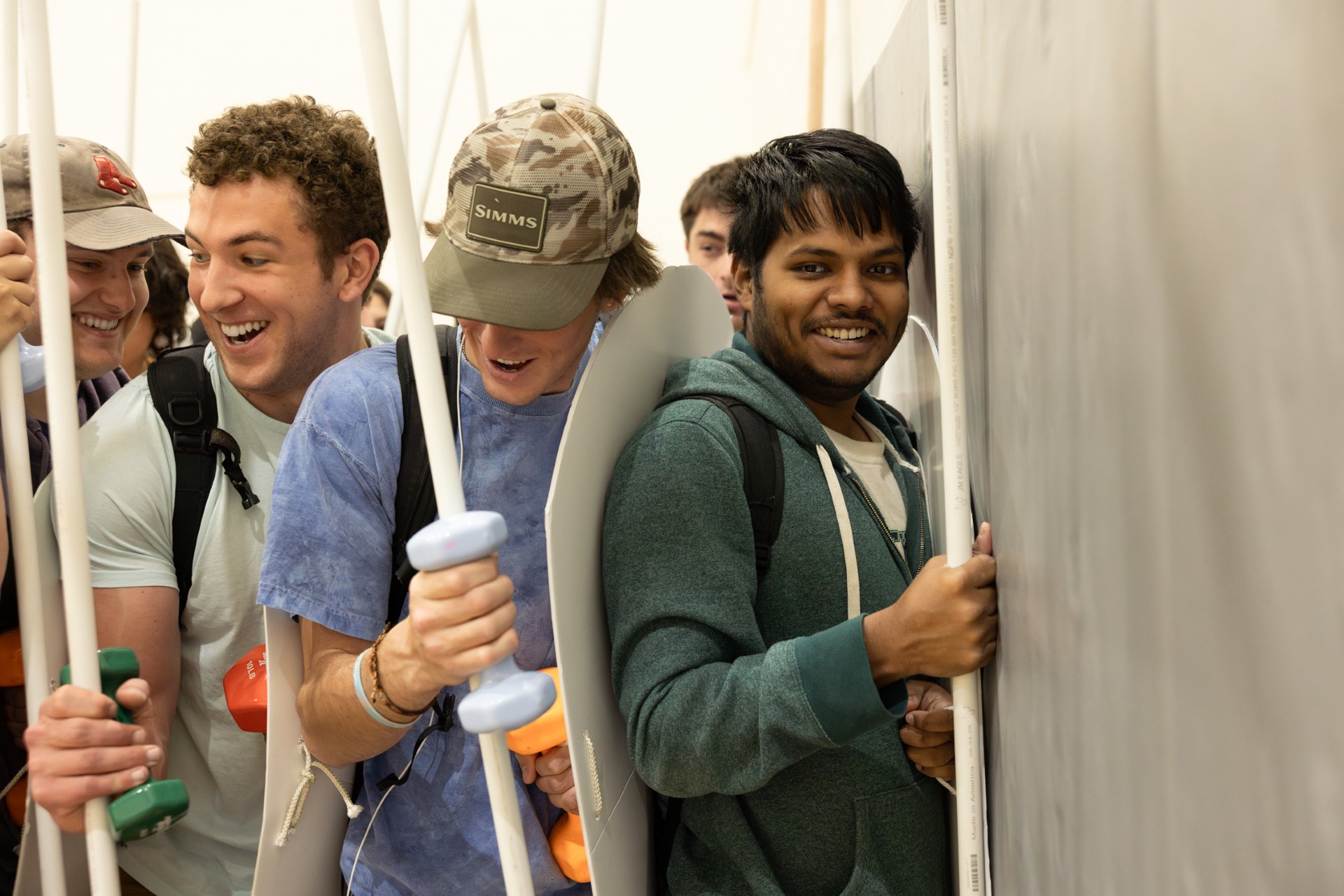
While the video game session was a major highlight for students, Buxton also used other creative ways to teach his material, including bringing students to the Fitness Center to use equipment to simulate what it was like to wield ancient Roman and Greek armor, which would often weigh over 60 pounds.
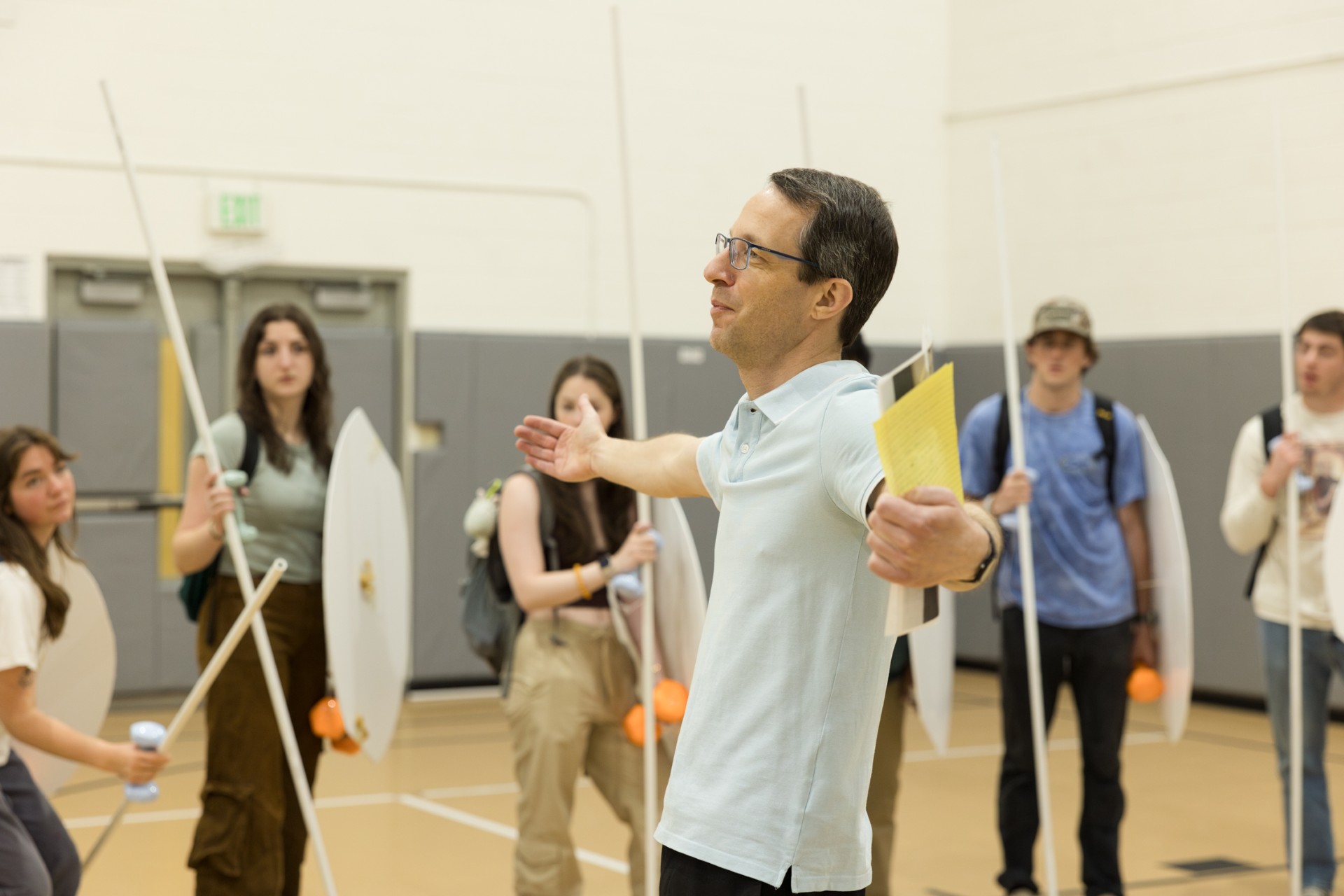
“If the Esports Lab session is about immersing students into the role of Roman generals, the Fitness Center session is about physical immersion into the experience of the common Greek soldier: the hoplite,” Buxton says.
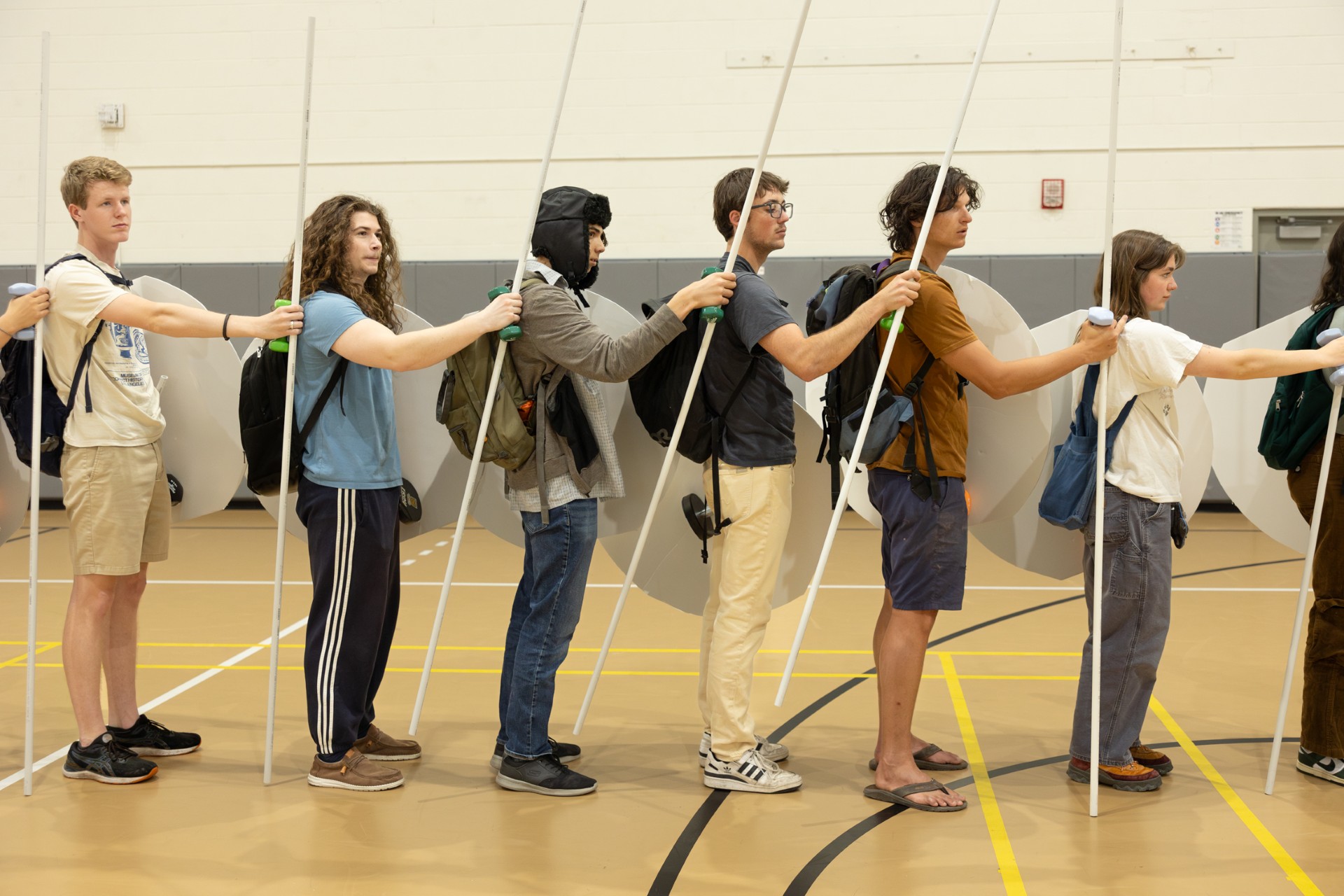
Buxton had students wear one backpack in front and one in back, as well as a helmet. He then supplied them with cardboard silhouettes of a hoplite’s shield and of his weapons, which were cut PVC pipe segments. Students then filled their backpacks, pockets, and hands with dumb bells that accurately simulate the weight of various pieces of gear, including armor, shield, spear, and sword.
“After that, we rehearse various forms of formation fighting, such as the phalanx, where each soldier's huge three-foot diameter, 15-pound round shield covered both his own left half and the right half of the man next to him, meaning one's frontside would only be wholly protected if the line stayed coherent,” Buxton explains. “Or at least that's one theory. Some scholars argue instead that once battle began, hoplites turned sideways, so the shield could then cover their entire front. We try out these various reconstructions to see which ones seem most plausible when you are actually dealing with a seven-foot pike and weighed down by 15 pounds of armor, on top of the shield your left arm is supporting.”
Buxton says there is also scholarly controversy over how heavy each piece of armor was, and whether poorer soldiers would use lighter linen or leather armor instead of metal.
“Accordingly, we try out different sets of weights to compare reconstructions.”
Students engage in armor simulation twice: first wielding the hoplite panoply from ancient Greek armor, and then on a second visit the legionary panoply from ancient Roman armor.
“After learning about each method of fighting and what it's speculated that the armies would wear, we went into the gym and simulated not only the fights, but the different methods of fighting that each scholar predicted to see what we believed was the most likely,” says Wren Cohen ’29. “It completely changed my idea of what was more plausible, and it was easy to see the flaws in each style when simulating them yourselves.”
Cohen says adding weights to the armor was the most informative part of that simulation.
“It's hard to get a good grasp on how heavy the armor really is without feeling the weights yourself, and while difficult to simulate perfectly, it was good enough to get a feel for it.”
Students agree these hands-on experiences helped solidify their understanding of the course material.
“Between readings, discussions, battle case study presentations, live reenactments in the Fitness Center, this simulation, and both analytical and creative writing assignments, I’ve been pushed to understand and think about the content in numerous ways that then gives me a deeper understanding,” Lapin says. “It is one thing to read about the influence of a cavalry charge, but it is another thing to be directing that charge yourself.”