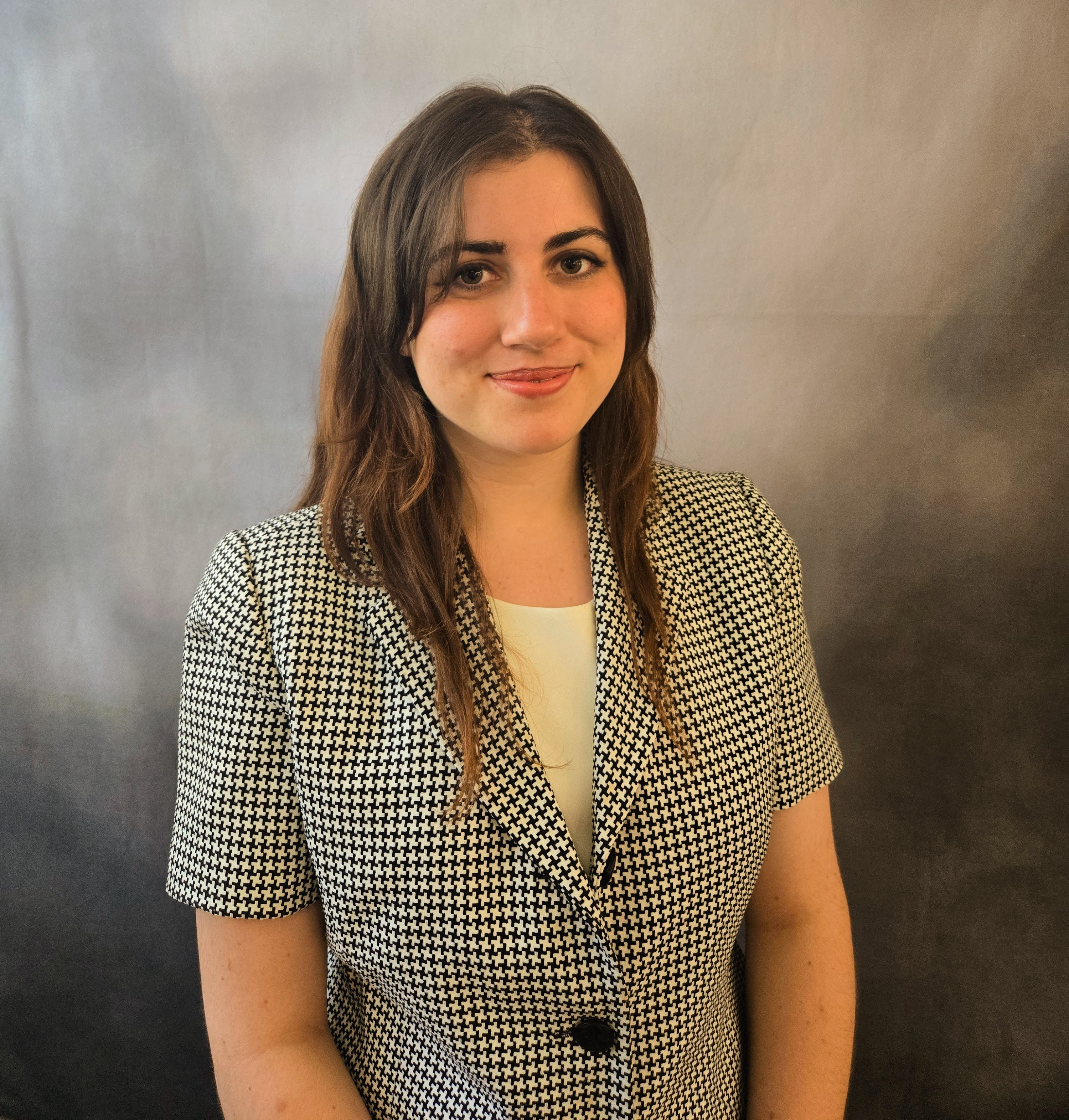
Not many college seniors can say they’ve won several state and nationwide fellowships, nor can they say they are public health advocates, actively making a difference in their communities. Charlotte Combe ’26, however, is not a typical college senior. Combe has long been passionate about harm reduction and has already made a significant difference in both the campus community and the state.
“In a world where people with substance use disorders are criminalized, demonized, and ‘invisibilized,’ harm reduction is an act of radical love and care,” says Combe, who is majoring in Sociology and minoring in Feminist and Gender Studies. “To meet people where they are, to accept their addiction and what a road to recovery looks like on their own terms, is empowering to me. The way our society treats people with substance use disorders denies them their humanity and agency. The legacy of the ‘War on Drugs’ has left its mark through the criminalization of substance use and the stigma surrounding addiction.”
"Invisibilize" is a term used frequently in sociology to describe the social process of rendering a person or group unacknowledged or disregarded.
Last year, Combe won the Campus Compact Newman Civic Fellowship for her work in harm reduction.
Combe’s passion for substance use harm reduction began in high school, when a fellow student overdosed and passed away at a gas station near their school during his lunch break.
“This work is extremely meaningful and personally rewarding because I see it as an act of mutual aid and care for my community,” Combe says. “Especially in the current political climate, where marginalized communities are facing increased violence at the hands of federal funding cuts and violent government policies, taking care of each other is key.”
During her first year on campus, Combe co-founded Substance Use Harm Reduction (SUHR@CC), an on-campus student organization aimed at preventing overdoses and educating students on harm reduction.
“Although addiction impacts people of all demographics and backgrounds, factors like race, sexuality, and class impact how an individual is treated during active addiction and how they are able to access recovery resources,” says Combe, who is also a Boettcher Scholar and on the President’s Council. “Truly equitable solutions to this crisis must acknowledge the inadequacies of policing and punishing addiction, and, as a result, should not be punitive or at all reliant on our carceral systems.”
As part of SUHR@CC, club members pack thousands of wound care and overdose prevention kits for Love Alive, a community-based non-profit created by CC alumni in response to the large overdose rates in El Paso County. SUHR@CC also collaborated with the Colorado Springs Mutual Aid Union to build tent heaters for unhoused community members. Additionally, Combe partners with different offices on campus to train students on overdose prevention.
The Collegiate Recovery Leadership Academy (CRLA) is funded through Safe Project, a national non-profit seeking to end fatal drug overdoses. It is a year-long fellowship for students interested in the intersection of addiction and mental health recovery, and leadership and advocacy.
Combe is one of 45 students from around the country to earn this fellowship, where participants will receive membership and support for their projects that promote harm reduction and recovery resources.
“For me, this fellowship provides a source of community and mentorship,” Combe says. “Right now, federal funding has been cut from many public health governmental agencies and non-profits. It is a disheartening time to be organizing for overdose prevention when programs that we know save lives are being decimated. This fellowship will help me foster a supportive network and serve as a source of hope and resistance. I am excited to connect with the other CRLA fellows in D.C. and eager to learn from the various mentors in the program.”
Combe’s project is looking to educate the CC student body and surrounding community about harm reduction through information sessions at Tutt Library. A few years ago, Combe helped plan and facilitate a roundtable discussion on harm reduction with SUHR@CC, Love Alive, and several faculty members.
“This discussion was fruitful as we discussed the context of substance use in Colorado Springs and what prevention, harm reduction, and recovery work look like here,” Combe says. “I would love to continue a roundtable series inviting different community and campus partners to educate the student body on topics related to the criminalization of people who use drugs, the social stigma of substance use, and the legacy of D.A.R.E. abstinence-based education, how to support someone with a substance use disorder, and local substance use disorder recovery resources in Colorado Springs.”
Combe also works as a peer health educator at the Wellness Resource Center (WRC) on campus, where she provides opioid overdose prevention and harm reduction training once a semester, open to the campus community.
Before one of these sessions, a representative from the Safe Project visited the WRC to train Combe and her fellow peer health educators on how to give the opioid overdose prevention training. During this, he told the group about the Collegiate Recovery Leadership Academy, and Combe immediately knew that she would apply.
“A special shoutout to Sally Goodquist, my supervisor at the Wellness Resource Center, for helping me with the application,” Combe says.
Combe says that CC has given her many opportunities to expand her interest in and passion for harm reduction.
In January 2024, Combe took Community Based Praxis Half Block course, where students partnered with and conducted hands-on work for local organizations and agencies. Comb and her partner Maren Snow ’25 completed a project for the Colorado Judicial Branch Recovery Court, where they analyzed demographics such as race, gender, and age to determine who is and who isn’t successful in the program. The program requires participants in active addiction to go through an intensive three-year substance use disorder treatment program, as well as probation, to have their criminal charges expunged.
Combe says that her research helped her contextualize the criminalization of substance use in El Paso County, as well as see the different barriers people face when receiving treatment for their substance use disorders.
As part of the CRLA fellowship, Combe will be mentored in implementing her harm reduction project on campus, as well as receive advocacy training, attend in-person events, and be part of a cohort of public health advocates around the country. Combe will attend the Collegiate Recovery Leadership Summit in Washington, D.C., this month, as well as the Leadership Retreat in June 2026.
After graduating, Combe is interested in public health law and potentially pursuing a dual J.D. and Master’s in Public Health program. “The CRLA will provide me with a vast network of dedicated individuals who are also invested in harm reduction and overdose prevention work.”