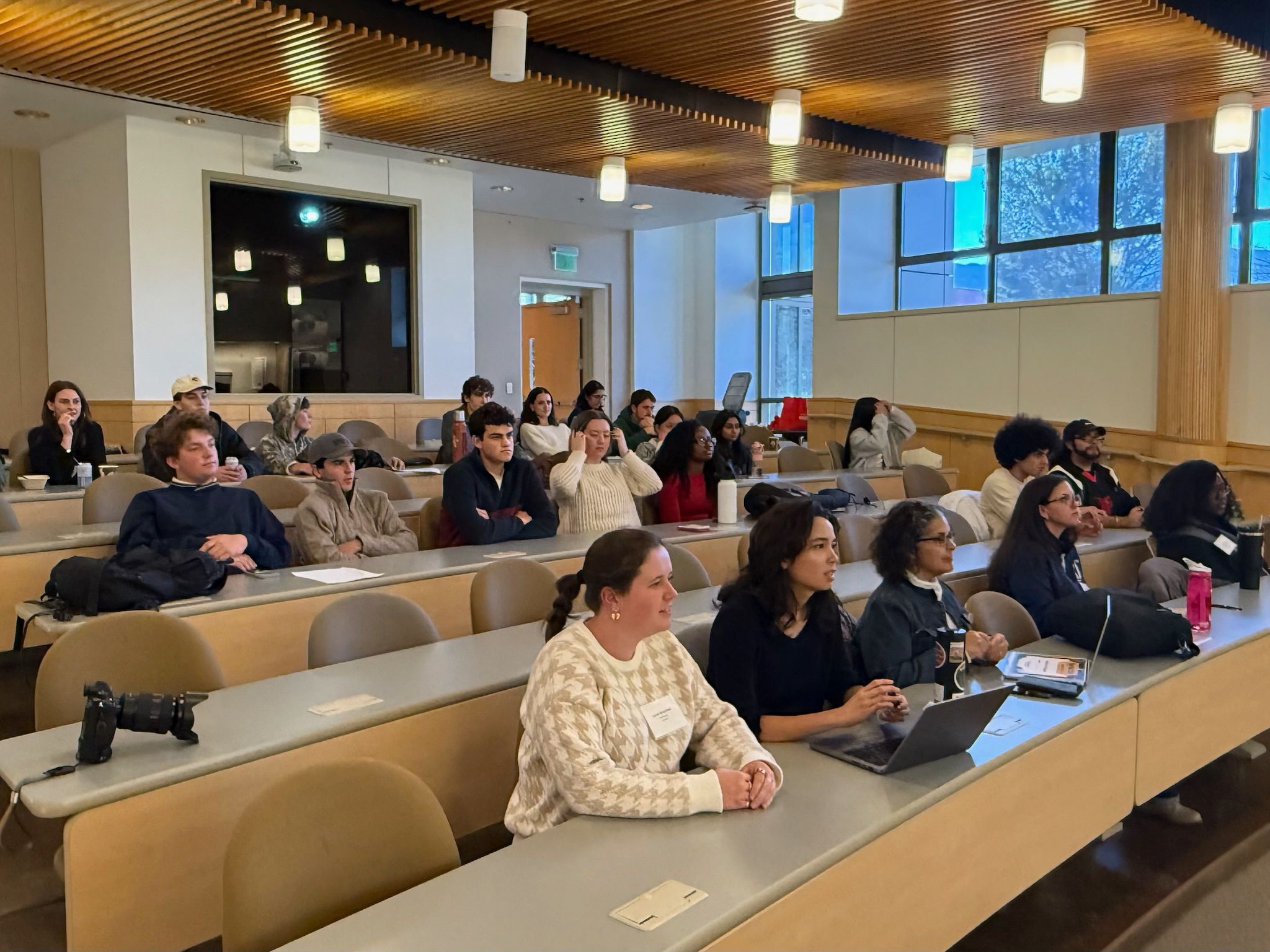
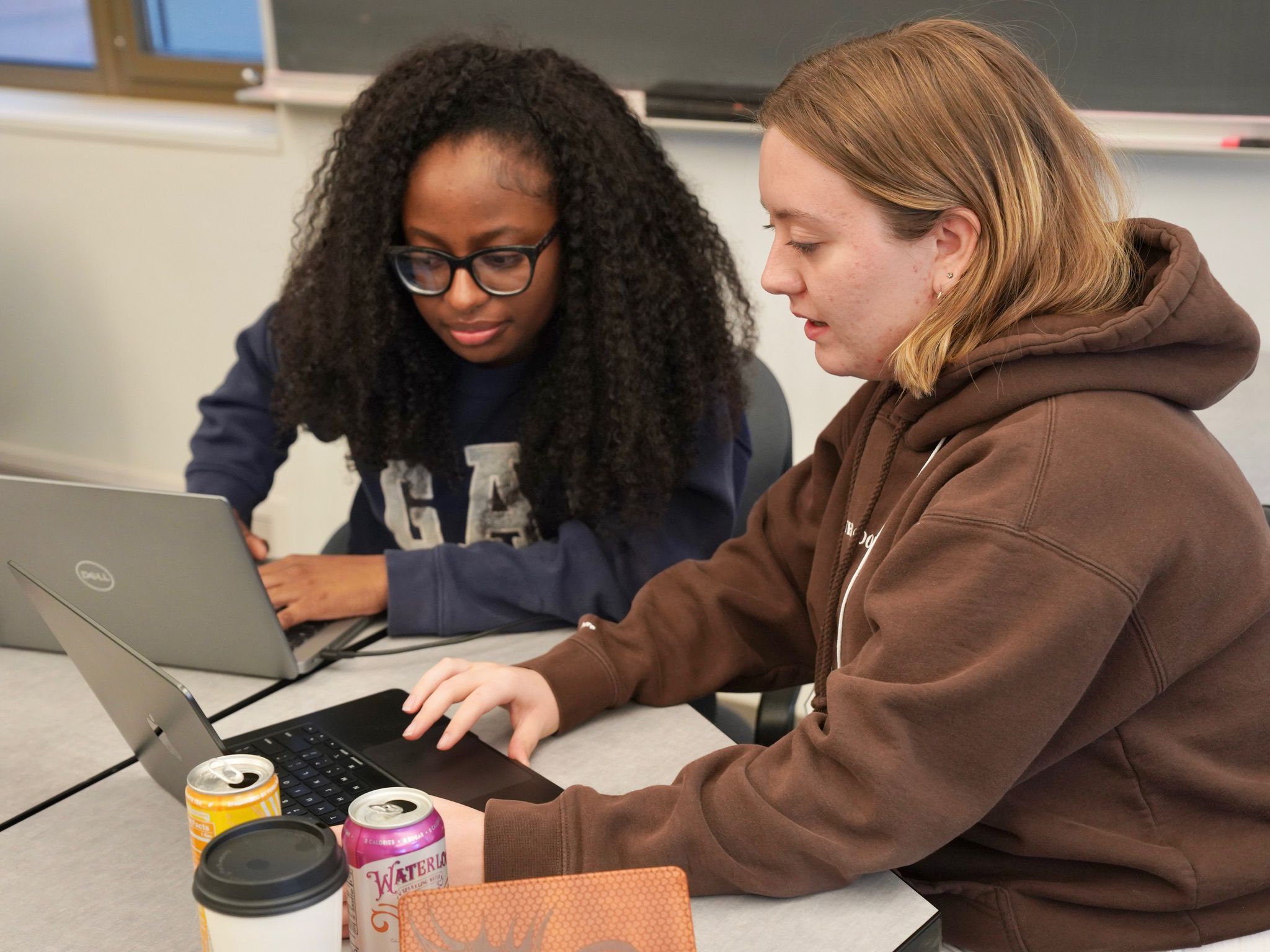
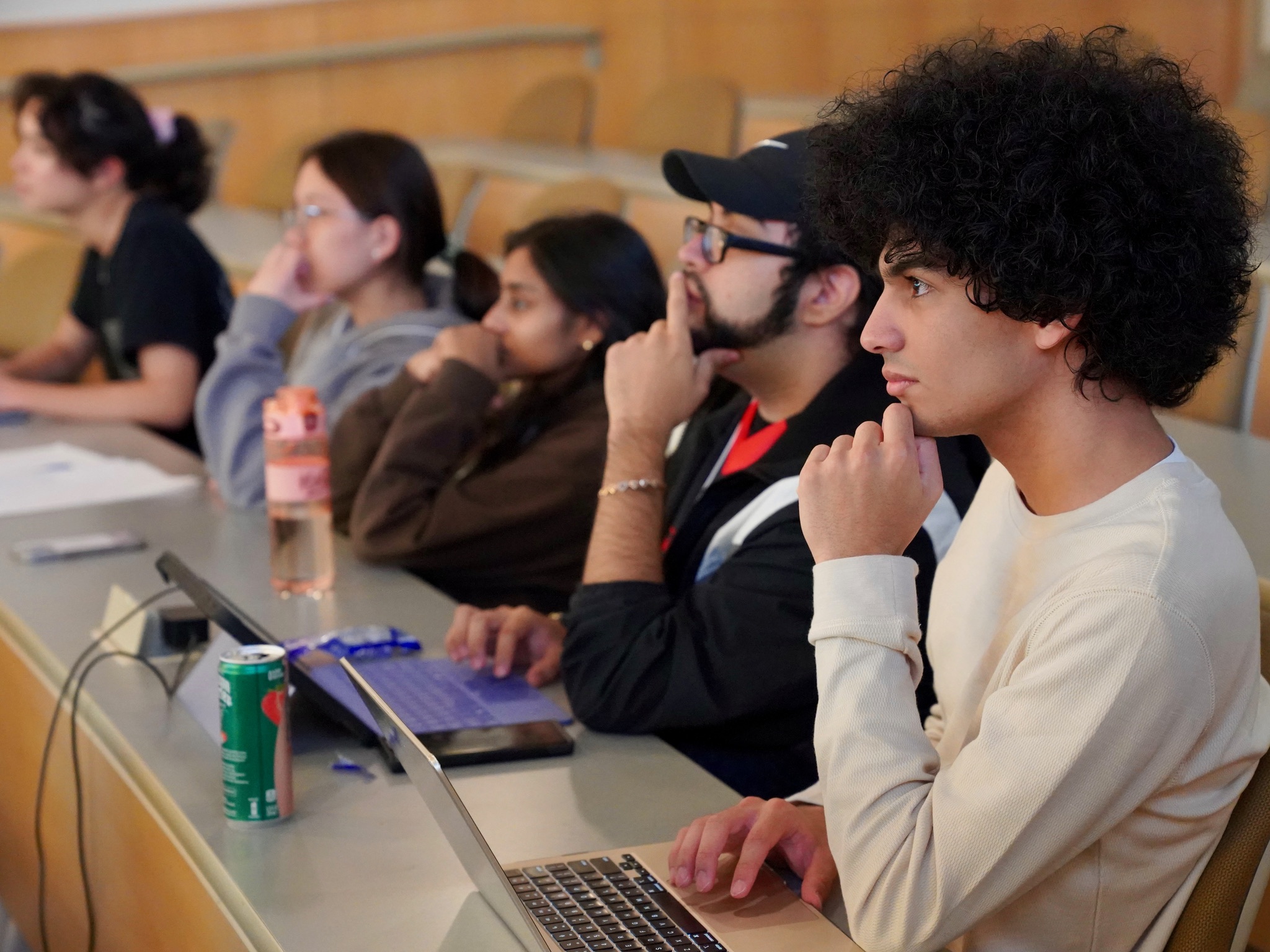
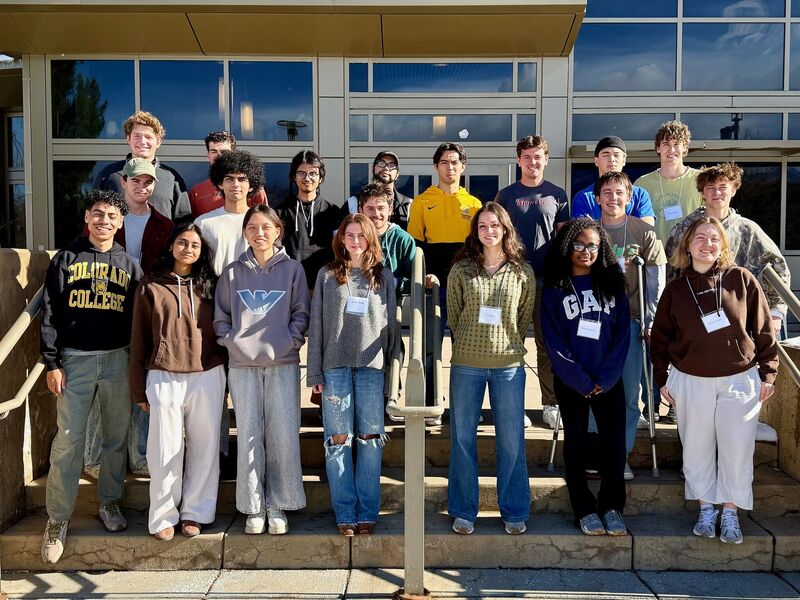
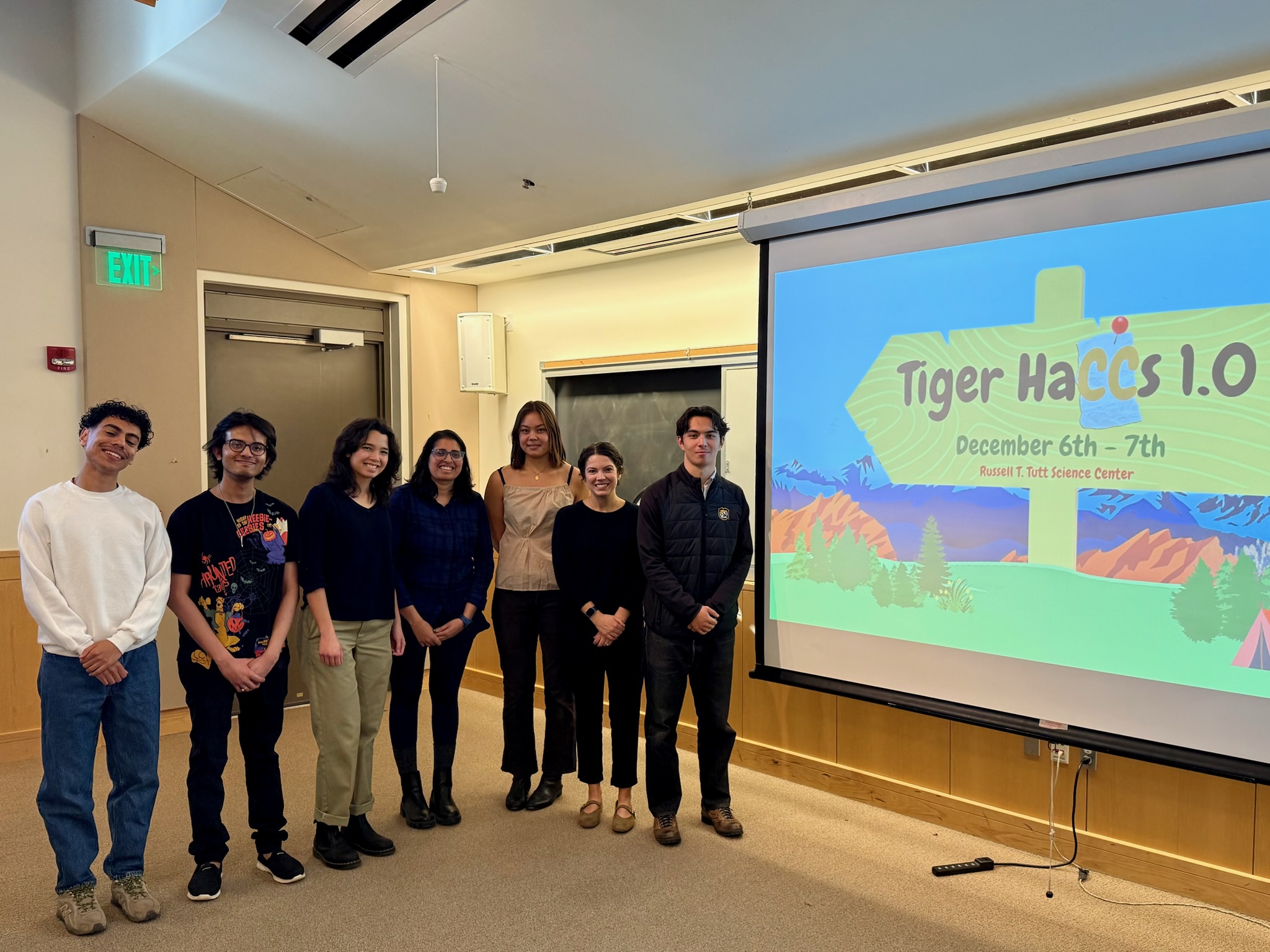
More than 20 students spent 24 hours straight participating in a hackathon focused on community revitalization earlier this month, working directly with the City of Colorado Springs to solve problems facing the local community.
The Coding Club has worked towards Tiger HaCCs 1.0, the first annual Tiger HaCCs (Hacks) Hackathon, since last year. While this was the first year CC hosted a 24-hour hackathon, CC students have been traveling to collegiate hackathons for several years. In 2023, four Computer Science majors won first place at the Harvard Hackathon.
Coding Club Co-President Ronan Takizawa ’26, one of the winning students at the Harvard Hackathon, said working with his peers on technical projects at hackathons was an incredible opportunity that he wanted to share with fellow CC students. This experience, along with the success CC students had at other hackathons, inspired Takizawa and fellow Coding Club Co-Presidents Maddy Spark ’26, Marcos Arnold ’27, and Parthib Paul ’28 to establish CC’s first Tiger HaCCs Hackathon.
“The idea for this 24-hour hackathon came from seeing how hackathons at other universities foster interdisciplinary collaboration, creativity, and hands-on problem-solving,” Paul says. “We wanted to bring that same experience to CC while grounding it in issues relevant to our own city. Choosing community revitalization as the theme allowed students to engage with real stakeholders and think beyond purely technical problems.”
The Coding Club leadership then worked with Career Consultant Emma Fairburn, Assistant Professor of Computer Science and Mathematics Dr. Varsha Koushik, and Isabelle Wagenvoord ’25, to collaboratively bring the event to life.
“We intentionally designed Tiger HaCCs to be more collaborative than competitive, emphasizing peer learning, mentorship from judges through workshops and office hours, and meaningful engagement with the Colorado Springs community,” Arnold says.
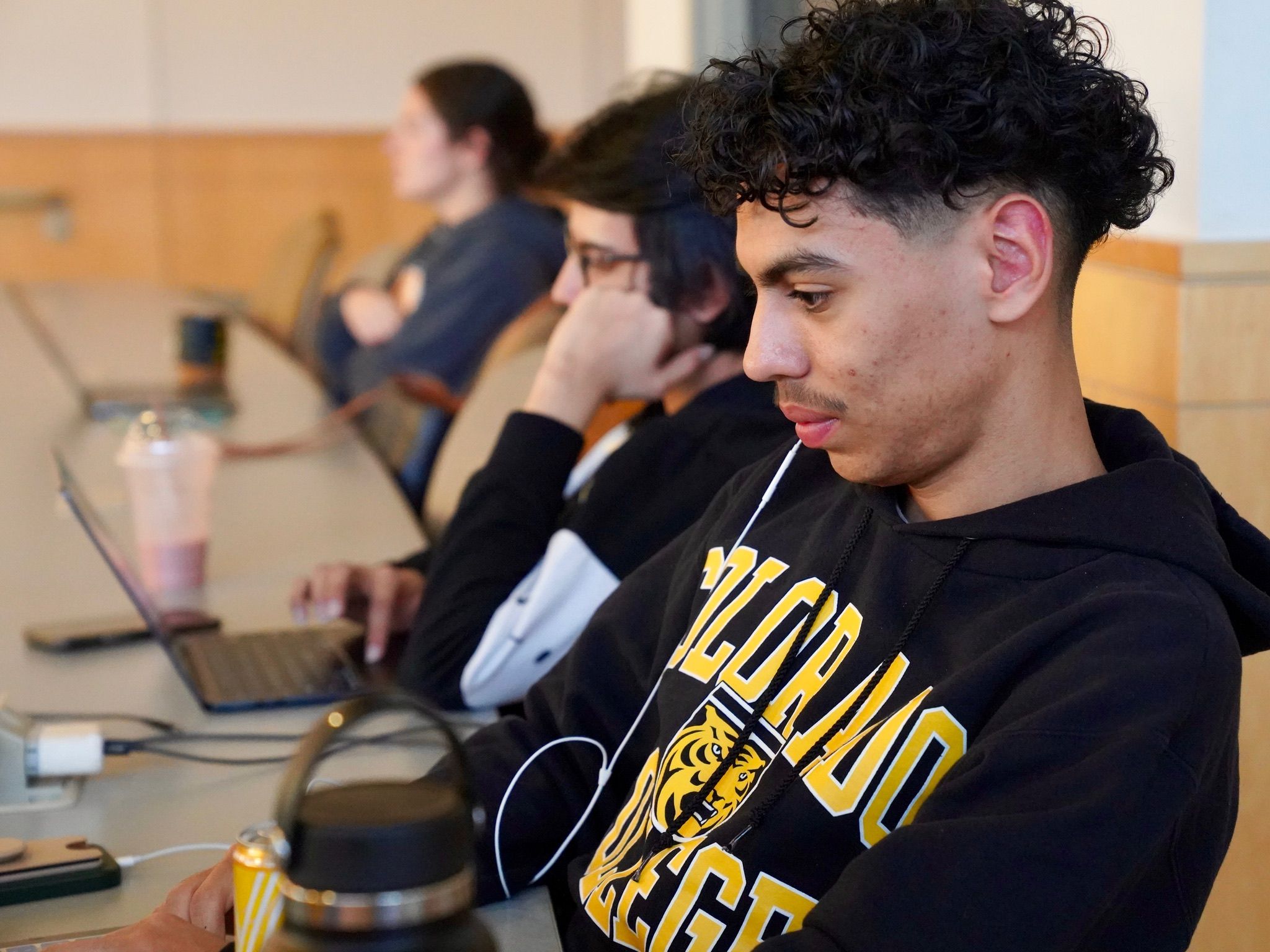
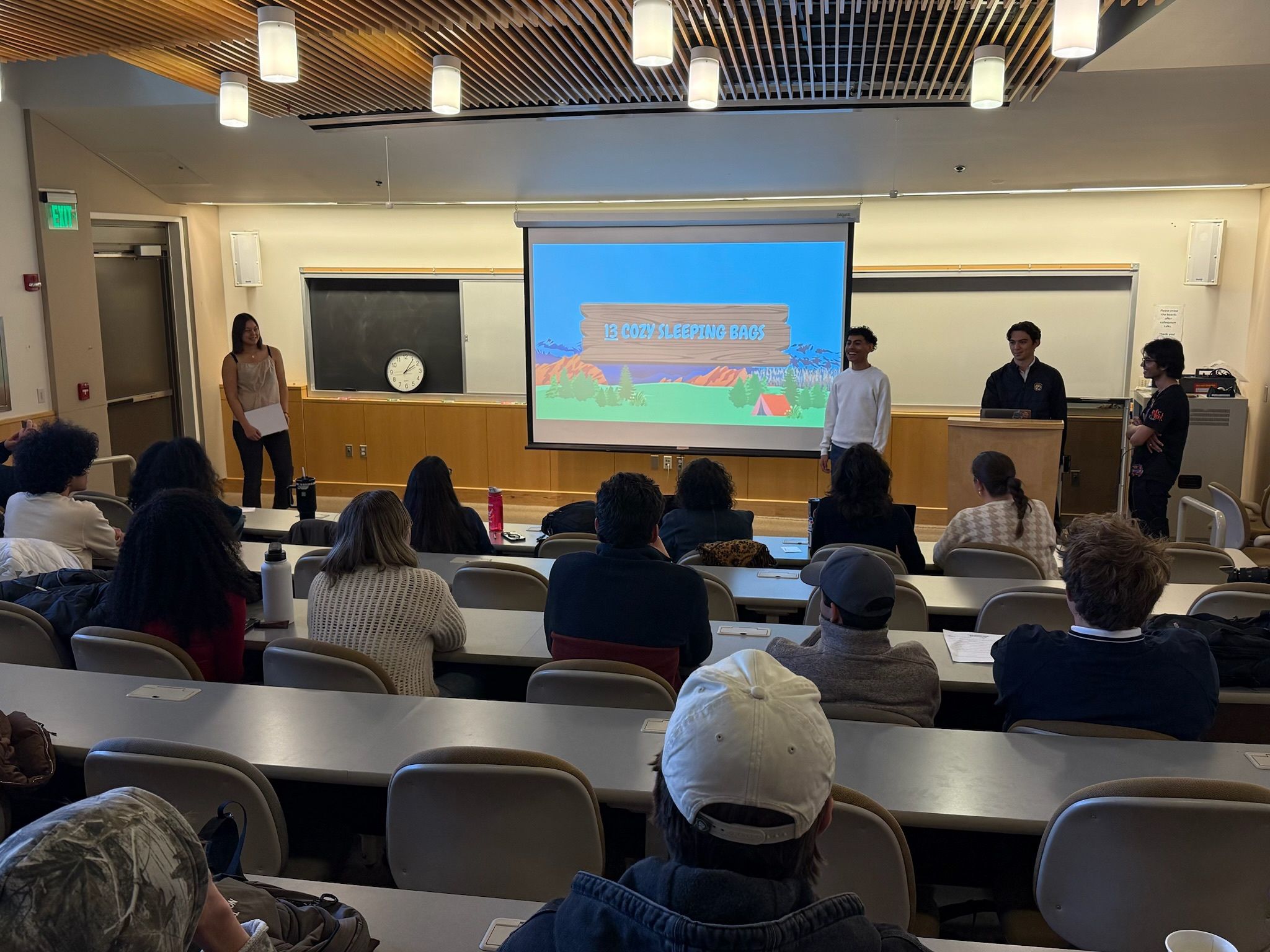
During a hackathon, students work in teams to create a technical project to solve a real-world problem. This was a true community-wide collaboration, where CC and the City of Colorado Springs worked together to solve real problems the community faces. Tiger HaCCs 1.0 participants divided themselves into six groups and designed a solution surrounding community revitalization.
“As our world, especially our cities and communities, become more connected and influenced by technology, it's important for us to consider ways to support and help each other within our communities,” Koushik says regarding the community revitalization topic, which the city picked based on its 2025 Strategic Doing Actions.
The time limit for hackathons can vary but usually range between 24 and 72 hours, with Tiger HaCCs 1.0 lasting from 11 a.m. on Dec. 6 to 11 a.m. on Dec. 7.
“This event came naturally to students, thanks to the Block Plan’s condensed schedule, which encourages deep learning, focus, and exploration,” Arnold says. “At one point, I even had to explain to Campus Safety at 4 a.m. that the people still in the building were just students fully immersed in their projects, prototyping solutions for our Community Revitalization theme.”
Paul says the most exciting part of the event was that they had participants from eight different majors, which reflected the organizing team’s goal of making the hackathon accessible to all students.
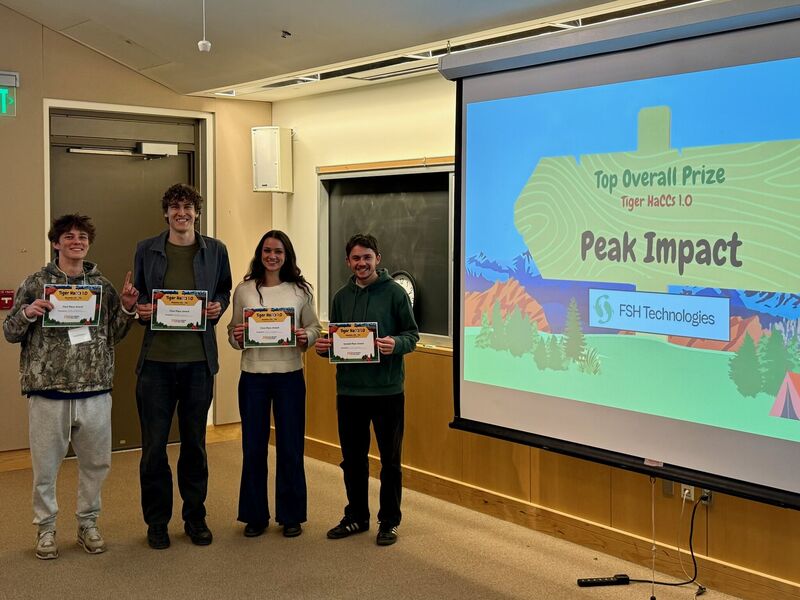
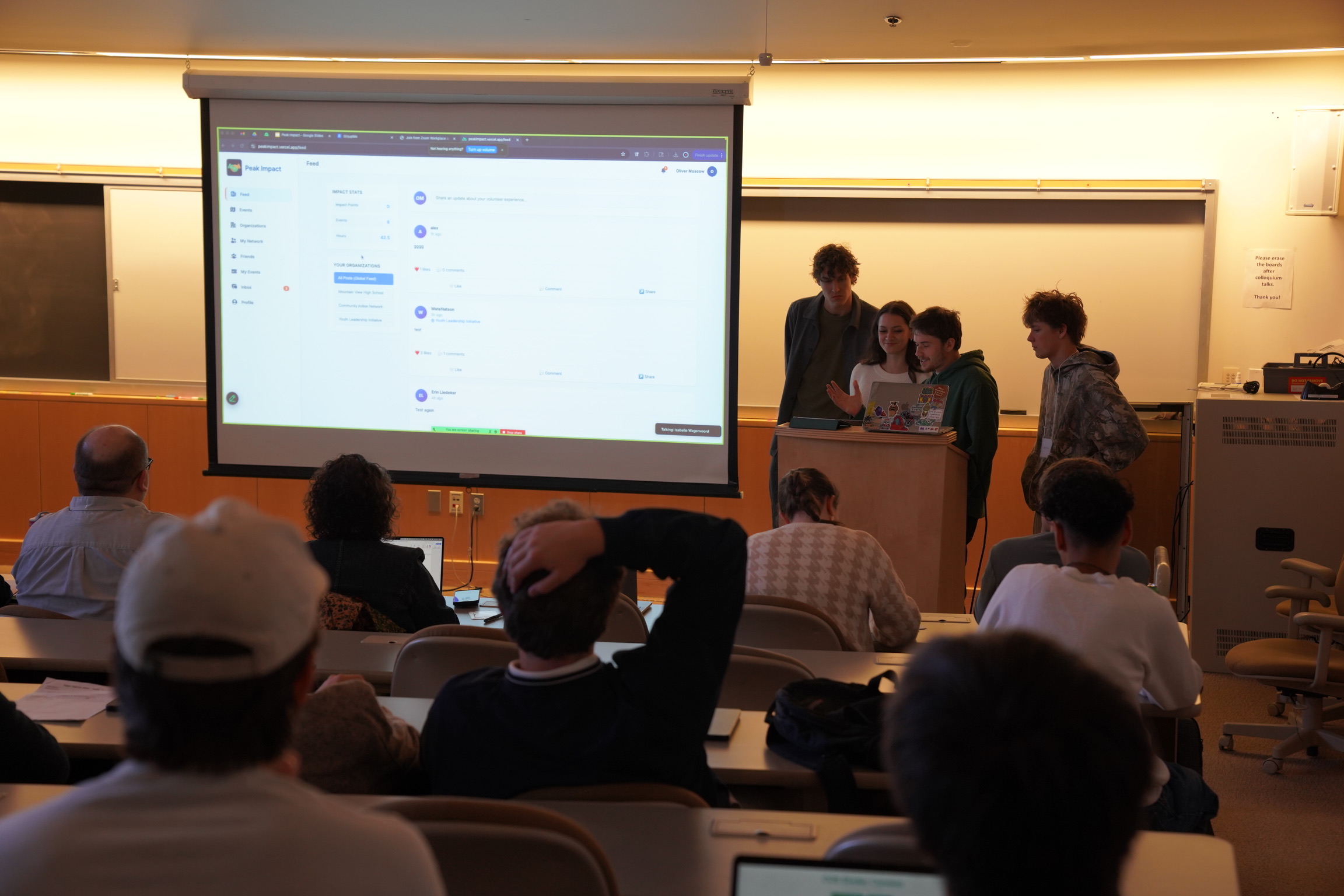
Owen McGann ’26, Erin Liedeker ’26, Nate Watson ’26, and Oliver Moscow ’26 won first place for their project on Peak Impact, where the students created a working volunteering social media platform that matches volunteers with activities using gamified components.
“We chose this project because community engagement is something we all care about, and we noticed how fragmented and manual the volunteer process still is,” McGann says. “The idea came together pretty organically once we started talking about barriers to volunteering and how tech could lower them.”
Moscow had never done a hackathon before but had seen many videos about it and wanted to try it. “I wanted to see what I was capable of and build my skills as a programmer, especially in a team environment like that where everyone needs to be able to compromise on ideas, delegate work, and help each other troubleshoot bugs.”
Watson says he learned how important it is to fully flesh out the design of a project before writing any code.
“There are so many moving parts that if you don’t begin coding with a complete idea on the chalkboard, you are going to create a lot more work for yourself,” Watson says.
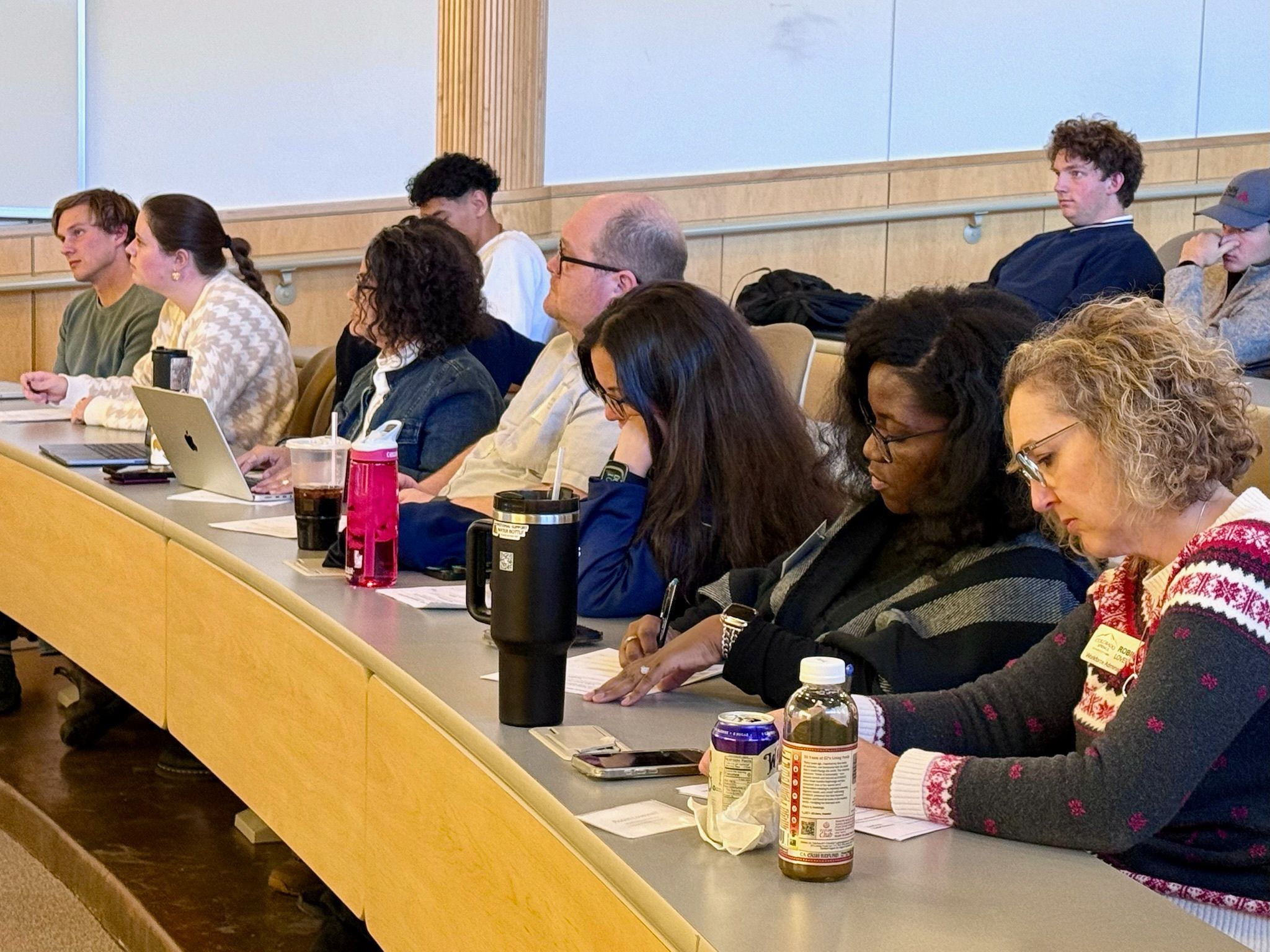
Business and Economics faculty member Celeste Diaz Ferraro, two representatives from Colorado Springs, Lizzie Blaschke ’24, Board of Trustee member Lilly Chen ’19, and two employees from Exponential Impact served as judges for the event.
Chen says she likes mentoring student hackathons because it energizes the local civic movement.
“While cutting-edge technology is always available to private industries and national security, that same innovation is missing for our everyday lives,” Chen says. “Getting students excited about the things that impact them every day, from local election voting to zoning laws that impact housing prices, is really important for developing a more engaged resident.”
Chen appreciated the community revitalization topic because when you build for your local community, you get to see the impact immediately.
“For example, I built the software that runs the City of Philadelphia’s free small business tax prep program,” says Chen, CEO and co-founder of FSH Technologies, a venture-backed Artificial Intelligence (AI)-native company building public digital infrastructure. “The day we launched, I had several friends reach out to me and tell me that this app is a massive deal for them. Thousands of small businesses in my city will get free tax prep because of my software. That’s community revitalization at the core.”
After thinking about ways to make community involvement more accessible, Evelyn Cunneen ’28 and Mary-Kate Laibhen ’28 built PerksCOS, a universal rewards program designed to support and incentivize engagement with local small businesses.
“We wanted to create something practical that could help people discover opportunities, participate more easily, and feel more connected to their community,” Laibhen says.
Cunneen learned a lot about how to structure an application, as well as how to delegate feature implementations while working in a team.
"We went from a blank slate in hour one to a fully functional platform by hour twenty-four, complete with business management portals, user dashboards, basic customer analytics, and more,” Cunneen says.
Ryan Enriquez ’27, Joshuah Gomez ’28, Passang Tenzin ’29, and Shreya Majumder ’29 placed third for their website that takes a dynamic agenda PDF from the city website and based on a person’s location and interests, sends him or her an informative email after each town hall meeting to increase civic digest and engagement.
“The interdisciplinary aspect of this hackathon was particularly powerful,” says Enriquez, who explains that some of his groupmates didn’t have much experience with coding, which may initially seem like a disadvantage, but actually ended up being a strength.
“Everyone came from different backgrounds and that provided quite a bit of insight into things we should consider, how to design certain elements, and other vital components for a program that is meant to help everyone,” emphasizes Enriquez. “Diverse backgrounds, disciplines, and fields ensure that we consider as many people as possible while building something.”