Linguistic Anthropology
Linguistic Anthropology recognizes language as a critical form of social action and focuses on the relationship between language, culture, and society. Ethnography is central to research in this subfield. Students in linguistic anthropology courses learn a variety of research methods including participant observation, interviewing, narrative analysis, and critical discourse analysis. They also learn about the biological and structural aspects of language as relevant to social life. Linguistic anthropology classes in our department place a special focus on cognition, sociopolitical beliefs and actions, media communication, the role of popular culture in shaping social life, the role of discourse in social movement, poetics, ethnomusicology, Indigenous lifeways, social identities, discrimination, settler colonialism, and racism.
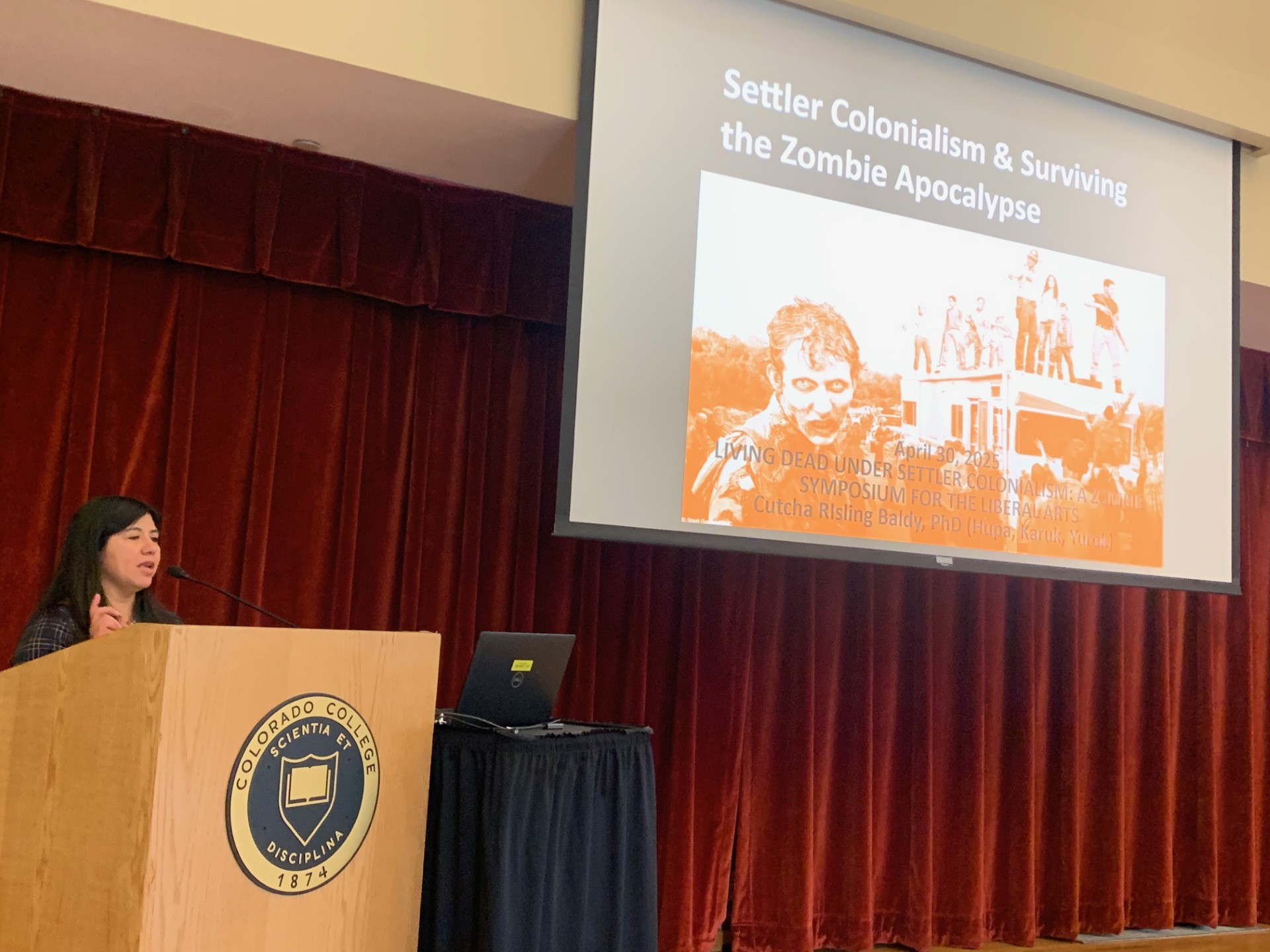
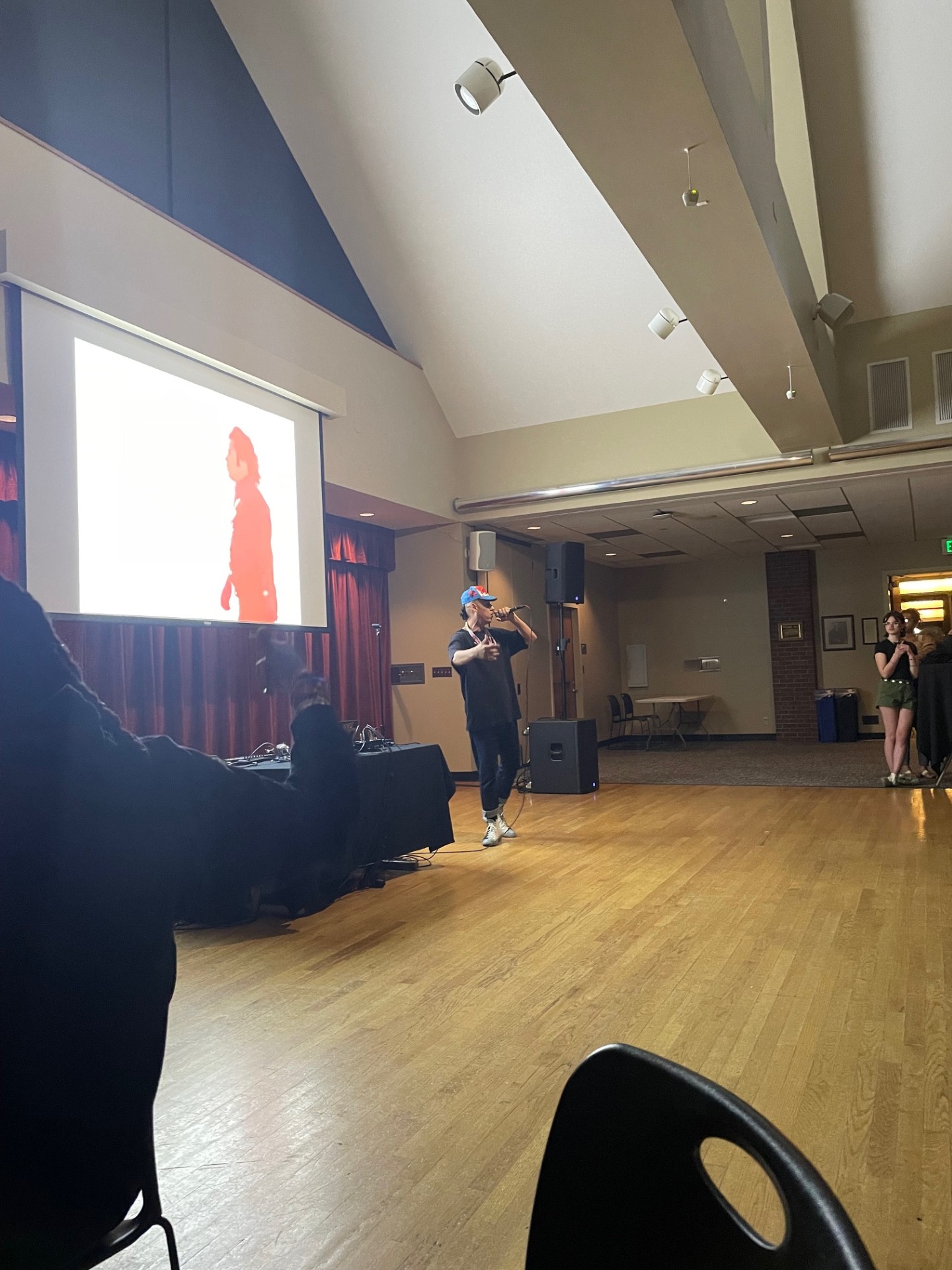
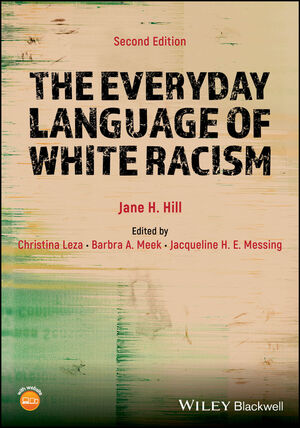
Our linguistic anthropology course events and student works contribute to our department’s in-person and virtual Language of Racism Symposium as an ongoing antiracist project.
Students with a strong interest in linguistic anthropology are also often interested in the all-college thematic minor in Linguistics, advised by our department’s linguistic anthropology professor Christina Leza.
Additional information about linguistic anthropology can be found at the Society for Linguistic Anthropology (SLA) website including SLA social justice initiatives.
Courses
Recent Anthropology Senior Capstone projects produced by students with a strong focus on linguistic anthropology include:
A Diachronic Look at the Linguistic Landscape of San Luis, CO
Sibling Relationships in the Antigone: Love, Blood, and the Reader
The Language and Linguistics of Donald Trump : Condoning and Promoting Rape Culture Through Words (Winner of the Cusick Award for Best Student Paper in Anthropology)
Maya Q'anjob'al or Akateko? Conversations on the Continuity of Maya Languages
show all / hide all
In Action