Possibility Books
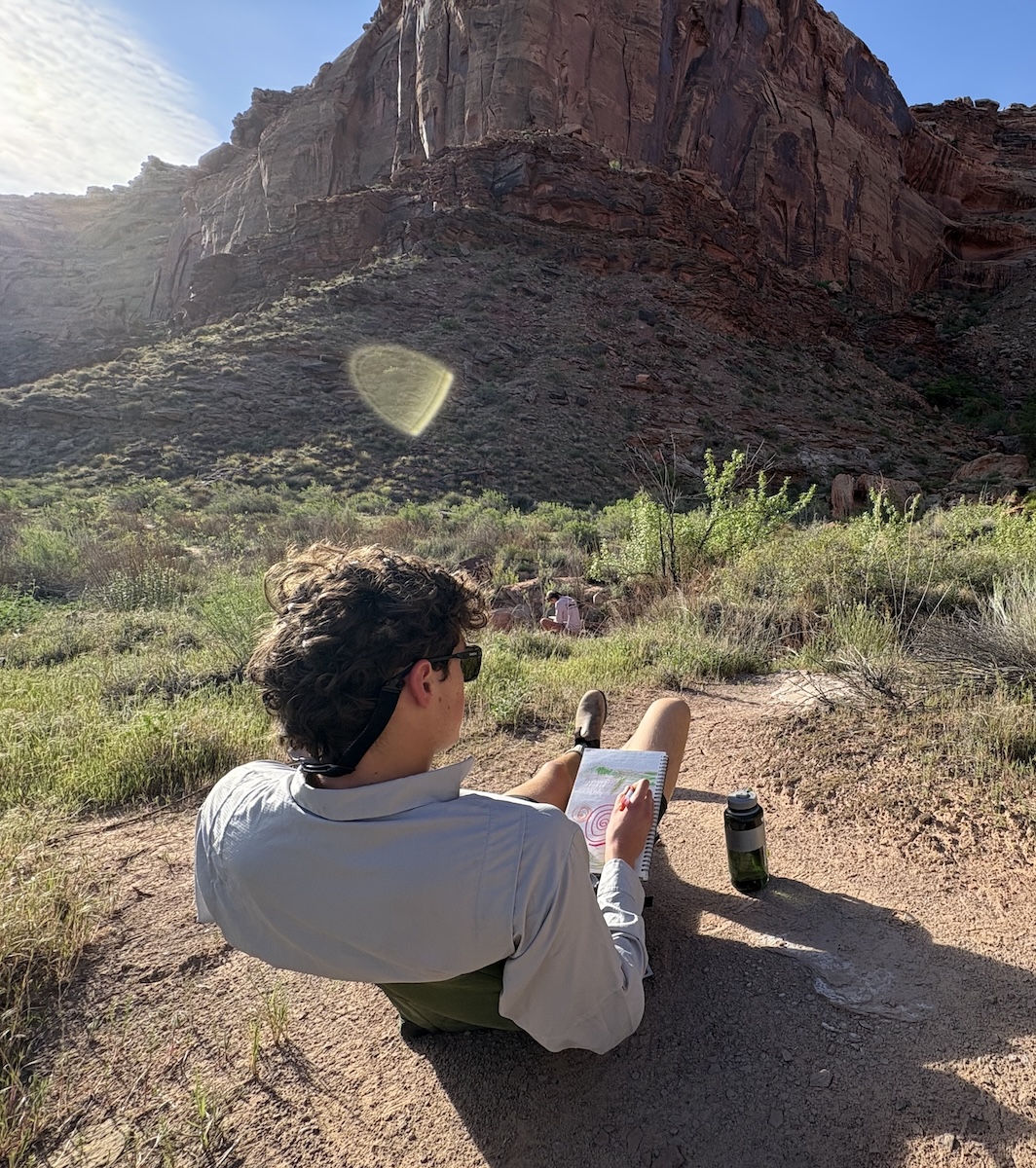
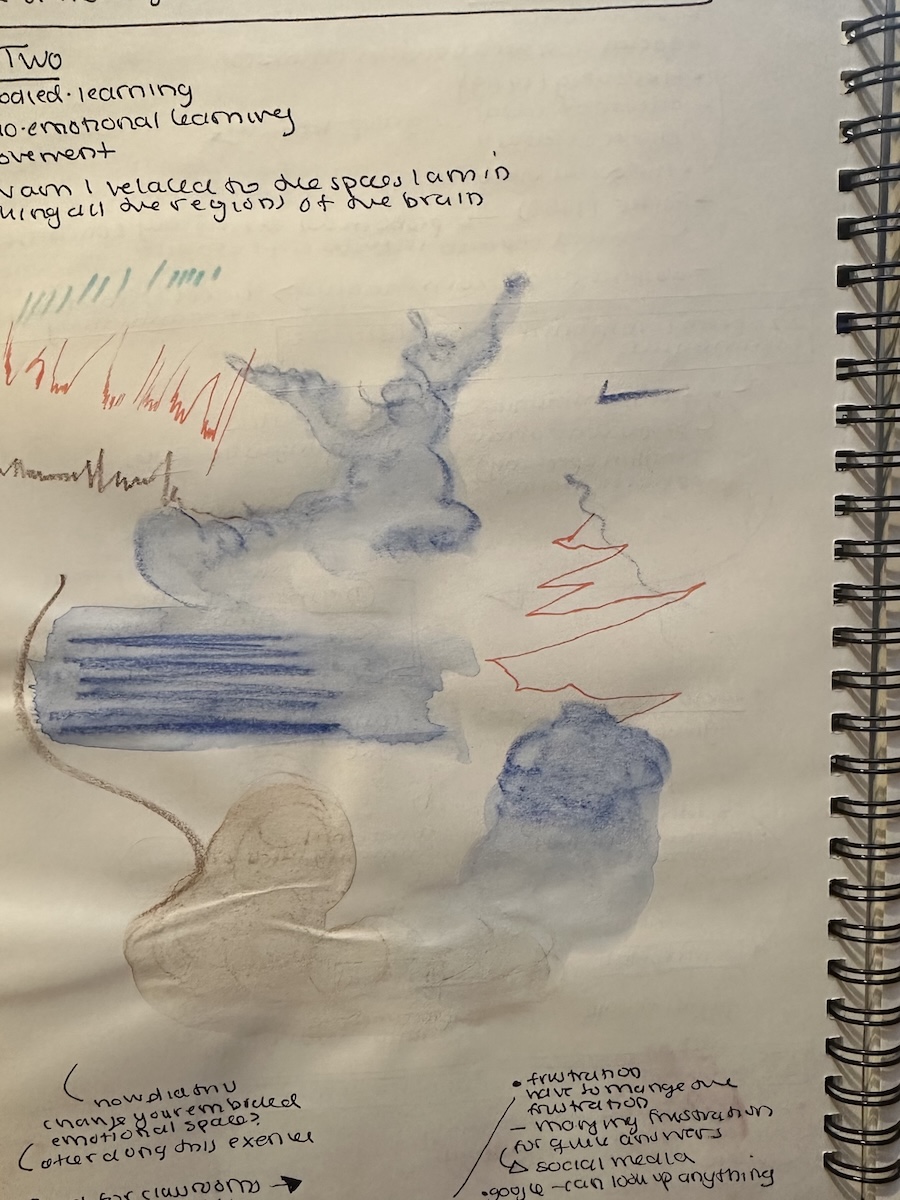
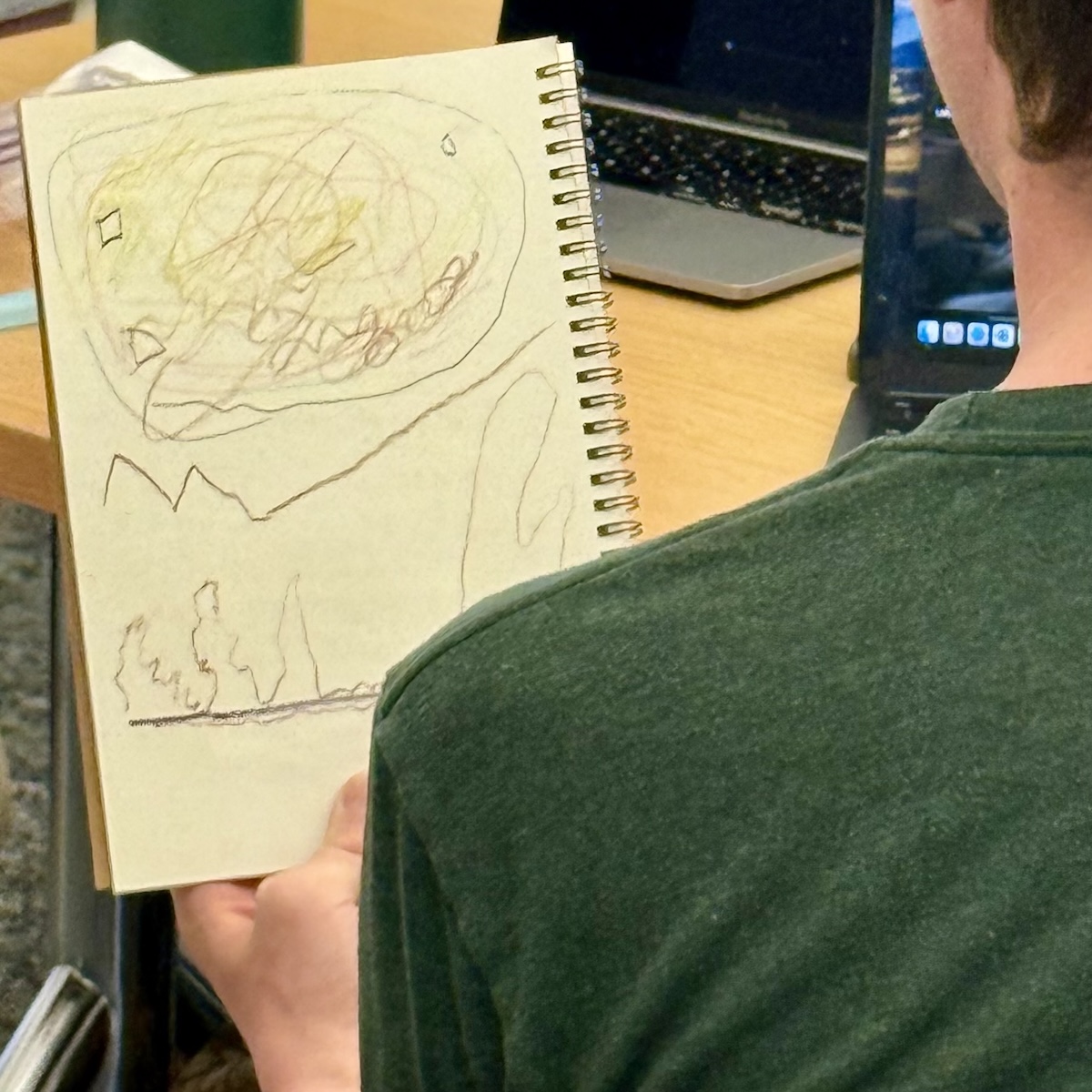
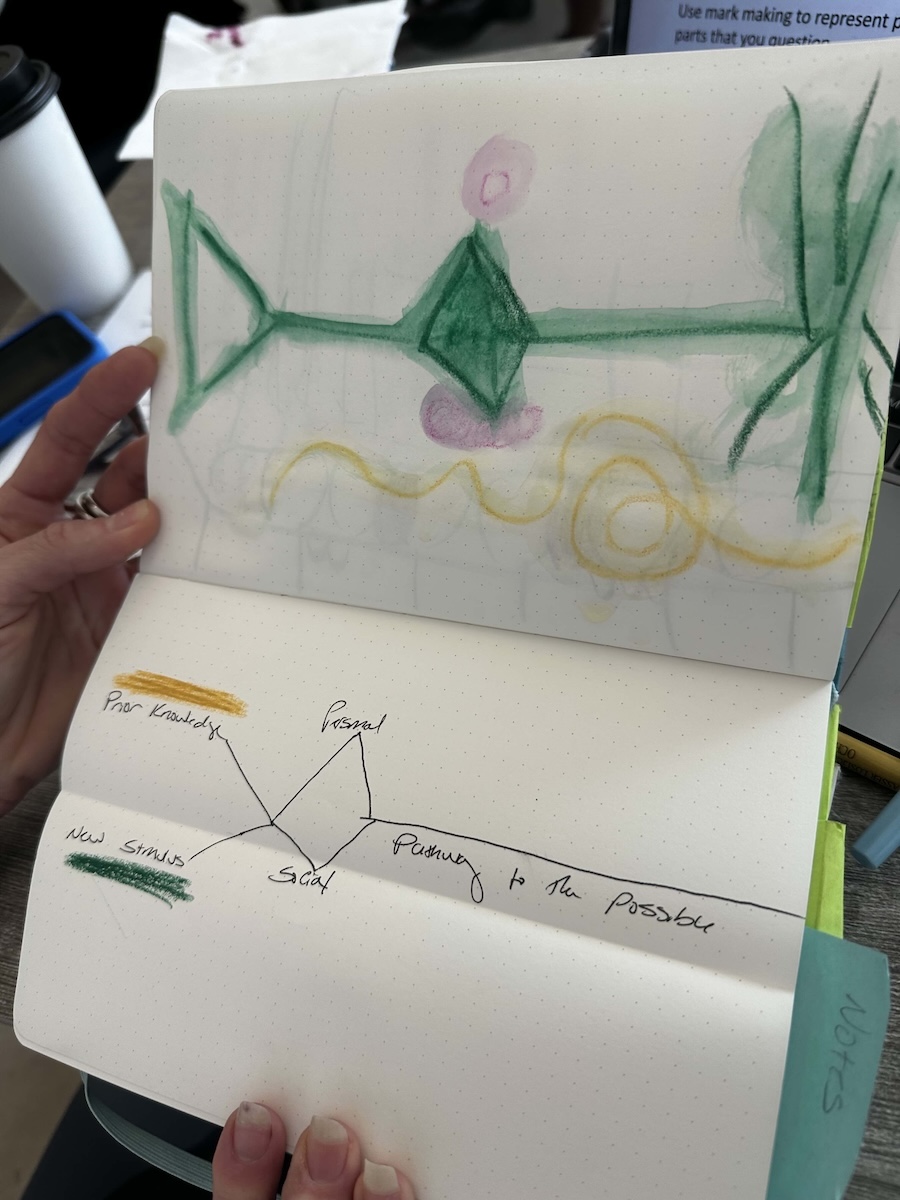
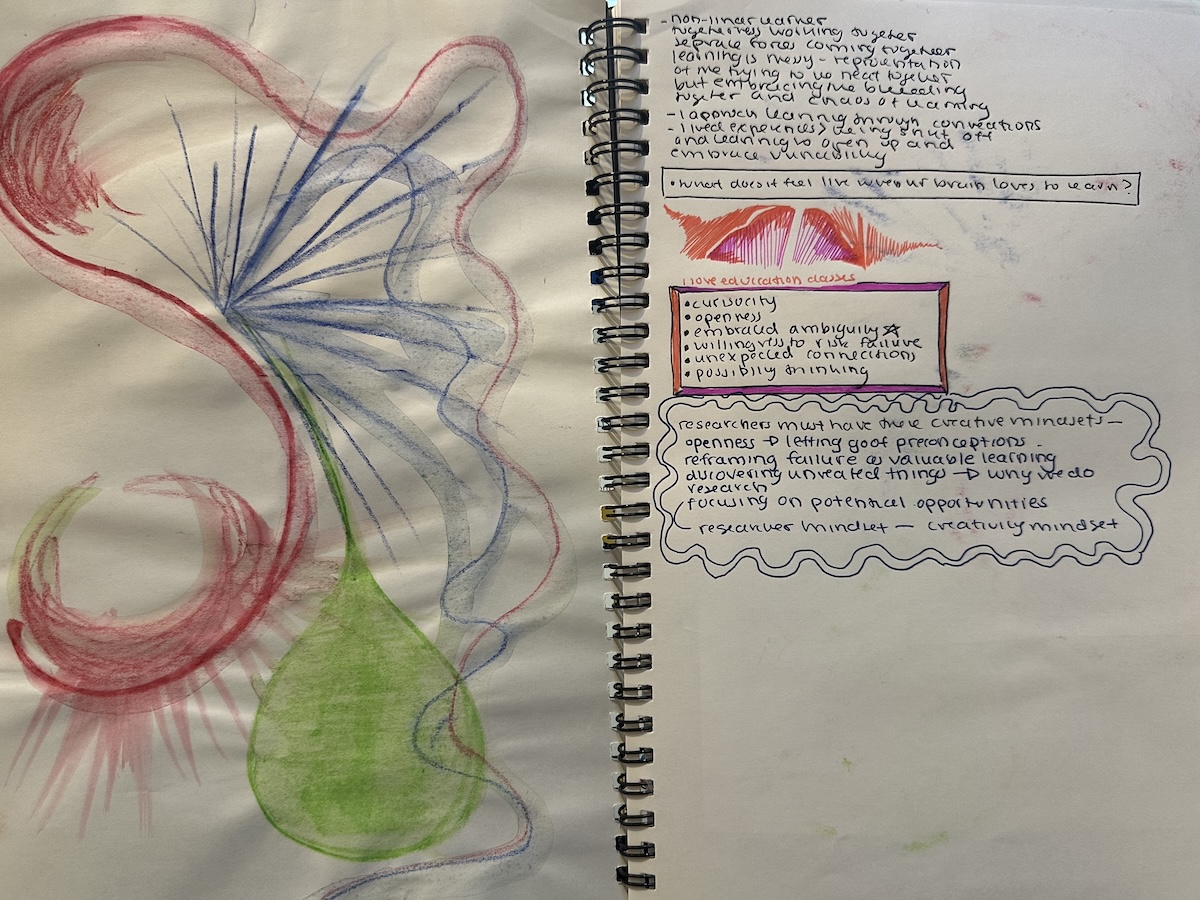
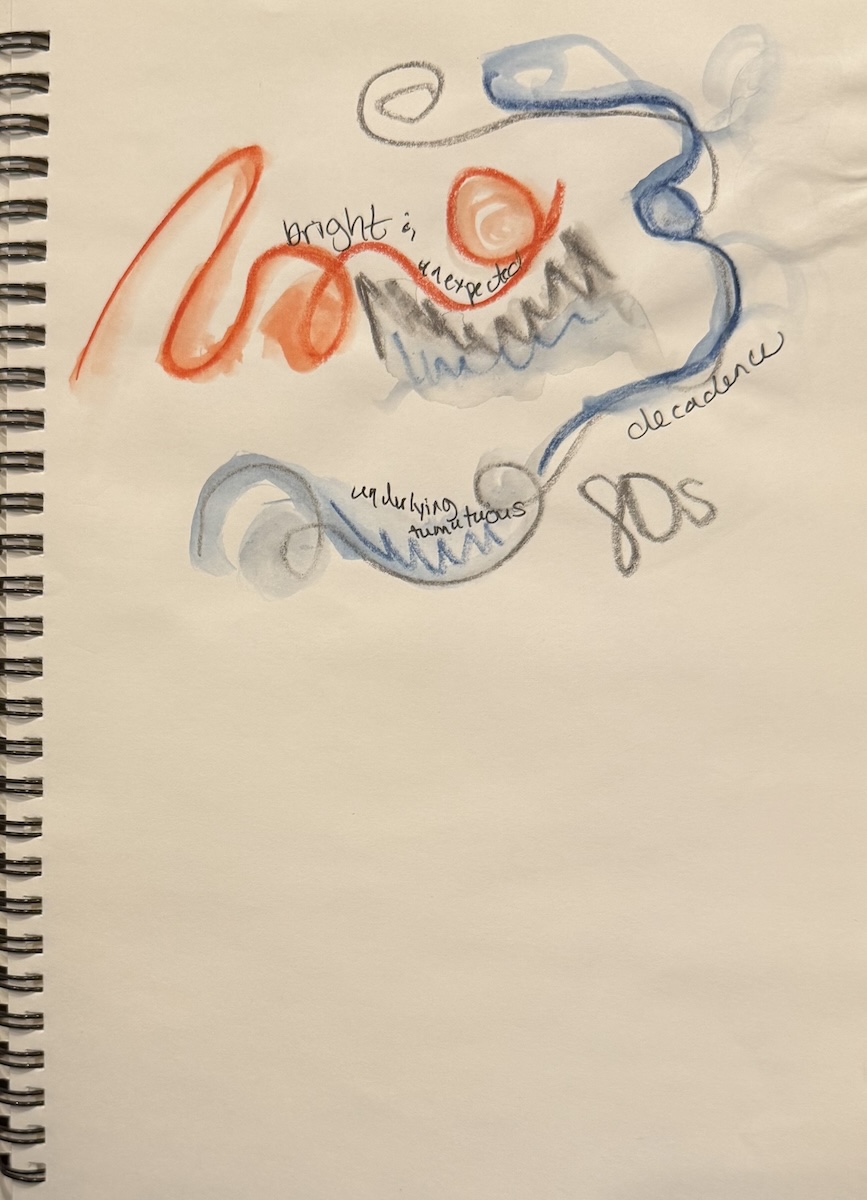
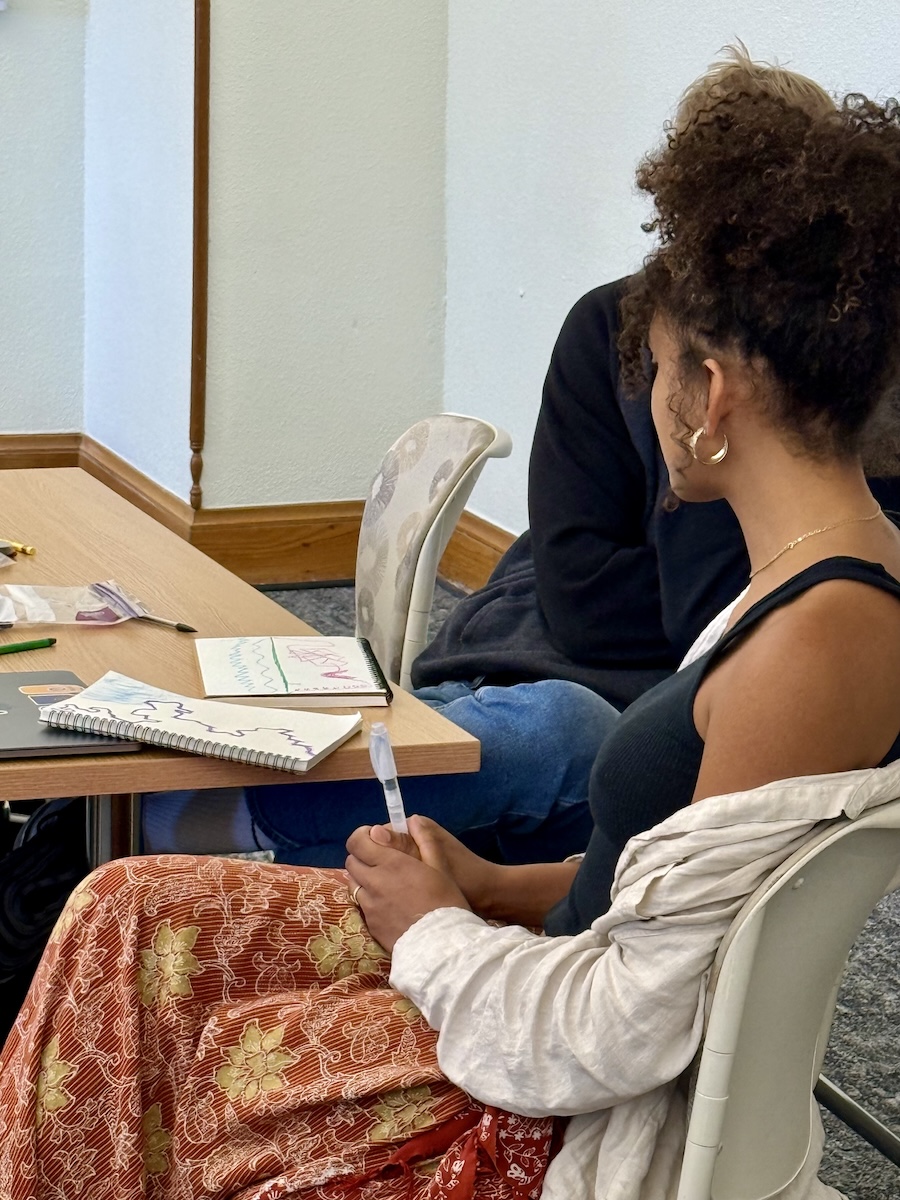
Possibility Books is a signature pedagogy at Colorado College that, to-date, has been used in over 250 courses across disciplines. The pedagogy centers a series of brief, ten-minute daily prompts, which a class responds to through the process of individual mark-making followed by sharing thoughts with one other student. Mark-making allows for nuanced embodied reflection while the interactions foster a collaborative learning environment in which co-creation of knowledge can occur. Implementation of Possibility Books encourages students to establish more meaningful connections with course materials, thereby enhancing their learning.
How They Work
The most recent data analysis of Possibility Books is available in Creative Critical Inquiry: Mark-Making to Explore the Interplay between Insight and Intuition.
Possibility Books are a pedagogical method where the creative and imaginative aspects of inquiry take precedence using mark-making, a free-flowing, non-representational, and open-ended process that leads to novel ideas and insights. This kinesthetic reflection enhances Creativity Mindsets (stay curious, remain open, risk failure, navigate ambiguity, make unexpected connections, explore possibilities), which support cognitive monitoring (e.g., self-regulation) resulting in the conscious recognition of new connections across existing knowledge. This pedagogy intentionally moves participants between familiar and unfamiliar spaces, deepening the interplay between insight and intuition.
Our research on the use of mark-making to prioritize embodied learning shows that using Possibility Books to practice Creativity Mindsets develops Creative Critical Inquiry. The study employed a sequential, phenomenological mixed-methods approach to provide a nuanced understanding of the participants’ experience using Possibility Books. Participants were faculty (N = 59, instructed on Possibility Books) and undergraduate students (N = 494) who completed a post-experience questionnaire (Cronbach's α = .861 on scaled items). Qualitative coding revealed consistent patterns that support embodied-first pedagogical sequencing, Creativity Mindset practice, and the co-creation of knowledge. Participants consistently described insights that "surprised" them, suggesting that mark-making accessed embodied understandings which are often less explored through traditional education logic-first approaches.
Principal component analysis revealed two distinct but positively correlated factors (r = .403, p < .001) that align with theories supporting Creative Critical Inquiry. The Cognitive Monitoring Factor (α = .882) encompasses safe spaces for thinking, visual learning enhancement, life connections, problem-solving integration, stress reduction, and community building. The Creativity Mindsets Factor (α = .709) captures uncertainty tolerance, creative self-concept, curiosity, the risk of idea sharing, and openness. Results confirm that the use of Possibility Books with mark-making creates learning environments across disciplines that honor embodied knowledge and collective thinking, which strengthens the interplay between insight and intuition.
Getting Started
In Fall '26, Possibility Books will be available to faculty who have previously used the pedagogy in at least one course and attend a workshop to discuss the most recent iterations and prompts. Workshops will be offered before the fall semester starts on Tuesday, Aug. 11 and Tuesday, Aug. 18. Eligible faculty deciding to use Possibility Books will receive all materials needed from C&I.
We will share information about future opportunities for faculty new to and interested in using Possibility Books through all campus channels when those opportunities become available.
Outcomes
Possibility Books contribute to CC’s mission to develop habits of intellect and imagination that promote learning and leadership by:
- Providing consistent, structured opportunities to process ideas and reflect on questions, encouraging more meaningful engagement with course materials, and allowing students to iterate their understanding of the content.
- Making creativity practice part of students’ academic routine, honing their creative thinking and problem-solving skills, and strengthening creative confidence.
- Introducing modes of learning that have been excluded from traditional, colonial-based academic inquiry and creating space that centers various identity perspectives as assets. In this way, Possibility Books also support CC’s institutional antiracism commitment.
- Positively influencing students’ wellbeing, including increasing levels of focus and reducing anxiety, and their sense of belonging in class.
Student Experiences
"The Possibility Books supported my learning process by allowing me to center myself at the beginning of class. It was also very helpful for making unexpected connections with class content to things that I think about more, like things that I do a lot or see a lot of. It also made me feel comfortable in the class because we were all sharing our thoughts and notes/drawings with each other, so it lowered the competitive barrier that is often in these types of classes."
- Student in a 300 level Chemistry course
"[Possibility Books] gave me the space to be myself and record how I think without fear of judgement, where I came up with some ideas that surprised me and my classmates! It was amazing!"
- Student in a 200 level General Studies course
Student Examples