At Colorado College, some of the school’s most impressive athletic statistics aren’t found on a scoreboard.
They’re found in the classroom.
Colorado College was named the winner of the National Collegiate Hockey Conference’s inaugural Academic Excellence Award for the 2025-26 season after the Tigers posted a 3.762 average team GPA—the highest among the conference’s nine members. Of the team’s 28 student-athletes, two earned perfect 4.0 GPAs during the academic year, while 12 recorded GPAs of 3.8 or higher.
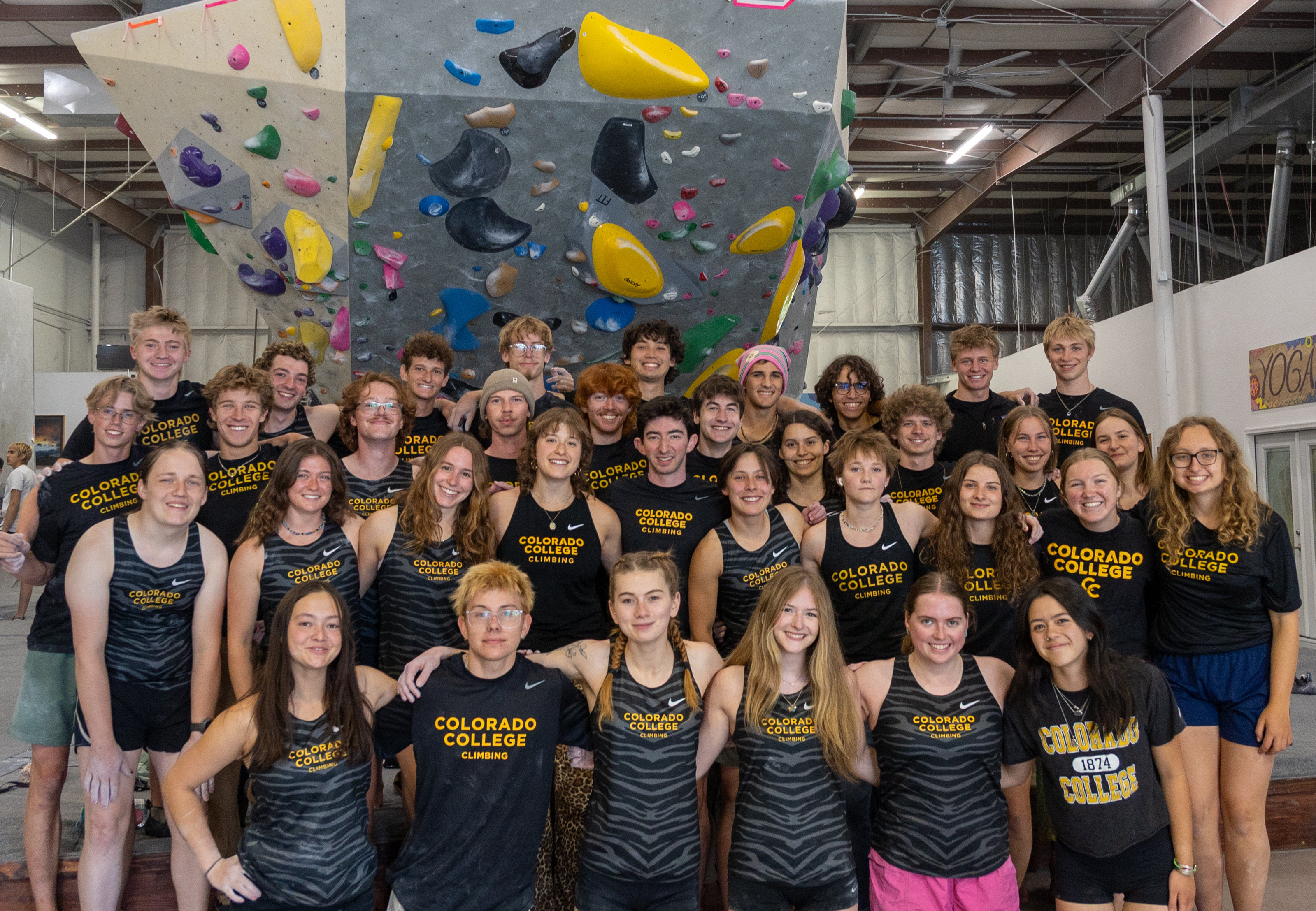
The recognition adds another example of a broader pattern at Colorado College: Student-athletes consistently demonstrate that competing at a high level and succeeding in the classroom can go hand in hand.
The women’s swimming and diving team posted a 3.92 GPA, ranking first among NCAA Division III programs and second across all NCAA divisions. The men’s swimming and diving team posted a 3.87 GPA, the highest among men’s swimming and diving programs across the NCAA.
The Tigers’ success in the classroom extends beyond team GPA. Colorado College led the NCHC with 27 student-athletes named to the 2025-26 NCHC Honor Roll for earning at least a 3.0 cumulative GPA. The Tigers also tied for the conference lead with 23 Distinguished Scholar-Athletes, who earned cumulative GPAs of 3.5 or higher.
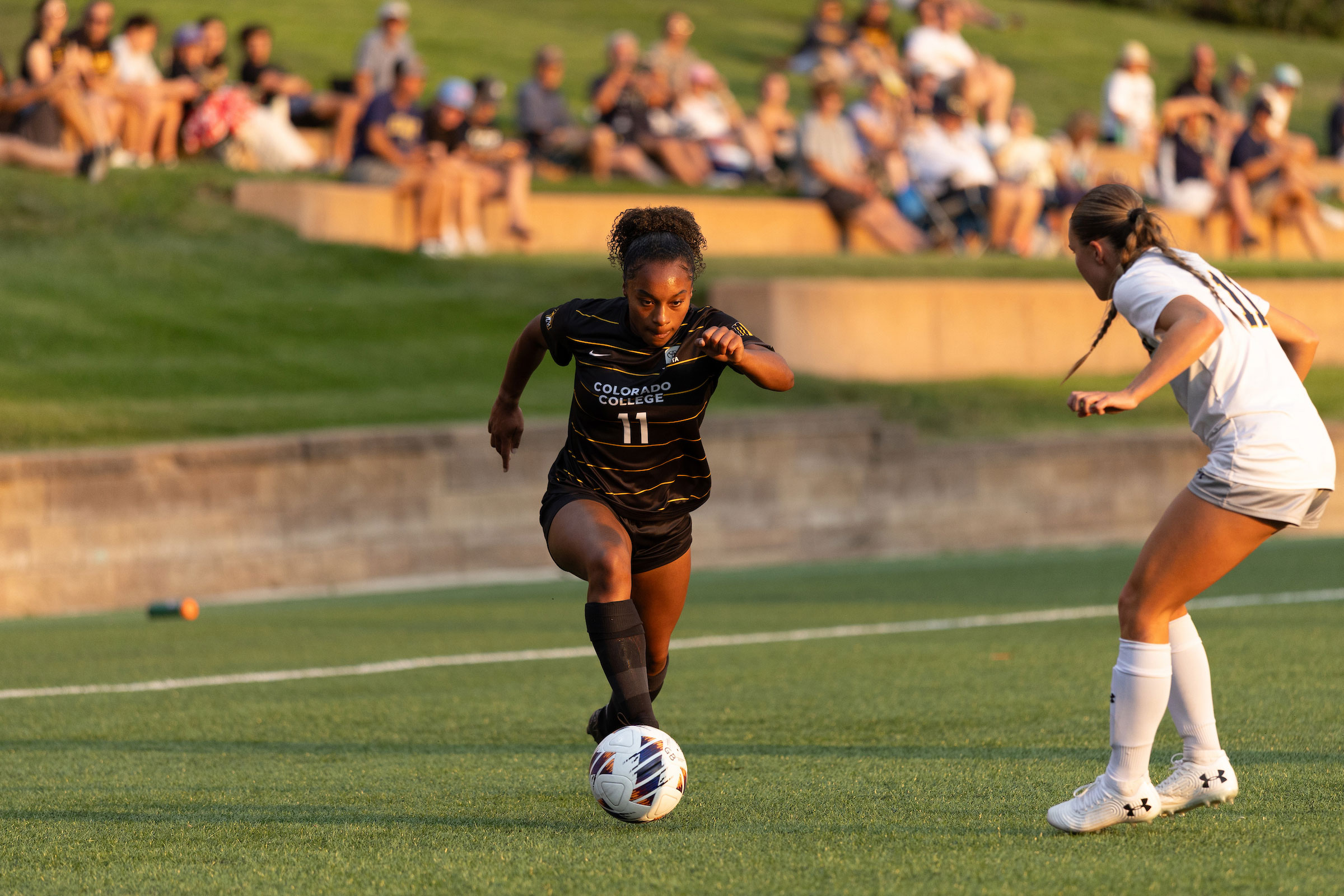
For Nadia Cassamajor ‘28, a forward on the women’s soccer team, that success begins with taking responsibility for her own education.
“At the end of day, we’re college students, we have to take the initiative,” she says. “The professors, if you miss class time because of a road game, they are not going to be the ones to chase you. You have to recognize you are missing it and you have to be the one to reach out and seek help.”
That doesn’t mean students are left on their own.
“When you do that initial step, they are willing to meet you halfway and help you out,” Cassamajor says. “When they see you’re willing to put in effort, they will be extremely accommodating and maybe even carve out time with some extra office hours. It’s about the student showing they are beyond willing to do whatever it takes to make up that work and get a good grade in that class.”
For Cassamajor, balancing academics and athletics requires discipline. A typical day might include classes from 9 a.m. to noon, practice in the afternoon, lifting and conditioning at 3 p.m., and two or three hours of studying in the evening.
The Block Plan can make that balancing act more manageable.
Rather than juggling several courses at once, CC students focus on one class during each block. For athletes traveling to competitions, that can simplify communication with professors and make it easier to stay focused on coursework.
“With this kind of schedule, it helped me learn my time-management skills,” Cassamajor says. “And it’s good to have a set learning schedule for consistency, to go along with the fact that our practice schedule is typically always the same.”
She also appreciates the opportunity to immerse herself in one subject.
“I also just personally like that we’re just focused on one class at a time, even though it can be a lot of material in three weeks,” she says. “I like to fully immerse myself instead of dividing my attention between different classes.”
A Winning Attitude
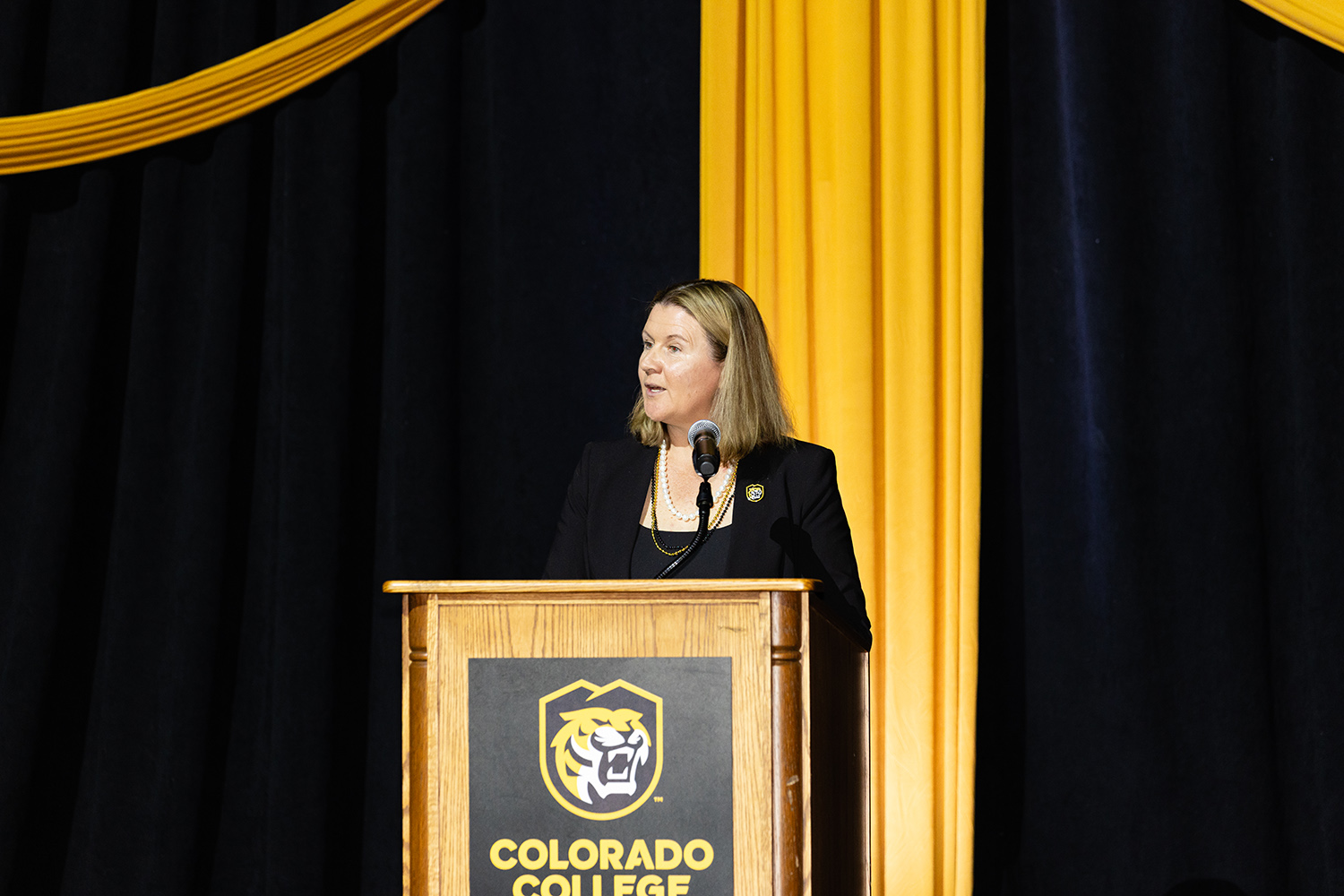
Colorado College Vice President and Director of Athletics Lesley Irvine says the College has had a positive role in athletes’ academic success, but she gives the lion’s share of the credit to the students themselves.
“Colorado College attracts student-athletes who take their academic goals very seriously,” says Irvine, who has led CC Athletics since 2019. “The college supports these goals versus drives them as the athletes are fully committed and have high expectations across the board. The students we work with are self-motivated, and they see their academics as a part of what overall success is.”
The academic success of the hockey team reflects that shared commitment.
“Winning the inaugural NCHC Team Academic Excellence Award is a great achievement that reflects the dedication of our student-athletes and the unwavering commitment of our entire campus community,” says men’s hockey head coach Kris Mayotte. “A 3.762 team GPA does not happen by accident. It is the direct result of our players’ work ethic in the classroom, coupled with the immense investment our faculty, staff, and coaches make every day into the holistic student-athlete experience.”
Mayotte says the recognition reflects a standard the team intends to maintain.
“I am incredibly proud of our team for setting this standard of excellence, and grateful to everyone at Colorado College who champions our players’ success both on and off the ice,” he says.
That mindset also spreads from one teammate to another.
Cassamajor says her soccer teammates regularly create time and space to study, even while traveling for games.
“Our team does a great job of supporting each other academically,” she says. “We carve out study time on away trips, put on our headphones and study. It’s nice that we have similar goals of wanting to succeed in the classroom.”
For Irvine, the habits that athletes develop through competition can translate directly to academics. Athletes are accustomed to setting goals, identifying weaknesses, managing their time and working through setbacks.
“Competitors are used to coming up on obstacles and figuring out a way to get through,” she says. “They are used to juggling responsibilities, prioritizing working on weaknesses and seeing how achieving small goals builds to big results.”
Those skills can be particularly valuable at Colorado College, where the academic experience is demanding and the Block Plan requires students to engage deeply with their coursework.
For Cassamajor, athletics has helped prepare her for that challenge rather than compete with it.
“Colorado College is an extremely rigorous school and the workload is demanding,” she says. “But with the mentality that comes from being an athlete, the rigor pushes me to become a better student and learn and grow.”
The connection between athletics and academics ultimately comes down to the same qualities that drive success in both: discipline, preparation, resilience and a willingness to keep working when things get difficult.
“Sports taught me that so much is possible with the right discipline,” Cassamajor says. “Colorado College backs that up.”