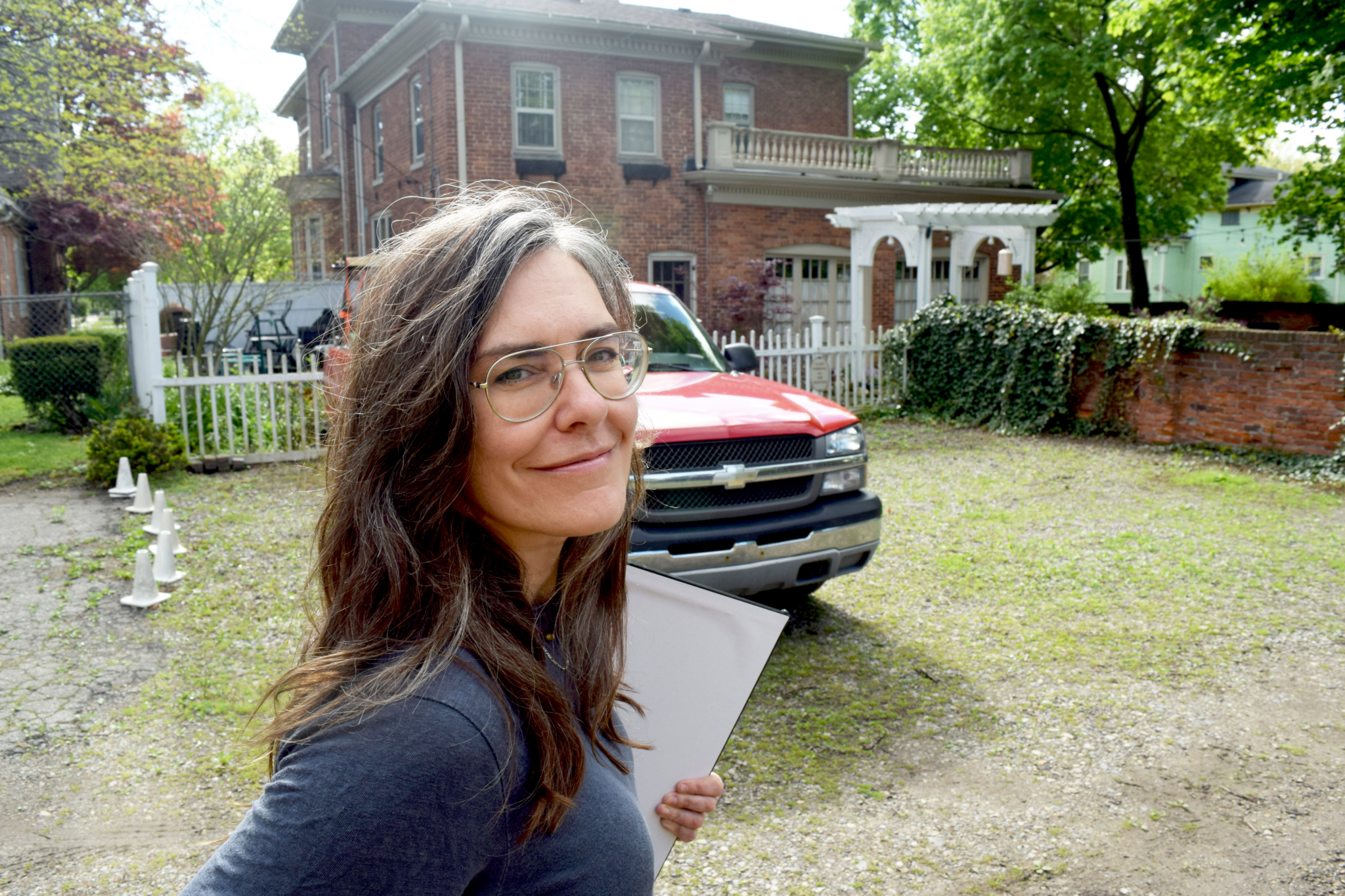
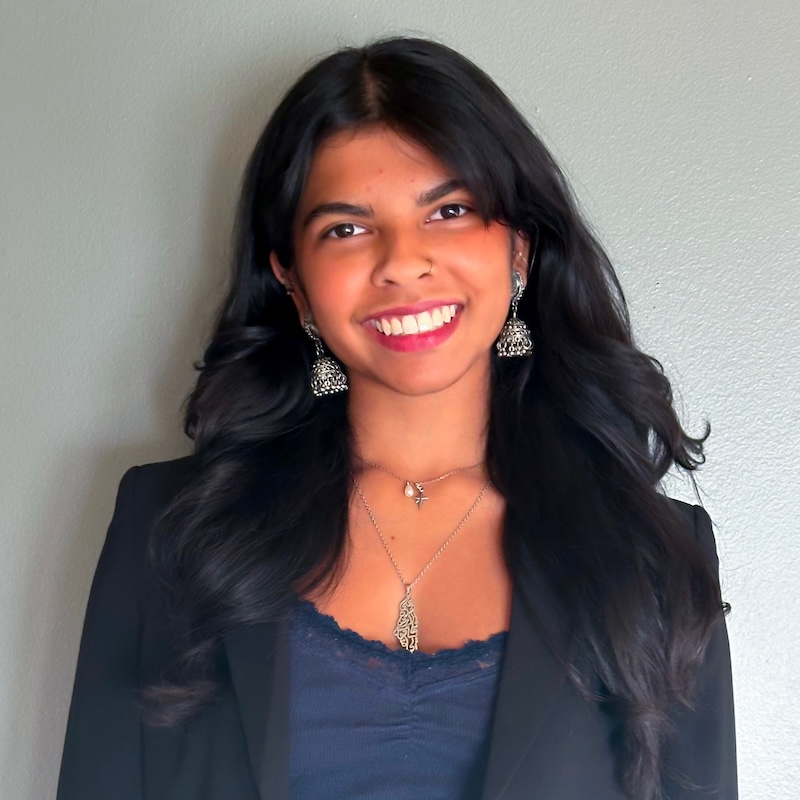
Kaviya Chidambaram ’27 is helping fisherwomen in Chennai, India, fight climate displacement, funded by a $10,000 Davis Project for Peace award.
“The Davis Project for Peace grant allows me to bring something meaningful to a community partner and catalyze a shared vision for our community,” Chidambaram says. “I am so grateful to the Kathryn W. Davis Foundation and CC for investing in student leadership.”
Chidambaram’s project aims to empower single fisherwomen on the coast of Tamil Nadu to be heard in the fishermen policymaking process.
Fisherwomen in Chennai, Tamil Nadu’s capital, are the traditional stewards of mangroves, protecting coastal ecosystems from erosion. Often the sole providers for their families, they sell fish in informal hawking zones, where they can face discrimination, Chidambaram says. Many are widowed, which adds another layer of cultural ostracization and makes it harder for them to access social safety nets they are legally promised, she says.
“Peace is not the absence of conflict but community cohesion with justice at the forefront,” Chidambaram wrote in her initial project proposal. “Power is sustained by strength in coalition. When fisherwomen know that they are not alone, they can better stand for their rights and collectively organize when their rights are not respected.”
For her project, Chidambaram is collaborating with the Human Rights Advocacy and Research Foundation (HRF) to host a three-day conference with 50 single fisherwomen, female community organizers, and advocates from all 14 coastal districts across Tamil Nadu. Attendees will share their lived experiences, develop their demands for the new state government coastal budget, and draft an amendment to the Fisher Rights Act that protects coastal communities.
The conference will be an opportunity to build grassroots power in community, strengthening solidarity across each district’s Single Women’s Action Network (SWAN) chapters. Chidambaram, who was also named a 2025-26 Newman Civic Fellow, is passionate about empowering local leadership.
In India, Chidambaram is also helping to develop a living People’s Archive, collecting and archiving the histories of fishing communities on their traditional land across the Tamil Nadu coast.
An International Political Economy major and Environmental Studies minor, Chidambaram is an Overseas Citizen of India—a form of permanent residency that allows her to live and work in India indefinitely. She has spent a lot of time in Chennai, where her parents lived before emigrating. Chidambaram is a heritage Tamil speaker and looks forward to improving her command of Tamil and better understanding the policymaking process in Tamil Nadu.
She traveled to Chennai in June and will return to the U.S. in July.
Chidambaram is grateful for CC’s avis Project for Peace review committee’s guidance and support, adding that CC’s Projects for Peace Campus Liaisons Sarah Elsey and Laura Hines “helped me make a crazy idea into a reality through many one-on-one meetings and revisions.”
“I am so lucky to have a strong support system that believes in the promise of student ideas.”
Chidambaram is “devoted to uplifting the voices of minority communities and advocating for more equitable and inclusive leadership practices,” Elsey says. “We have no doubt her project will be a success.”
The global Kathryn W. Davis Projects for Peace program encourages young adults to develop community-centered solutions to pressing issues in the world. Each year, about 125 student leaders are awarded $10,000 to implement their Project for Peace. Since its founding in 2007 by Kathryn W. Davis, the program has funded over 2,200 projects in over 150 countries.