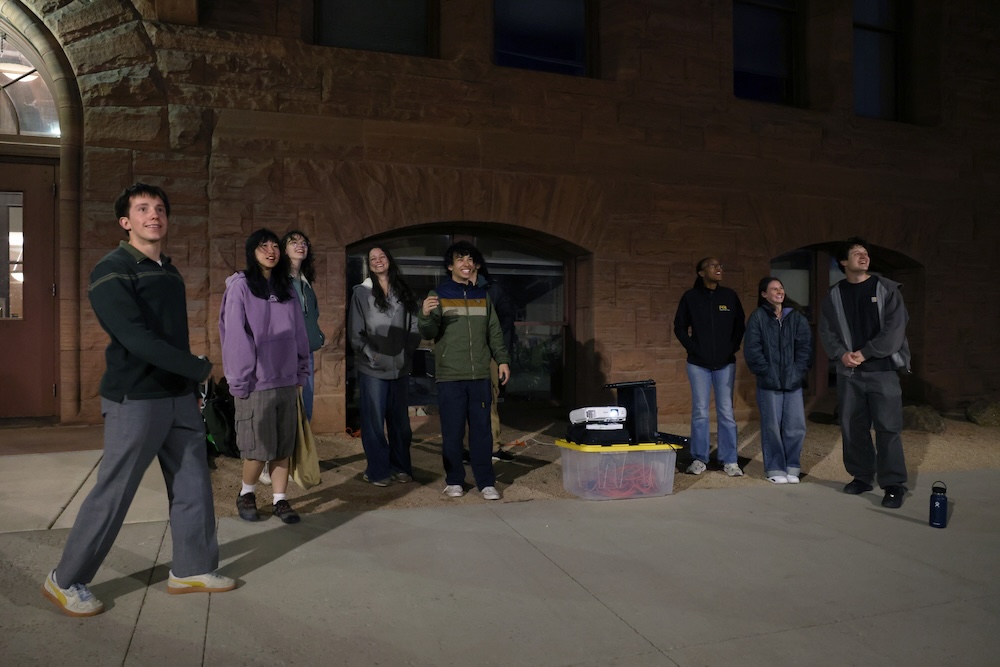
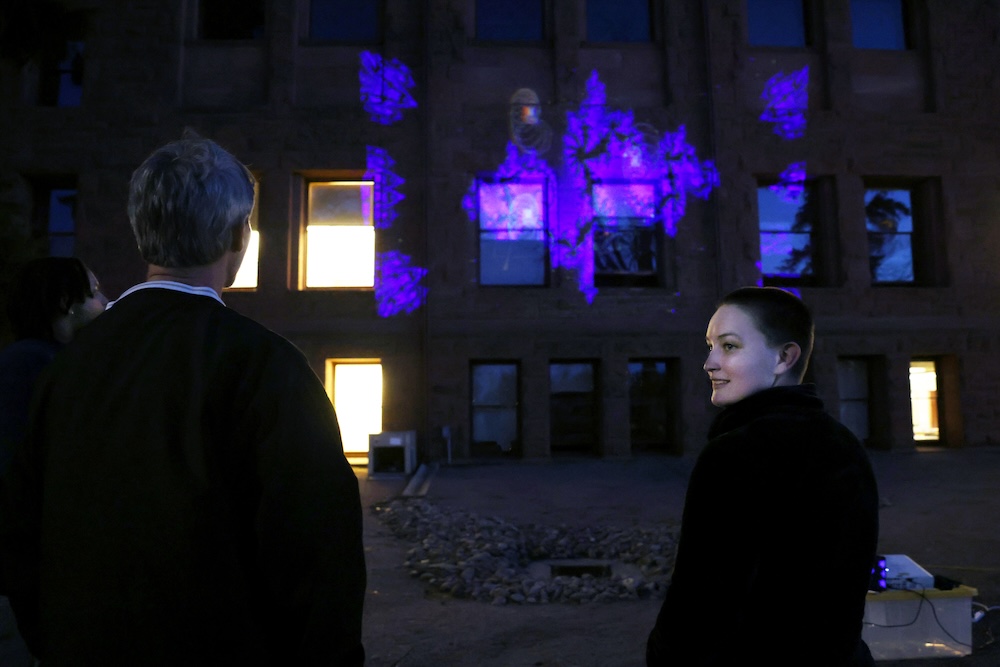
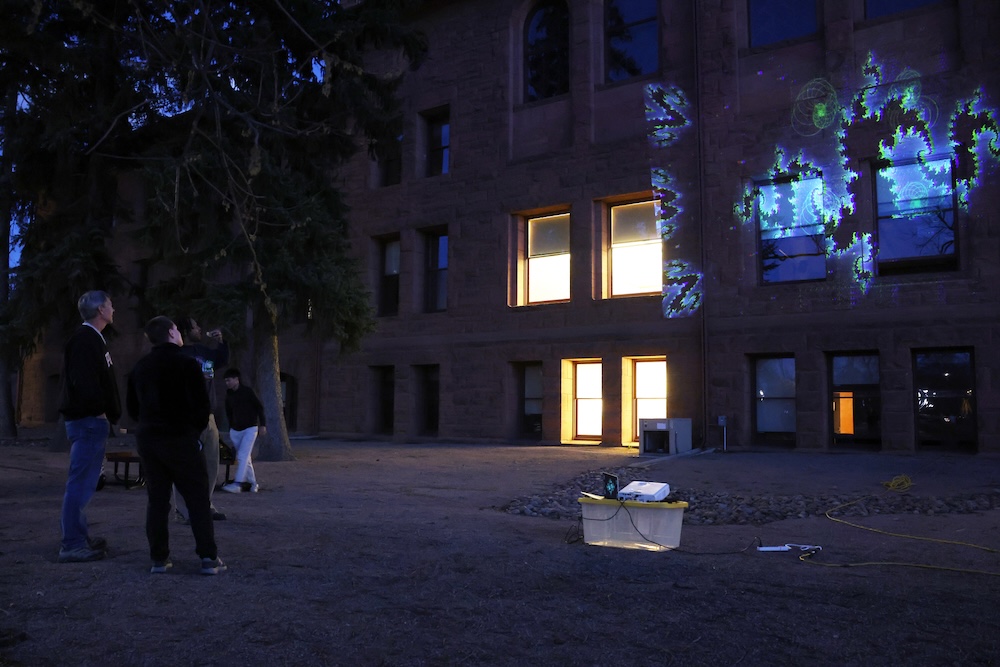
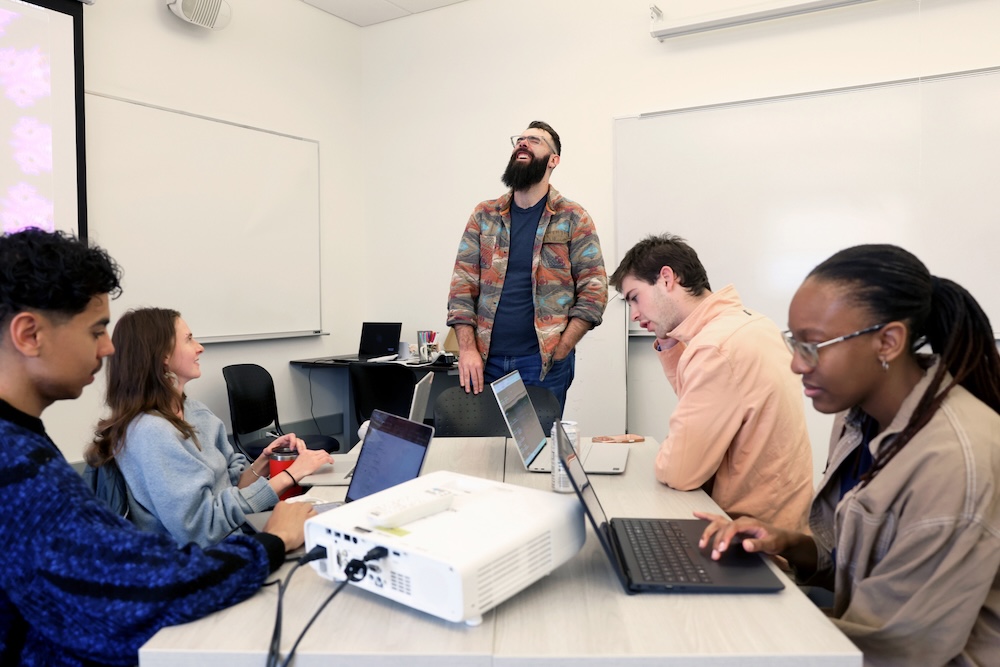
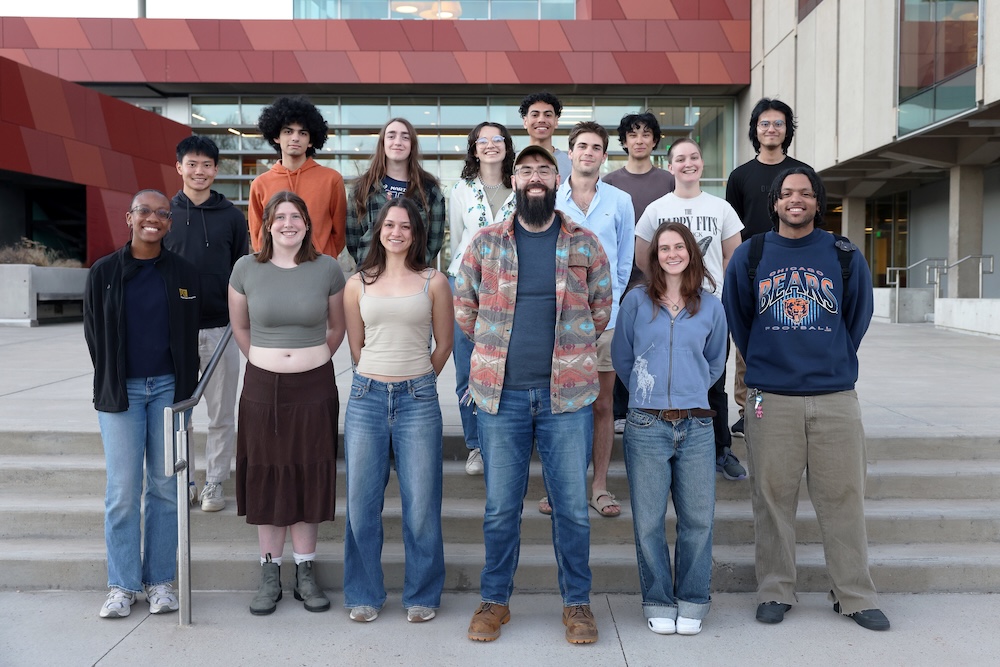
Students in Generative Art spent the past month developing computer-generated art pieces before getting to project their creations onto campus exteriors. Throughout the creative process, Assistant Professor of Mathematics and Computer Science Cory Braker Scott ’13 encouraged students to think of themselves both as computer scientists and creatives.
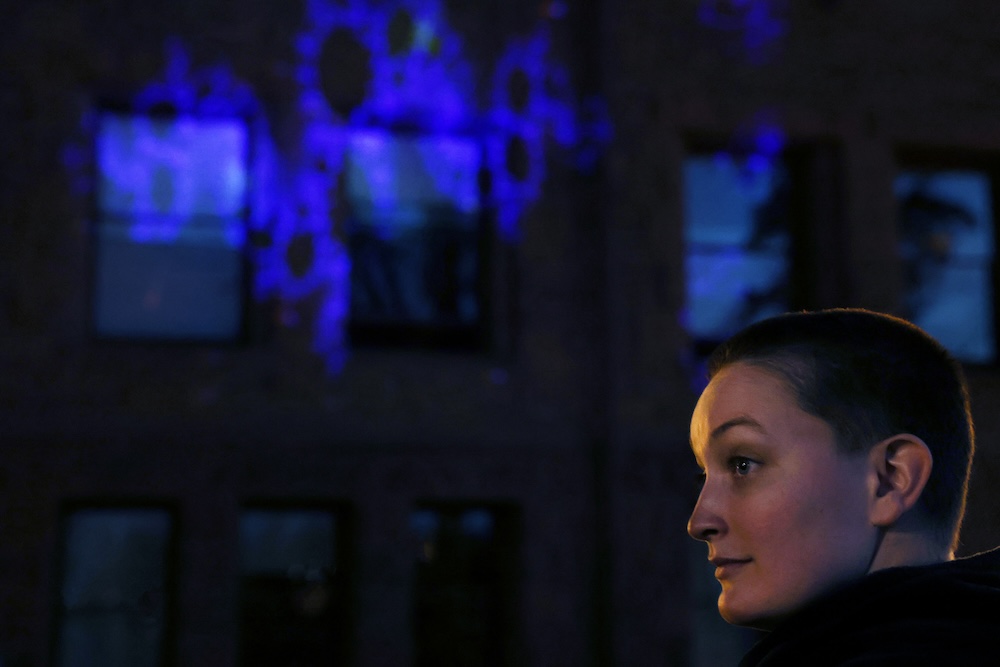
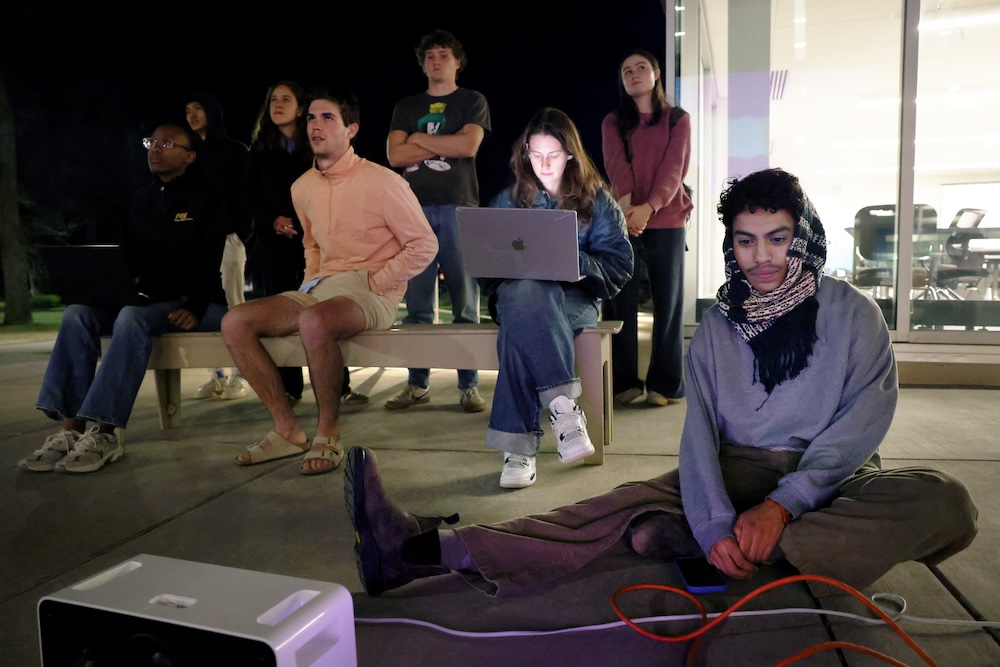
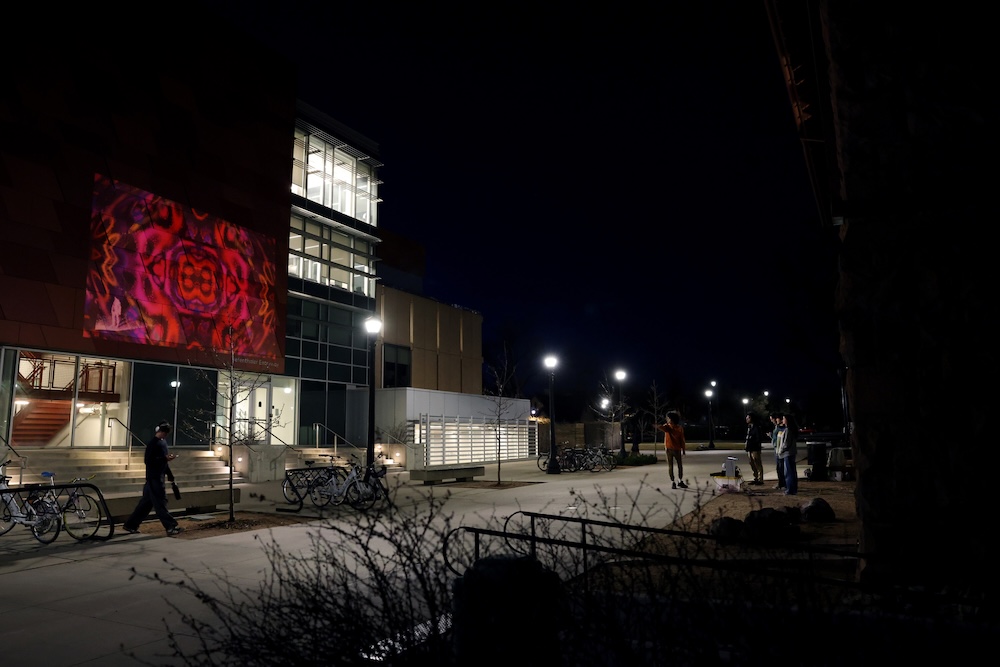
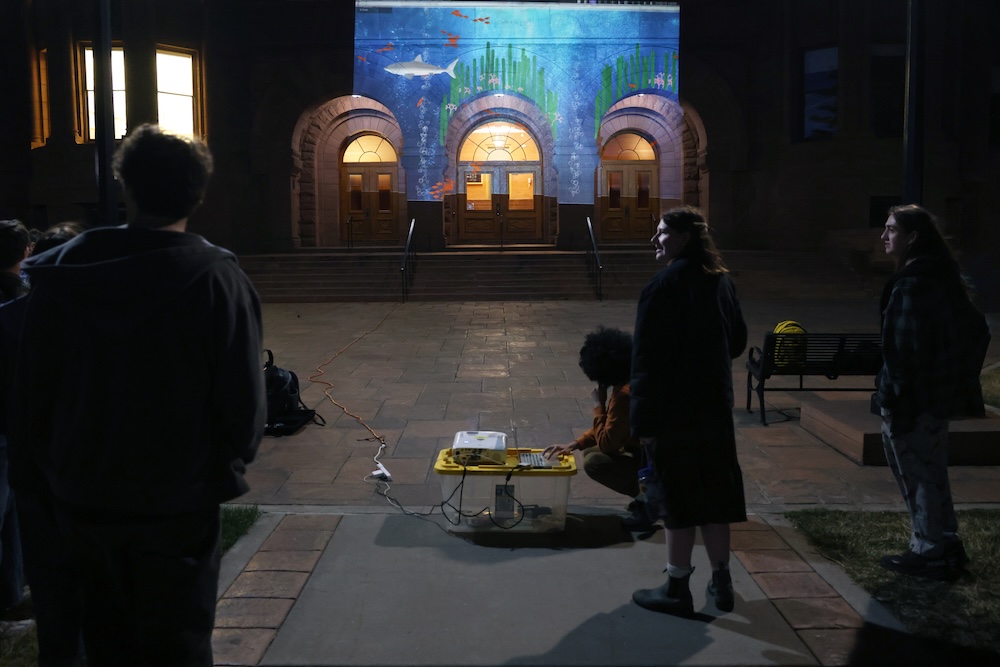
During the fourth week of Block 6, students projected their creations onto the outside walls of Palmer Hall and Tutt Library, giving them the opportunity to exhibit their art in a way that would draw in people from across campus and force them to perfect both the aesthetic parts of their work as well as the computational and technical sides. Several students created interactive pieces, and others created projects that were site-specific by using different light installations specific to the building onto which they were projecting their art. Students used commodity projectors checked out from Audio Visual to display their projects. Additionally, the students were able to use the carbon credits to offset the AI use due to financial support of the Crown Center for Teaching.
After being inspired by the demoscene videos they watched in class, Ja'Toria Johnson ’27 worked with three of her classmates to create one for their project. They decided to project their piece onto the western-facing interior wall by the entrance of Tutt Library, where the grey panels lay between the windows.
“Our initial idea was to implement the geometric shapes and colors of the walls of Tutt to create our own fractals,” Johnson explains. “From there, our ideas progressed to make cool graphic scenes with animations, fractals, and music.”
The four students wanted to create fun visuals that people watching would continue to view, even on repeat.
“We also wanted to imitate the environment of Tutt, especially its architecture and design,” Johnson says. “We all worked hard to make sure the graphics and animations we used captured that and were easy to follow and enjoyable to watch over time.”
While the generative art project was a significant part of the class, Scott also spent time teaching about the history of computational art and led class discussions about the ethics of it.
Scott says when most people think of computer-generated art, their minds immediately jump to AI. “I wanted to teach a course that discussed the long history and rich mathematical background of making computational art,” says Scott, who graduated from CC with a double major in Mathematics and Computer Science.
Scott showed students different examples of computational art, some of which predate digital computers by centuries. Scott says the current debate about AI art ("is it actually art?") is the same argument that artists have been having about procedural art for decades.
“We've talked about what is lost when we cede control of our artistic process to an LLM, for better or worse,” Scott says. “Along the way we've been able to have excellent conversations about labor rights, climate change, model racism and bias, what constitutes ‘real’ art, and what makes art creation feel fulfilling.”
The class spent five days on the Colorado College Baca Campus during the third week, working with robots by painting with light and long-exposure photography. The students also conducted a trial run of displaying their pieces with digital projectors.
Scott was inspired to design this class, and to include the Baca trip specifically, from his own experience at CC, when he took Robotics with Professor Emeritus of Mathematics and Computer Science Steven Janke and Machine Learning with former Associate Professor of Mathematics and Computer Science Matthew Whitehead.
“The biggest take away from this class for me is how computer science and art don’t have to be seen as two separate subjects, never to interact with each other,” Johnson says. “I’ve learned how the two can go hand in hand. As a double Computer Science and Art Studio major, this class opened a whole new world for me regarding how I see the two subjects. Mathematical functions and geometry are very much related to a lot of graphics and digital content we see today.”
Video by Julia Fuller / Colorado College.