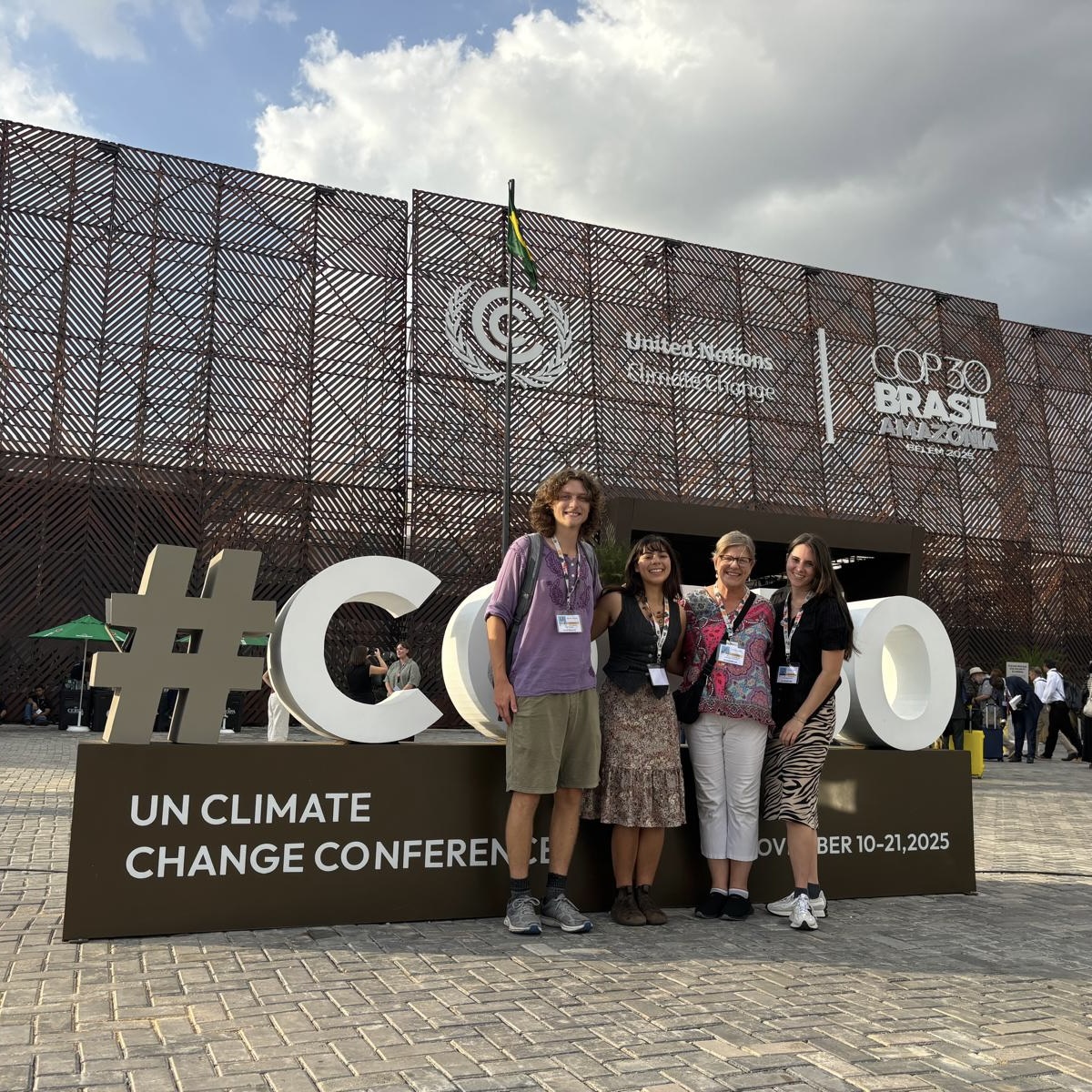
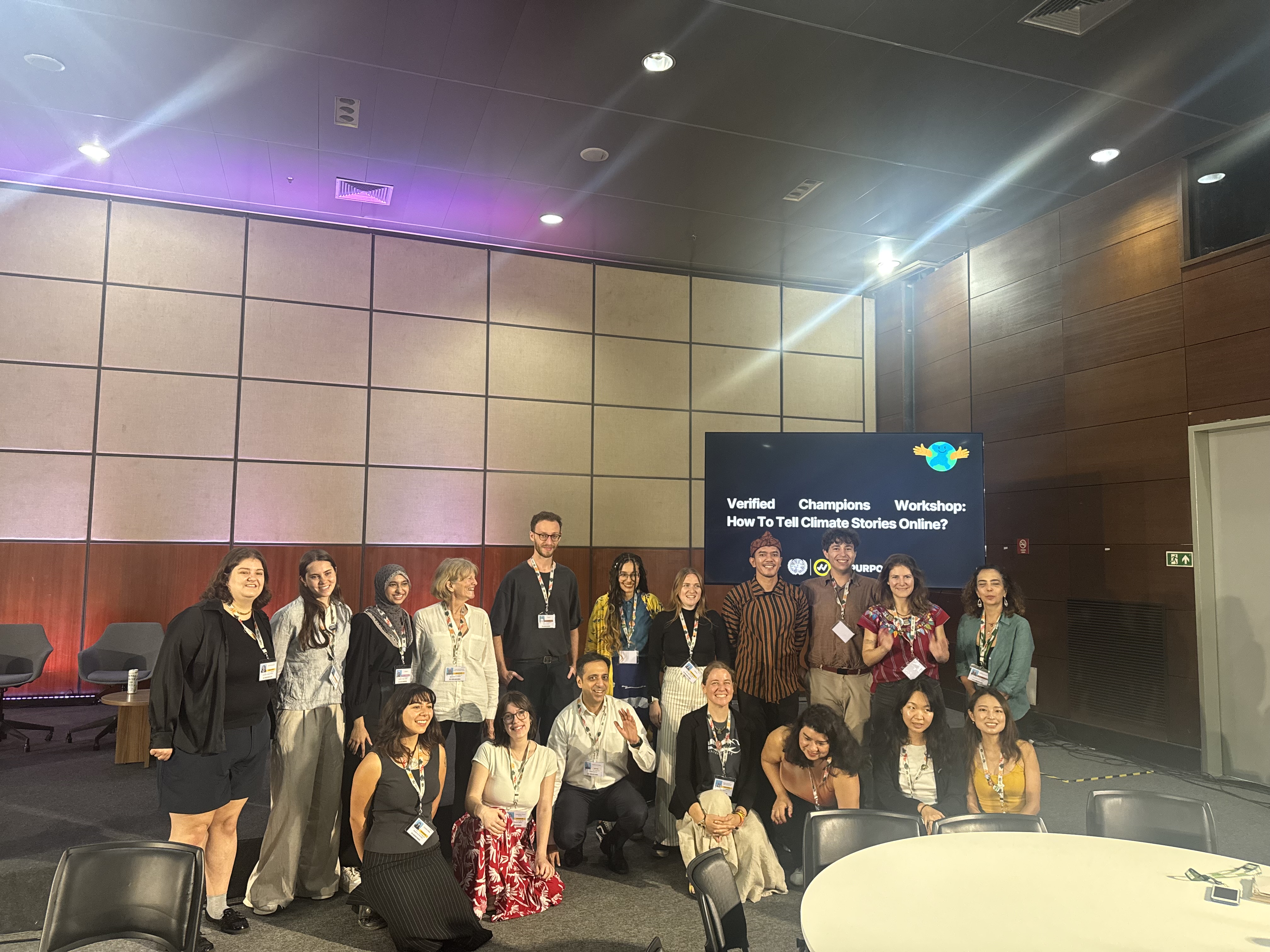
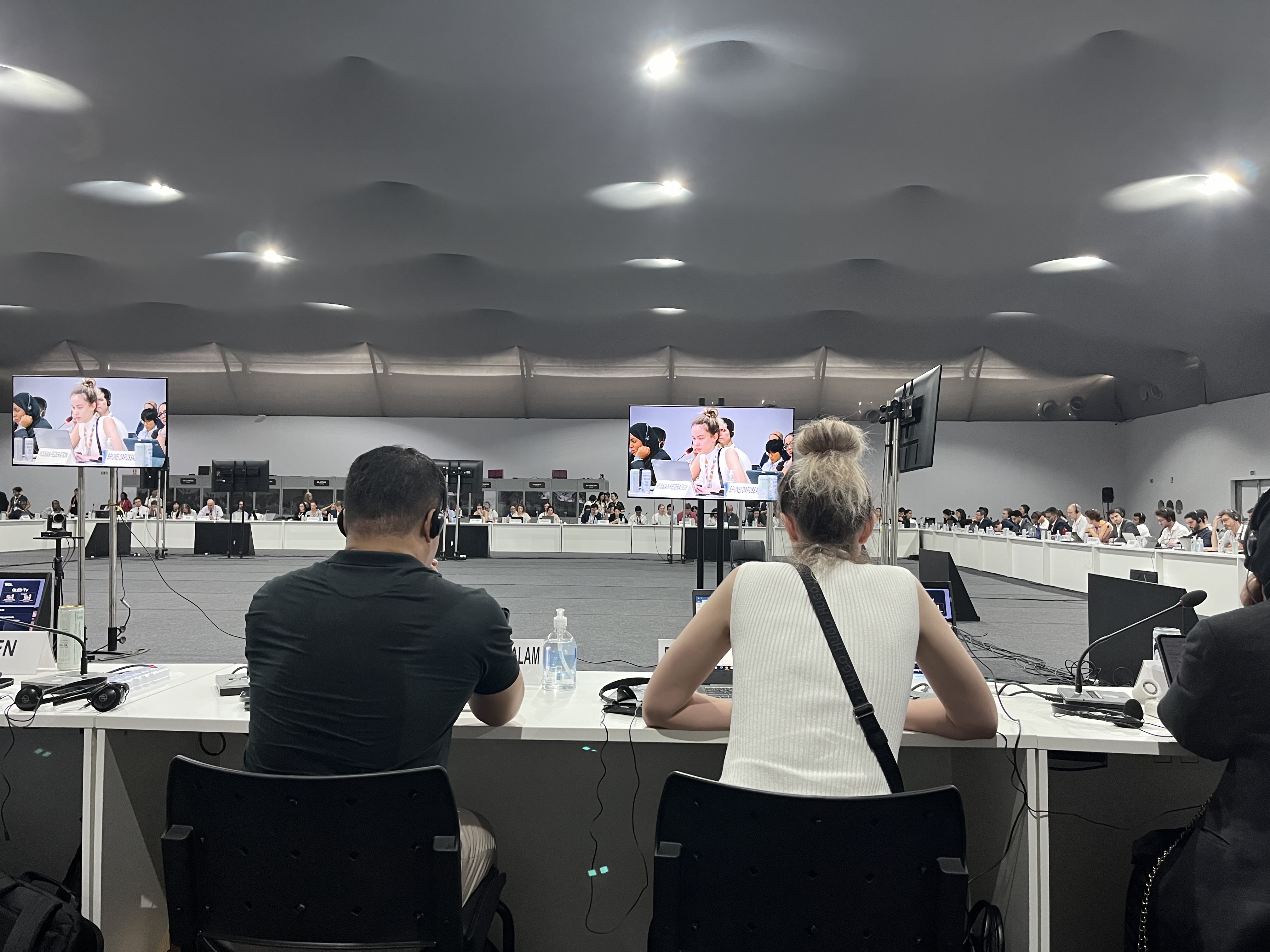
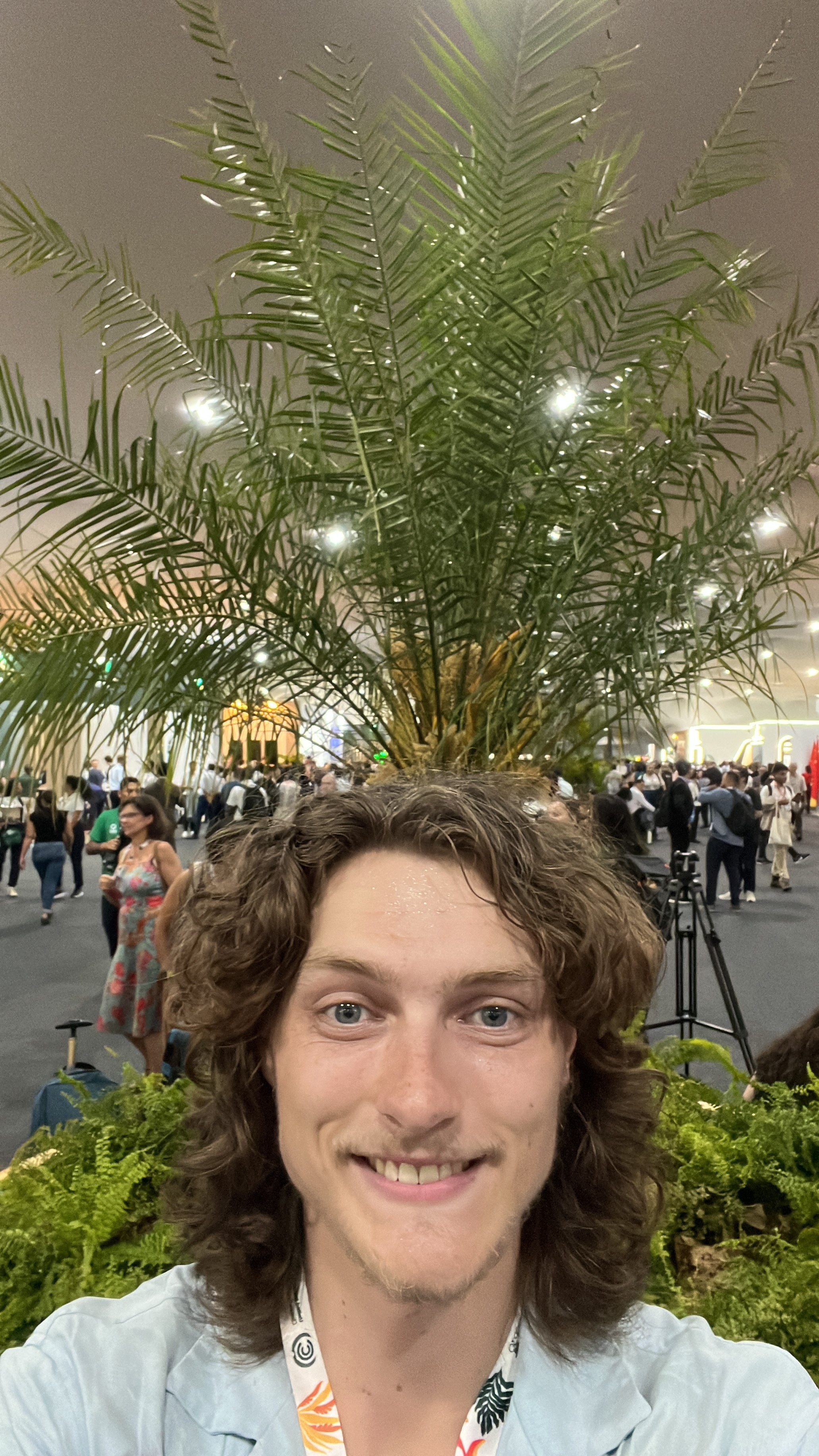
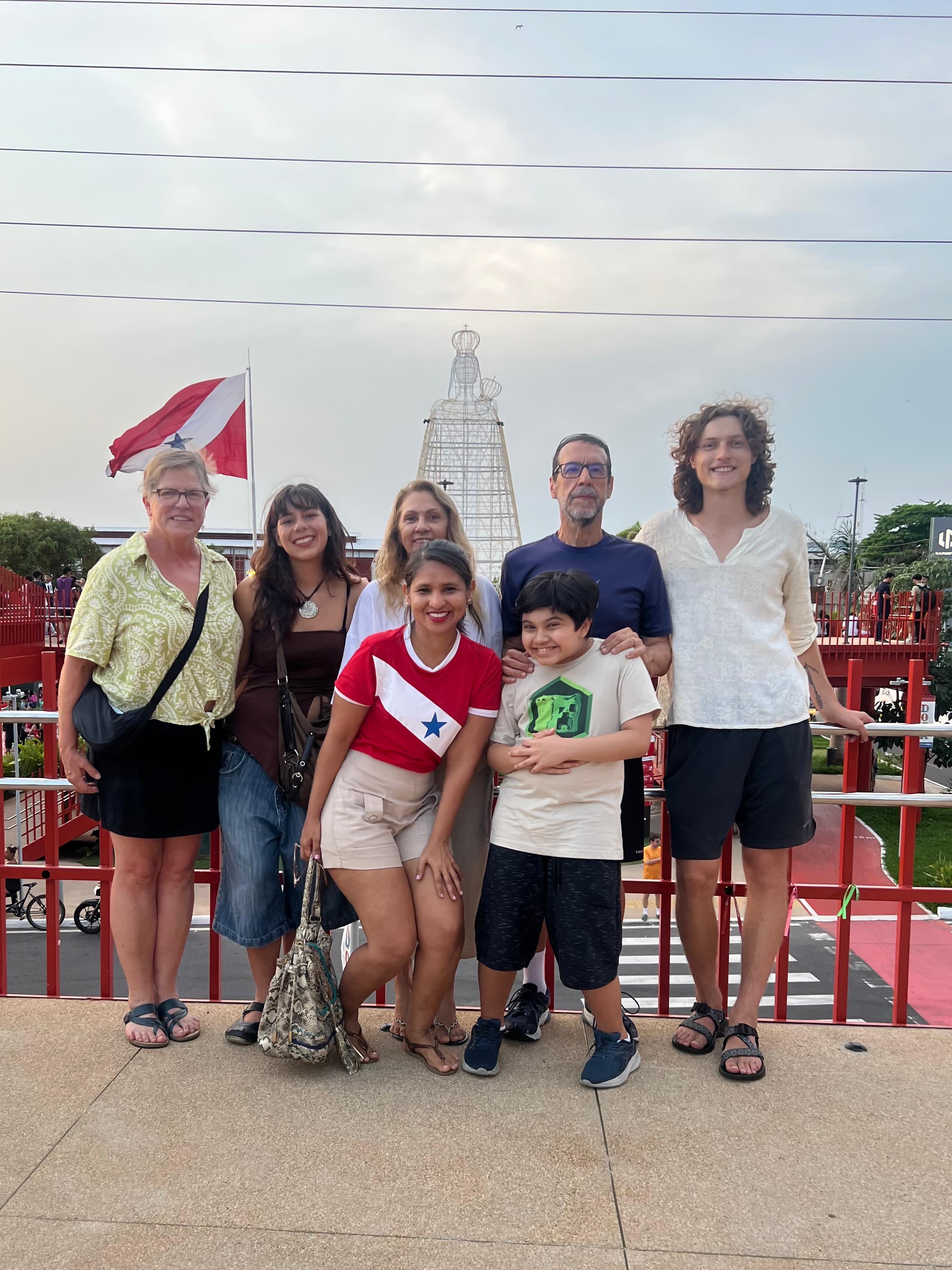
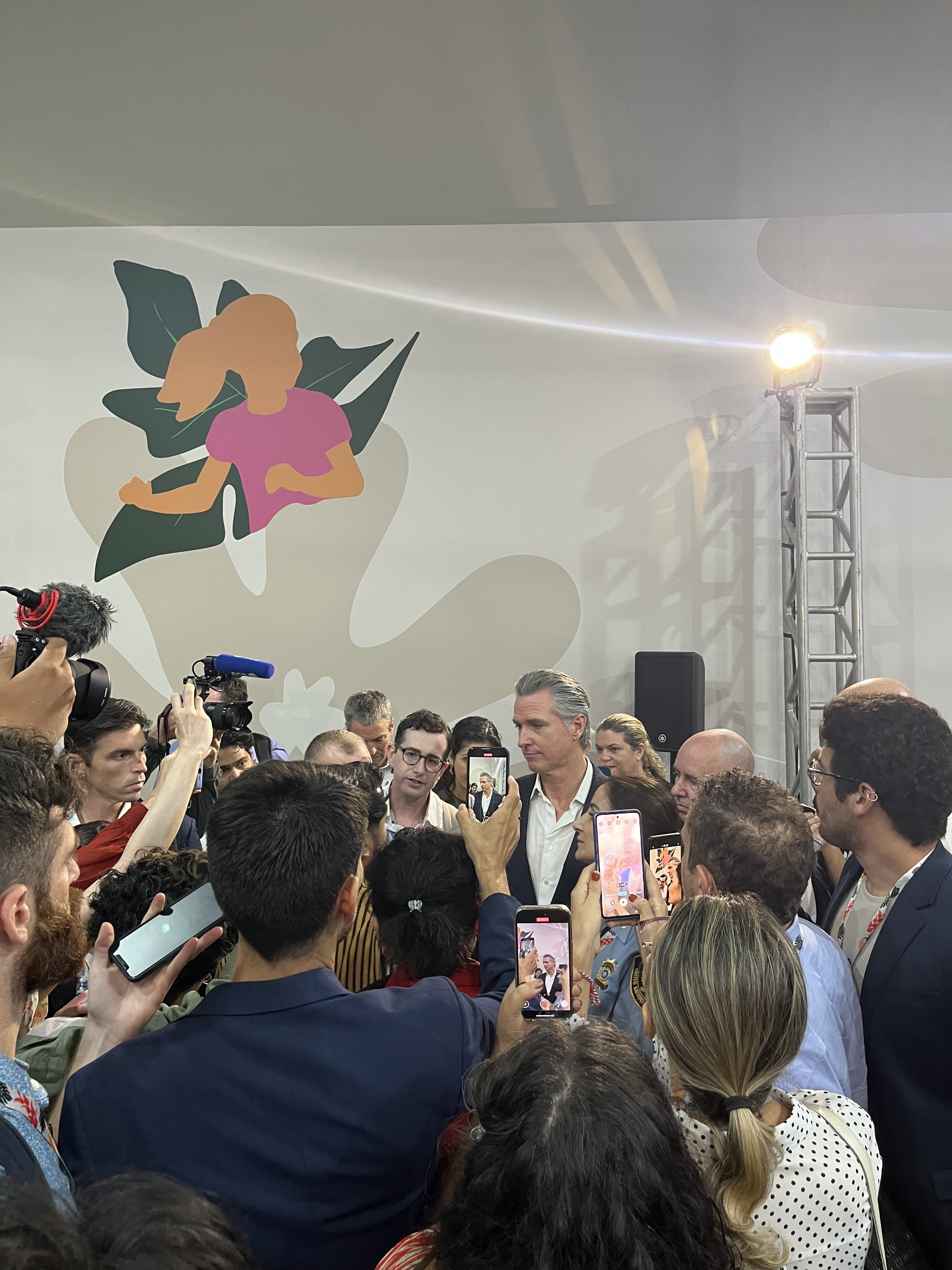
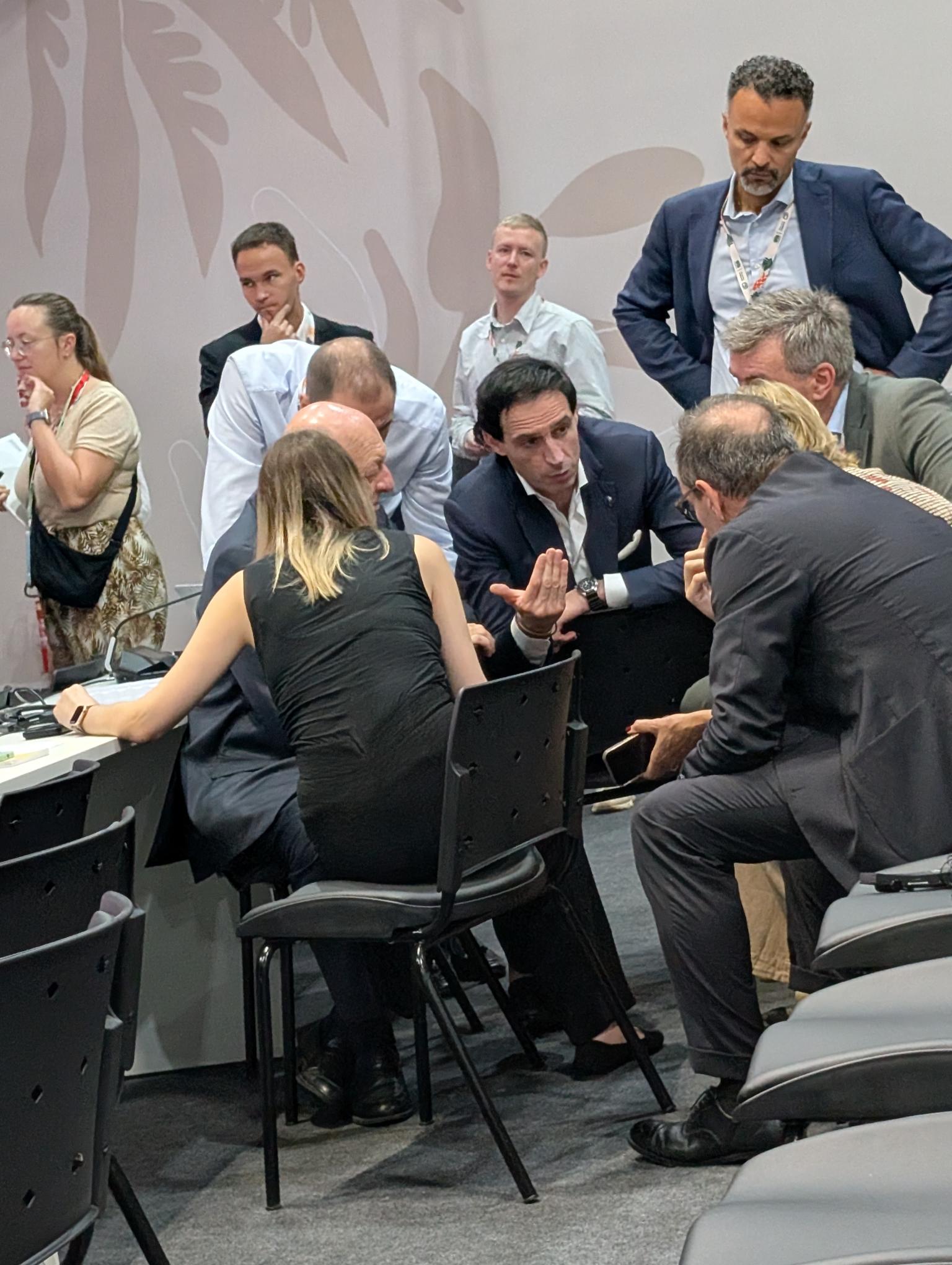
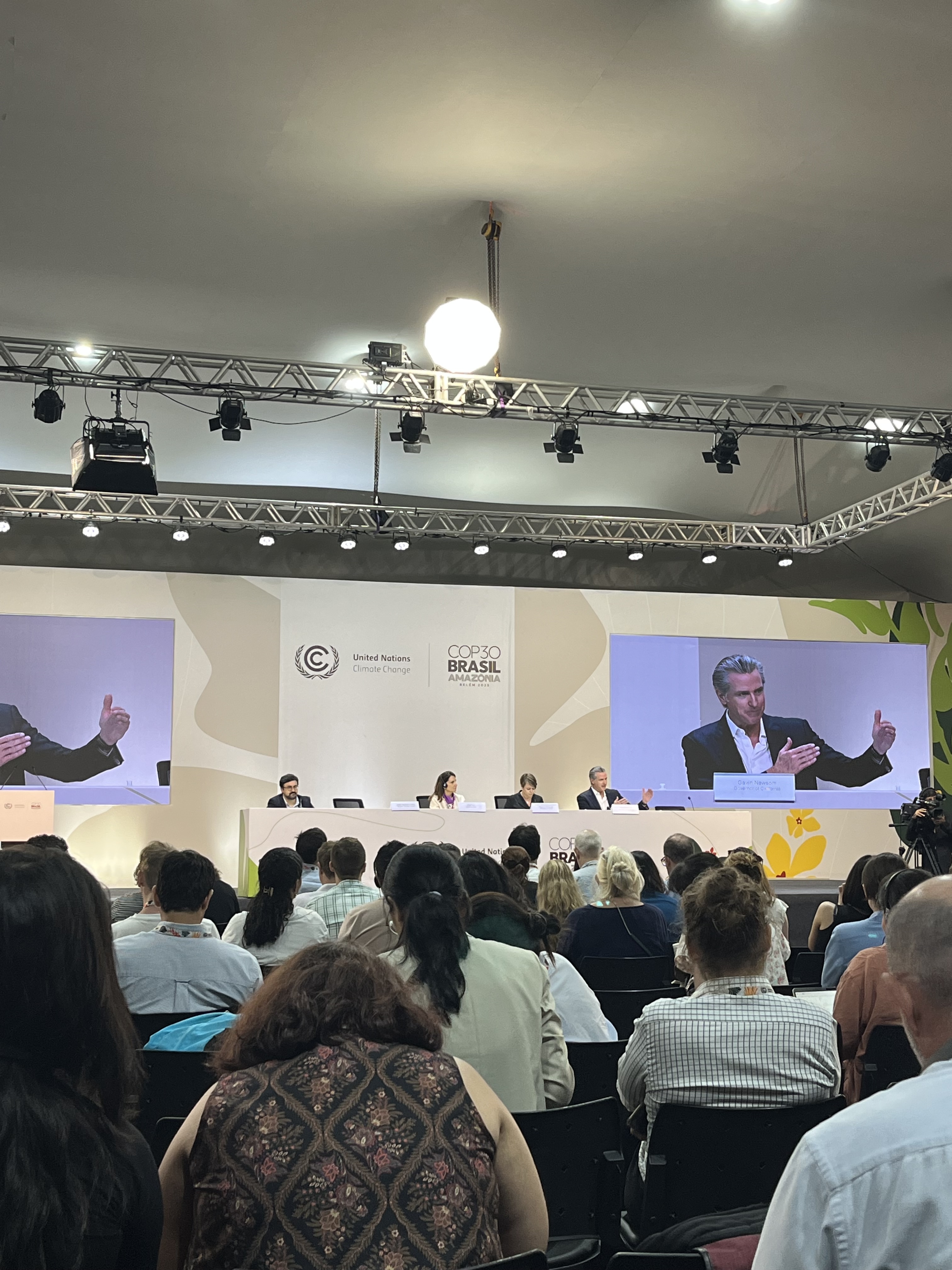
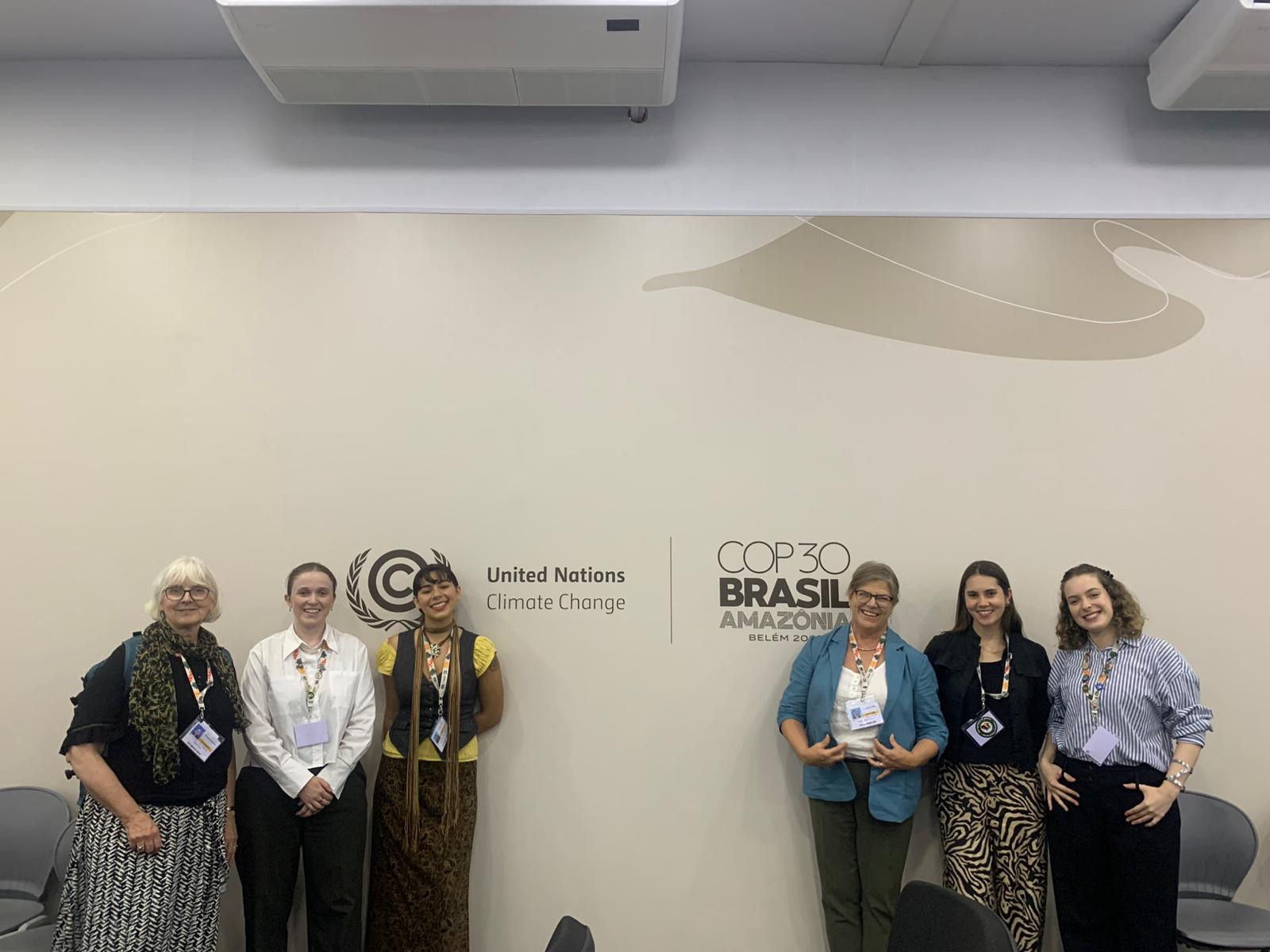
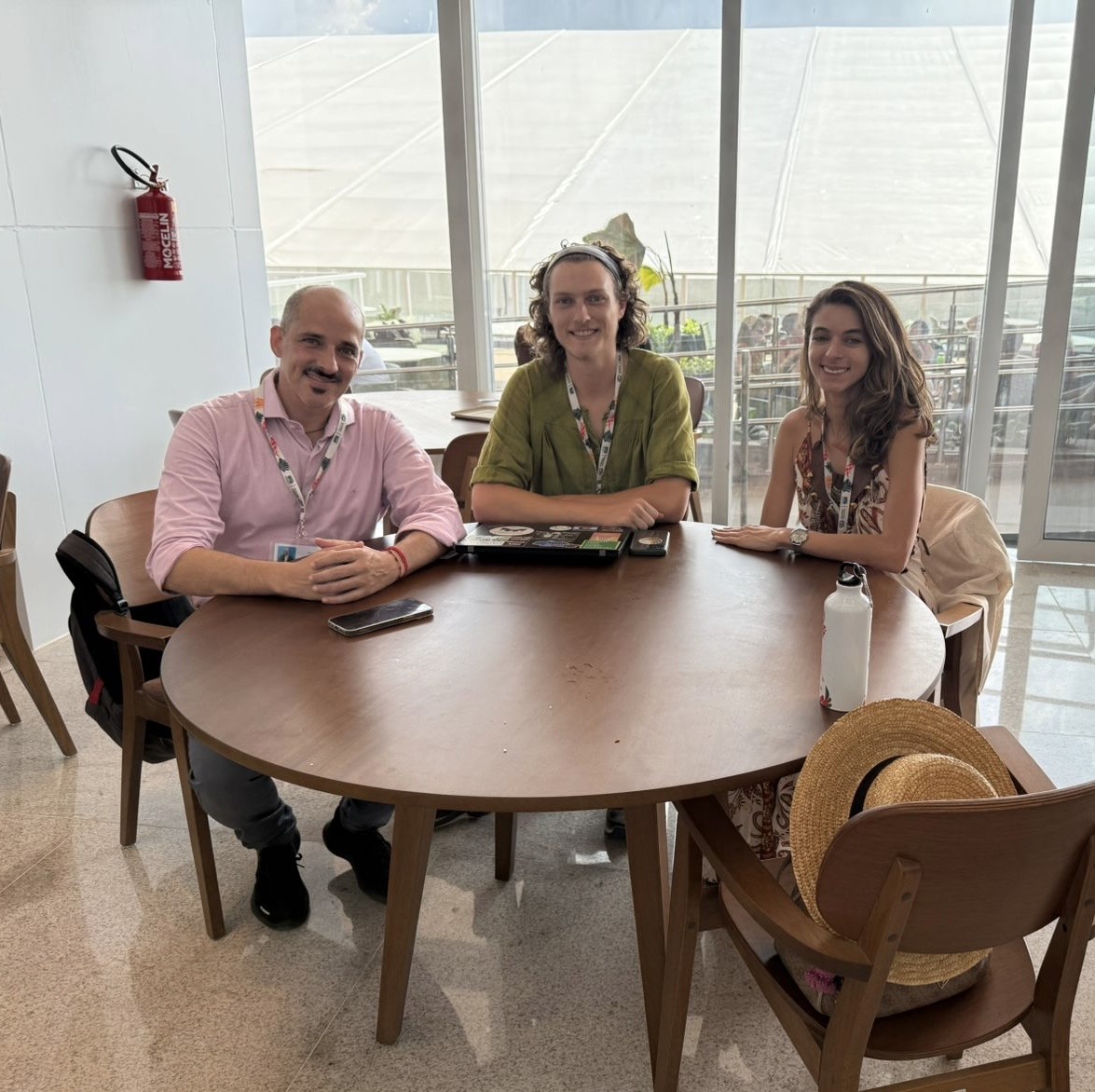
For the first time in history, the United States did not send an official government delegation under the Trump Administration to COP30, the United Nation's conference on climate change which took place in November in Belém, Brazil. While the absence cast a shadow over much of the conversation, 194 “parties” did attend and Colorado College students, faculty, and alumni were among them.
This year was CC’s most diverse virtual delegation so far, with five faculty, five students, and several alumni attending COP30 virtually, highlighting how important climate action is to the CC community.
“Never have I seen so many CC faculty out and about on a Monday evening—which was affirming of how central this work has become to so many of our lives,” Anthropology Professor Dr. Sarah Hautzinger says. “Climate conscripts us, as I’ve been observing of late! The company and camaraderie mean a lot, and we’re grateful.”
“I think every person I’ve met who has gone to a COP has been changed by it,” says Riss Banuelos ‘26. “It’s not that every single student has become a climate person, though many have, but it has shaped their trajectories. COP is such a unique experience; it changes and reinvigorates many people. It brings more people into the work, and that might be as, if not more, important than anything we do at the conference.”
Riss Banuelos ’26, Noah Furuseth ’26, Havalin Haskell ’26, and Anthropology Professor Dr. Sarah Hautzinger spoke about their experience upon their return to campus.
“It's cliché, but it is true: building relationships was my favorite part of COP,” says Banuelos, an Anthropology major. “From personal to professional, the relationships that I was able to make and build upon at COP have fostered both inspiration and an attitude of commitment within me. Reading updates on negotiations was of course a helpful base, but talking with people, hearing their observations, speculations, and deep understandings of the negotiations grounded my investment in the process.”
All three students linked COP30 to their thesis projects and were enrolled in Environmental Anthropology in Action: Climate Crisis and Sustainability, where they built their research plans and organized three community dialogues prior to traveling to Belém. The delegation also maintained a blog while in Belém.
“It was a wonderful way to prepare for the COP,” Banuelos says. “The first week we grounded ourselves in event ethnography, ethnography of community dialogues, environmental anthropology of the Amazon, and refreshed ourselves on the outcomes of the previous five COPs. The second week, we focused on our individual research, where we taught each other about our topics and critiqued our work together.”
Banuelos’ project examines the ways faith-based actors are attempting to address climate change through both affective and political pathways. Using Pierre Bourdieu’s concept of habitus and cultural capital, she contextualizes these pathways amidst the secular-bureaucratic backdrop of the United Nations Framework Convention on Climate Change (UNFCCC) where FBA legitimacy is contested, and emotional urgency is inserted.
Through this work, Banuelos joins Hautzinger’s multi-year research on the spiritual dimensions of climate challenges.
In addition to participating in COP30, Banuelos attended Bonn SB62, where the subsidiary bodies of the UNFCCC meet, which takes place in Bonn, Germany, every June and is the intersessional conference to COP. Banuelos used both Bonn SB62 and COP30 as the basis for her project. While at COP30, Banuelos continued to develop her relationships with members of the Interfaith-Liaison Committee (ILC), a faith-based advising body to the UNFCCC. In her research, the ILC serves as her primary window into the work of faith-based actors within the UNFCCC.
“Amidst disappointment in negotiated texts, meeting activists, advocates, and researchers was a reminder that change happens through us,” says Banuelos, who also attended COP28. “I feel inspired to take action and COP was a reminder of my obligation to do so. When negotiated commitments fall short, or absent in the case of the US, it is within our responsibility to fill the ambition gap.”
“I learned so much about the importance of subnational collaboration and the role of biodiversity in urban and rural resilience to climate change,” says Furuseth, an Independently Designed Major in Ecological Urban Studies. “I was fortunate to be representing not just CC, but the state of Colorado and the US, which currently lacks federal support for climate change action in a global setting. My classmates and professor were an amazing team to be with; their previous COP experiences helped me navigate how to spend my time, and their carefully researched questions inspired the process in creating my own question about how urban ecology and third-places show up at the COP.”
While attending COP29 as part of CC’s delegation, Haskell researched the intersection of gender and climate policymaking and noticed that gender and human rights-based language that had been settled for years, affirming women’s participation and gender-responsive climate action, was suddenly being rolled back and contested.
Therefore, this year she decided to investigate if that gender backlash was unprecedented and why certain states felt emboldened to now attack already agreed upon gender-responsive climate language within negotiations
“In my research and paper, I grounded my observations, interviews, and data collected at COP29 and COP30 to argue that the coordinated gender backlash at COP29 and COP30 is not incidental but a deliberate form of climate-policy obstruction, rooted in the global rise of authoritarian, patriarchal, and petro-political retrenchment,” says Haskell, an Environmental Studies major. “Drawing on theories of patriarchal authoritarianism, fragility-induced backlash, and petro-masculinity, my paper demonstrates how gender serves as a central arena through which illiberal and fossil-fuel-aligned states defend power and resist policy changes, especially demanded by the climate crisis, through the case study of gendered backlash at COP29 and COP30.”
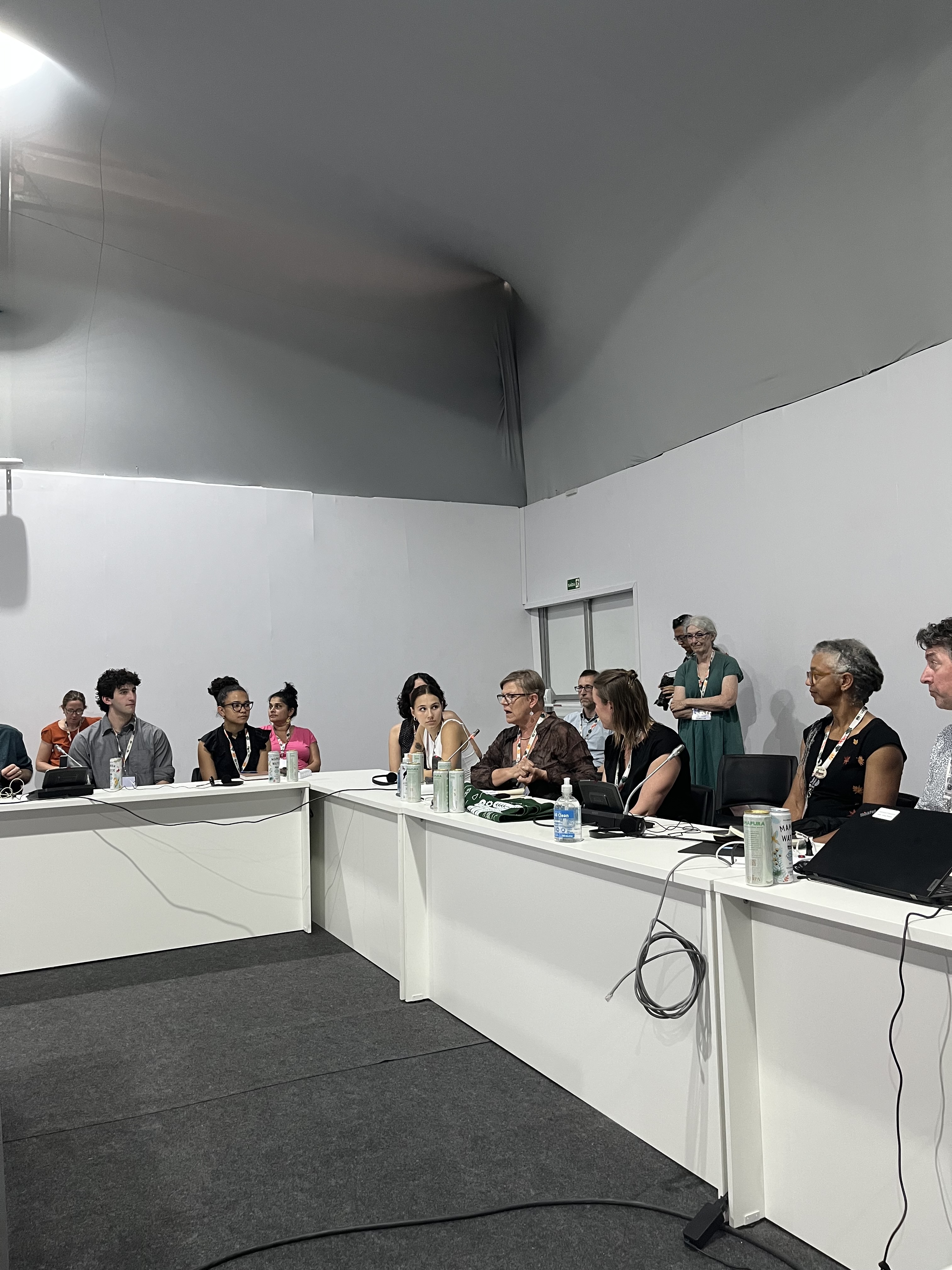
During COP30, CC’s delegation spoke at a side event organized by Hautzinger and her colleague Dr. Diane Husic from St. Lawrence University, which focused on how higher education plays a role in climate action.
“I spoke about how in originally choosing a college, I wanted a school where climate and sustainability weren’t just talked about, but truly practiced,” says Haskell, who also maintained a newsletter while at COP30. “CC stood out, not only for its strong Environmental Studies Program, but also for being carbon neutral. I explained how the Block Plan really creates the kind of immersive learning that I believe is essential for meaningful climate education.”
Banuelos spoke about how colleges and students can amplify climate action by channeling financial resources and mobilizing volunteers to community-based organizations. She primarily drew on her experiences with the Sunrise Movement last semester, where they collaborated with Hey Neighbor to organize CC volunteers to attend a planting party, transforming derelict, dusty yards into native pollinator food gardens. Soon after, they were awarded grands to fund future planting parties.
“Experiences like this exemplify how college students can be bridges that bolster local climate action,” she says.
Hautzinger also spoke at a meeting between Observer Organization Constituency and Research and Independent Non-Governmental Organizations (RINGO), emphasizing why observers are so important, as they help keep accountability in the process.
Learn more about CC's participation in the COP UN Climate Change Conference on our Climate, Environment, and Sustainability at CC page.