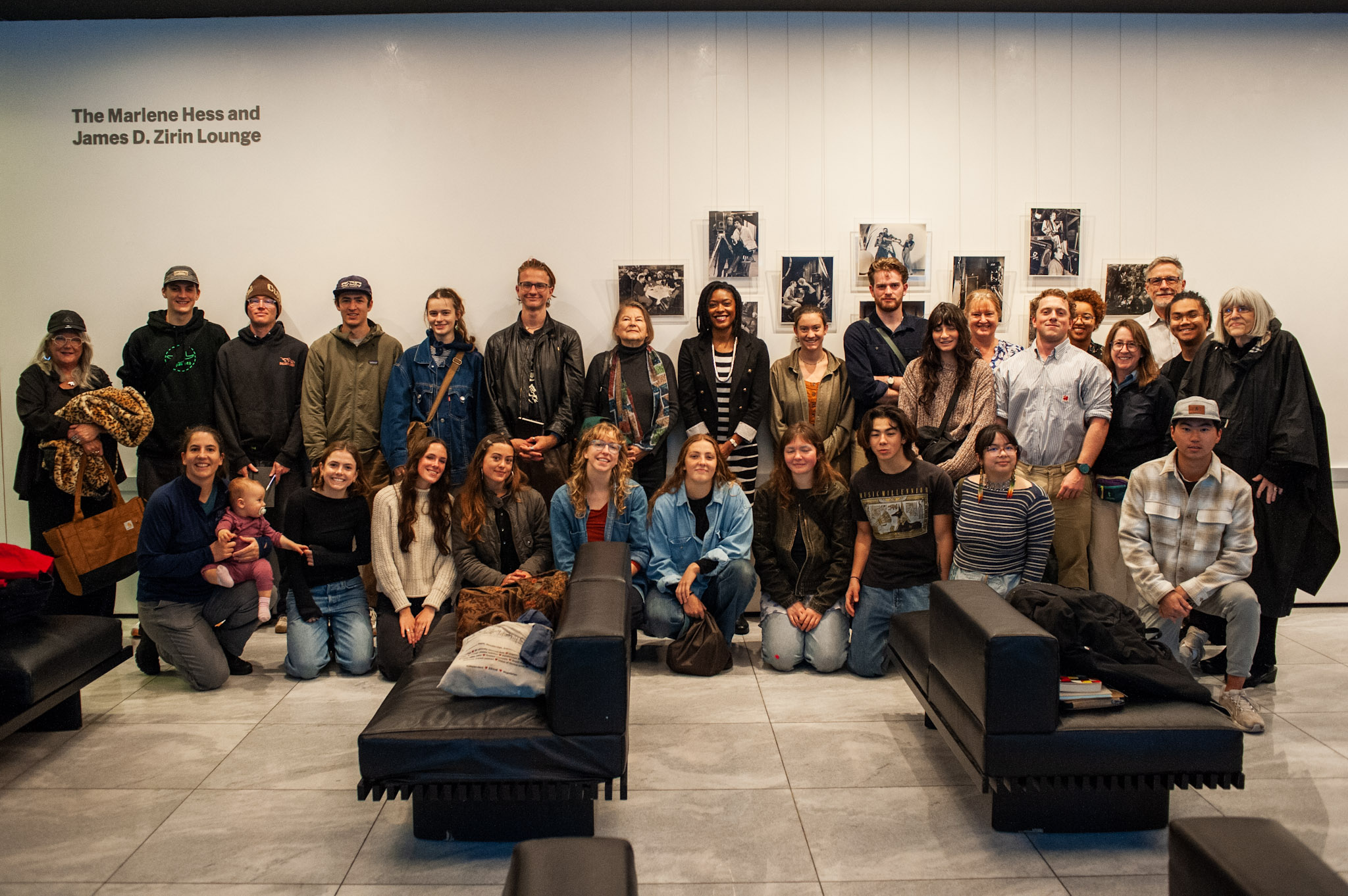
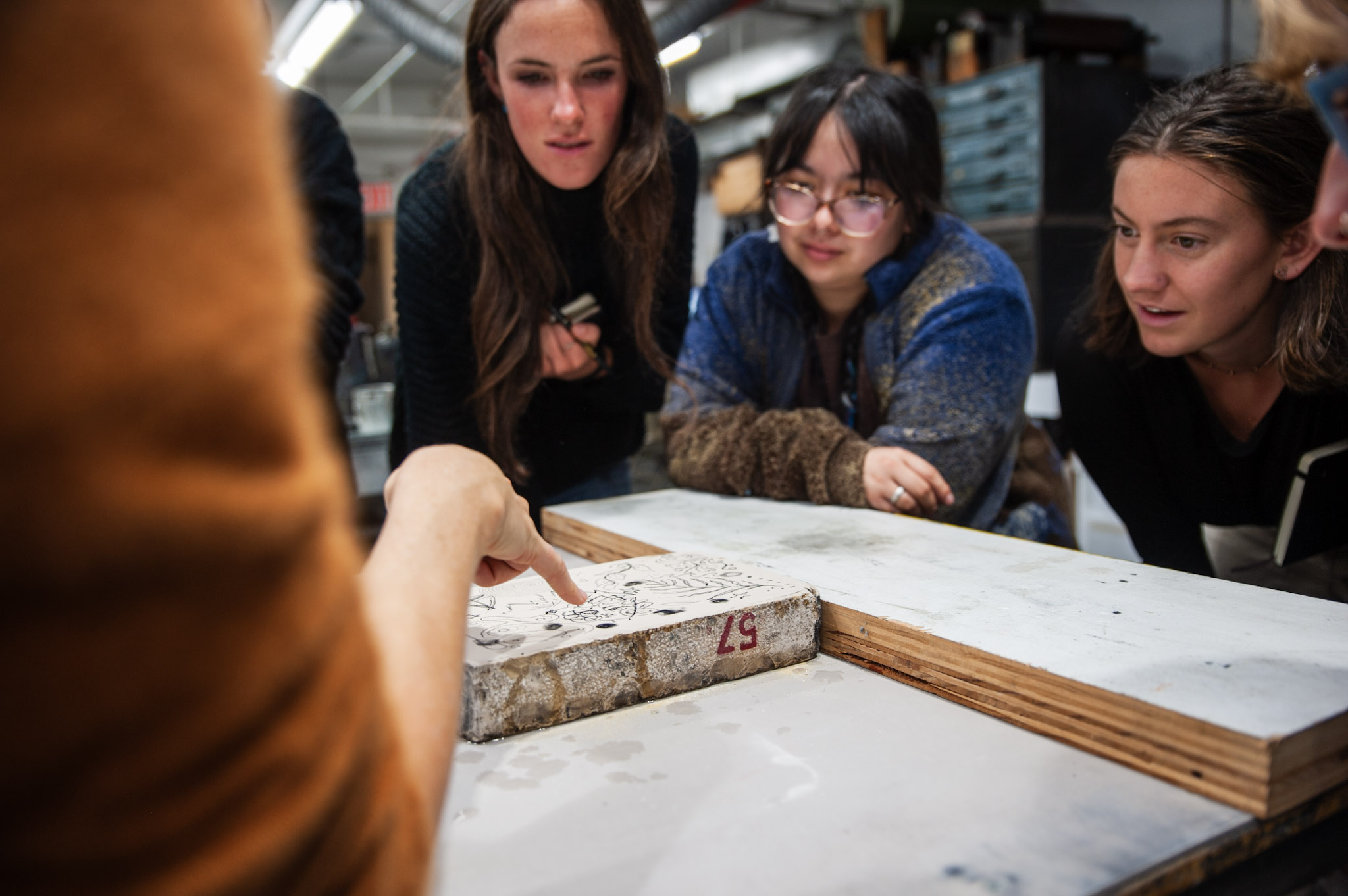
Twenty senior Art majors spent a week in New York City, fully immersing themselves in different artistic, historical, and cultural aspects of the city, preparing and inspiring them for their senior thesis projects.
“I loved being given the opportunity to really delve deeply into making and experimentation over the course of the block,” says Clio Quilter-Vagts ’26, a Studio Art major. “We were given ample time and space to explore and create, which I was so grateful for. And, of course, I must mention that we had the opportunity to go to New York and see and experience so much incredible art and culture. I got the chance to strengthen my analytical skills and really think critically about art and museums as institutions.”
Every October, senior Art majors travel to New York during their Senior Art Seminar Block to New York class, visiting museums, galleries, and studios. Professors of Art History and Art Studio lead the trip and students get to explore their own interests while being inspired for their senior seminar projects. The trip to New York also gives students an opportunity to expand their professional network as well as meet with alumni working in the arts to get advice on graduate school and different career paths.
The class spends the first two-and-a-half weeks of the block on campus, studying art history and different art pieces. This class was led by four professors who both taught the class and traveled to New York with students: Professor and Co-Chair of the Art and Asian Studies Departments Dr. Tamara Bentley, Professor and Co-Chair of the Art Department Scott Johnson, Professor of Art Dr. Gale Murray, and Assistant Professor of Art Jameel Paulin.
The course has three aspects: studio practice; analytical skills; and the New York trip. Students are expected to identify and articulate an initial direction for their senior thesis project during the class trip. Throughout the course, students learn analytical skills, such as how to analyze form and meaning of art, and how to recognize the historical and cultural context of it. During their time in New York, students keep a visual and textual journal to track their experience. They can include images, quotes, their reflection on the experience and the art pieces, sketches, impressions, and more. The class then shared their journals in Block 3.
“Leading up to the New York trip we were asked to build a studio practice and to take time to make something every day, to research specific artworks and artists that interested us in the museums we intended to visit,” says Quilter-Vagts, who decided to declare a Studio Art major after taking several Studio Art classes and seeing how immersive and supportive the program is. “There was a great premium placed on dissecting and understanding the cultural context of art, so we spent a lot of time in and out of class discussing and reading and reflecting on art in this way.”
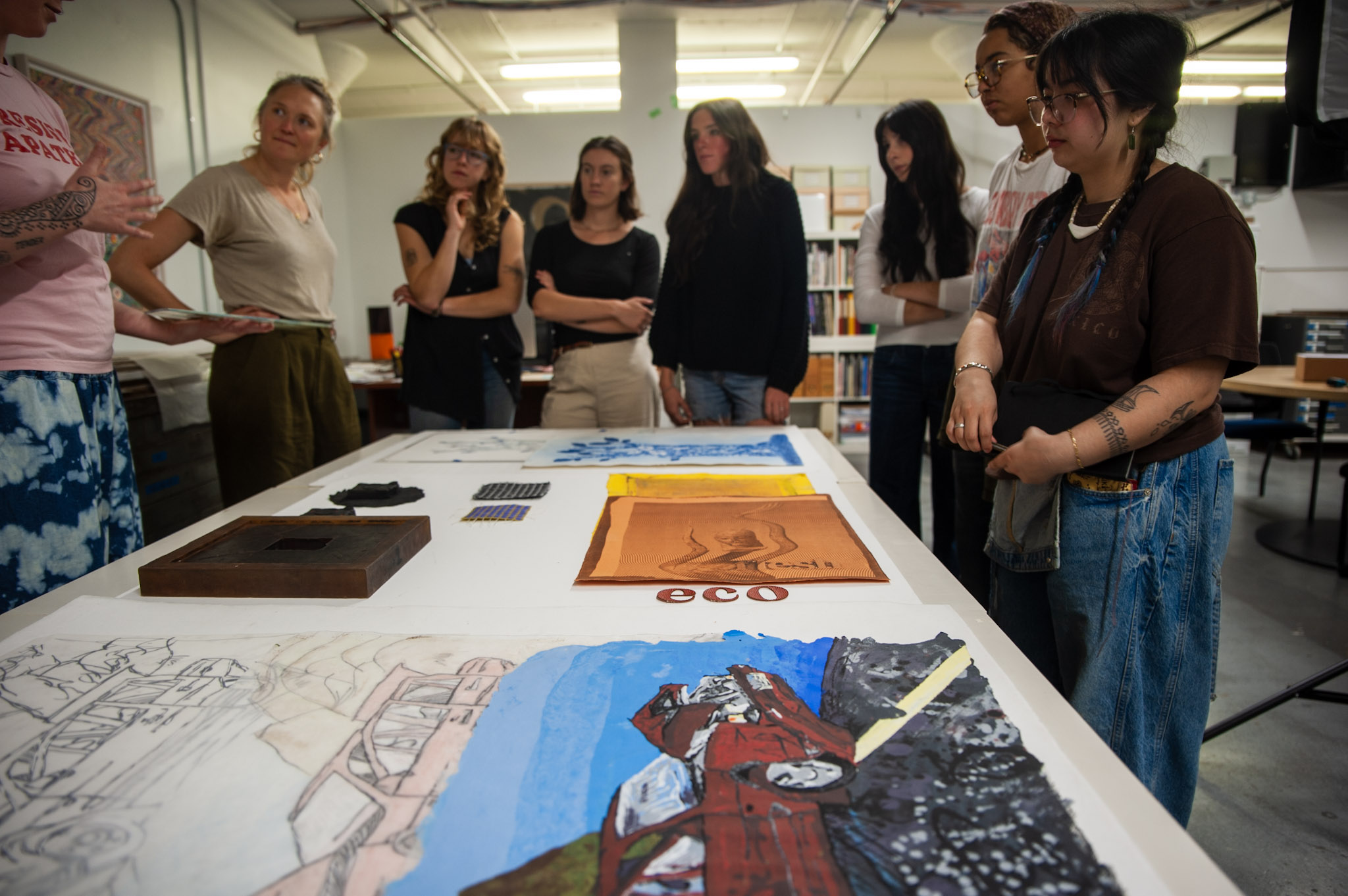
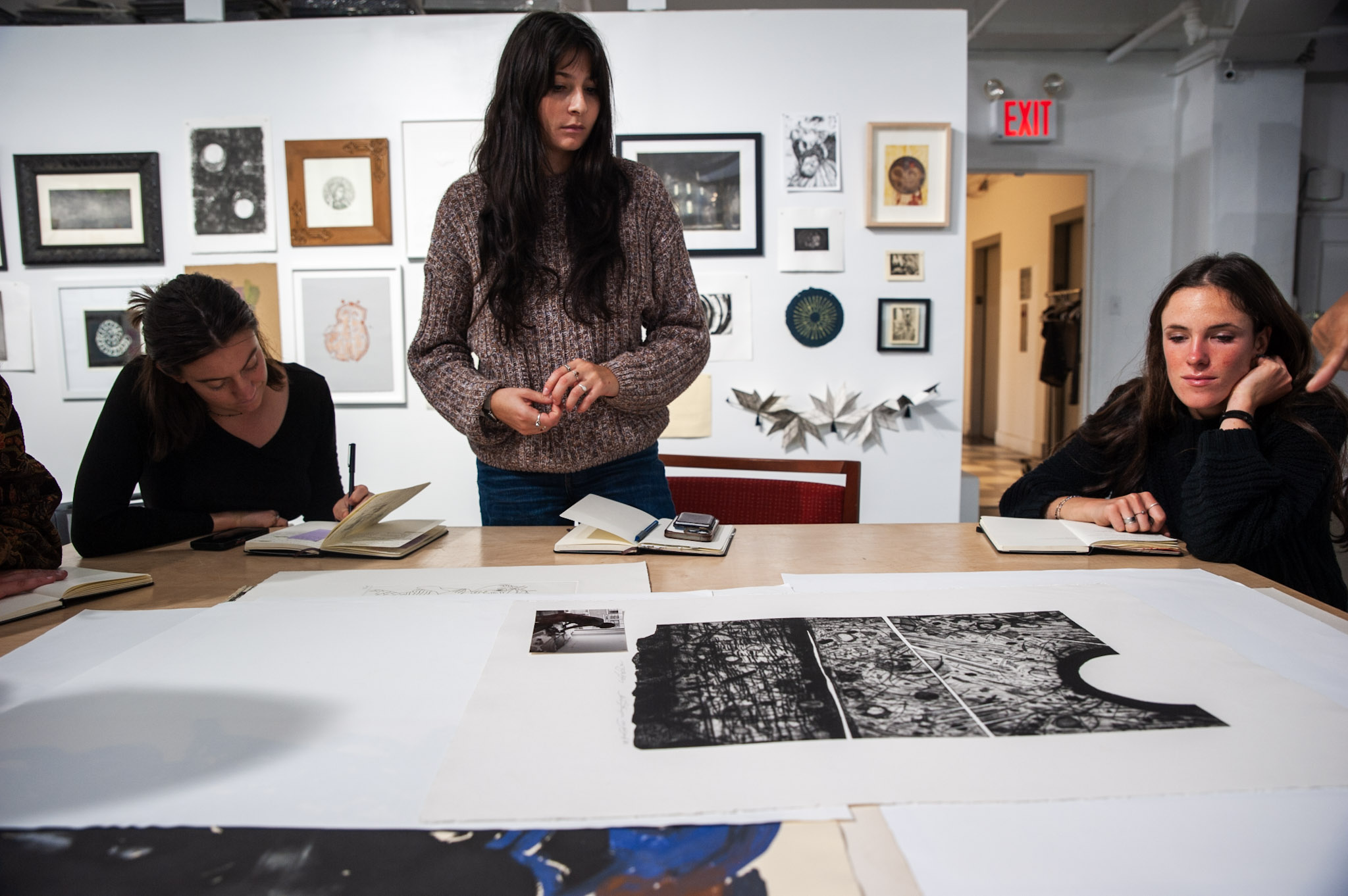
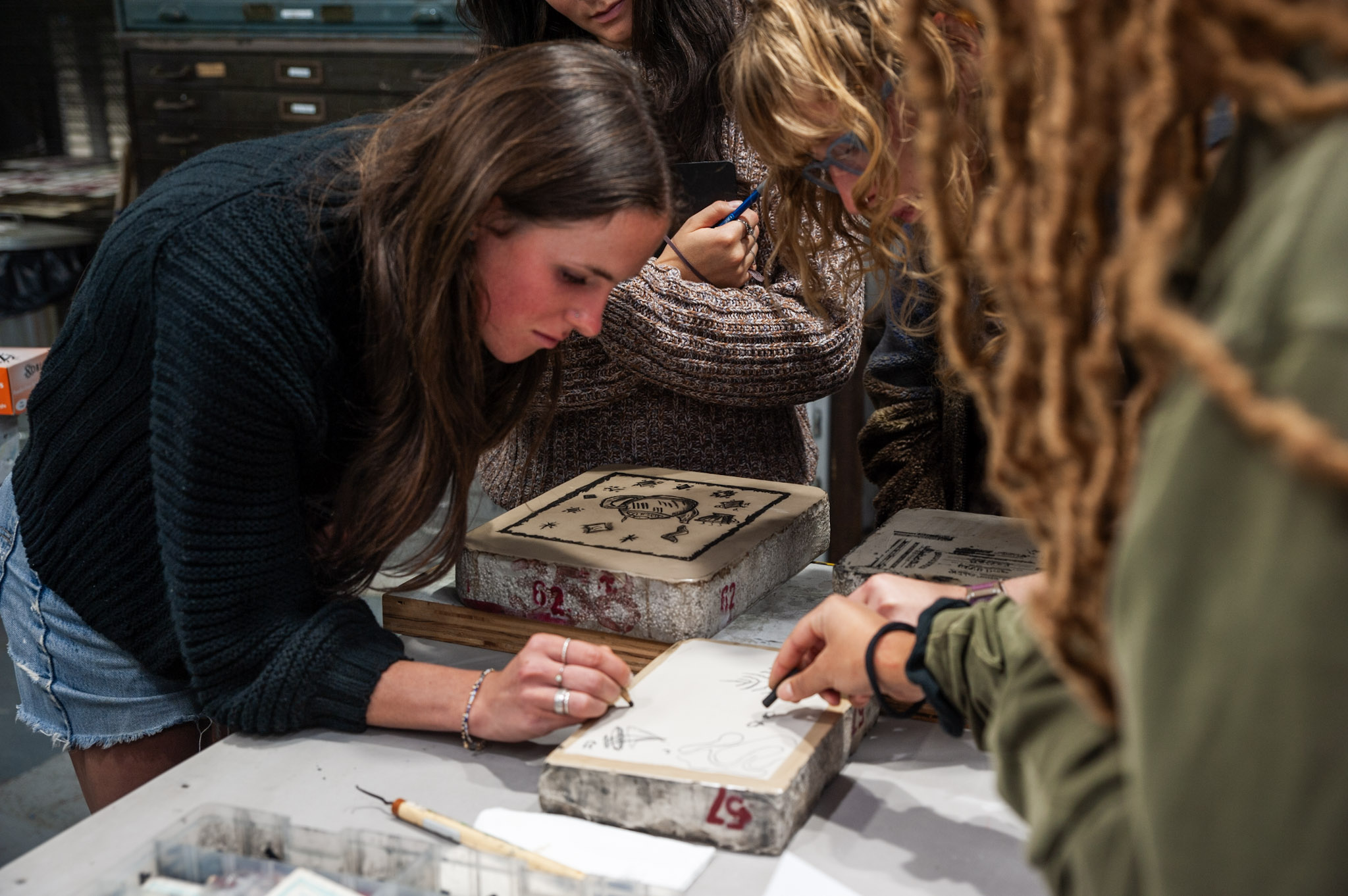
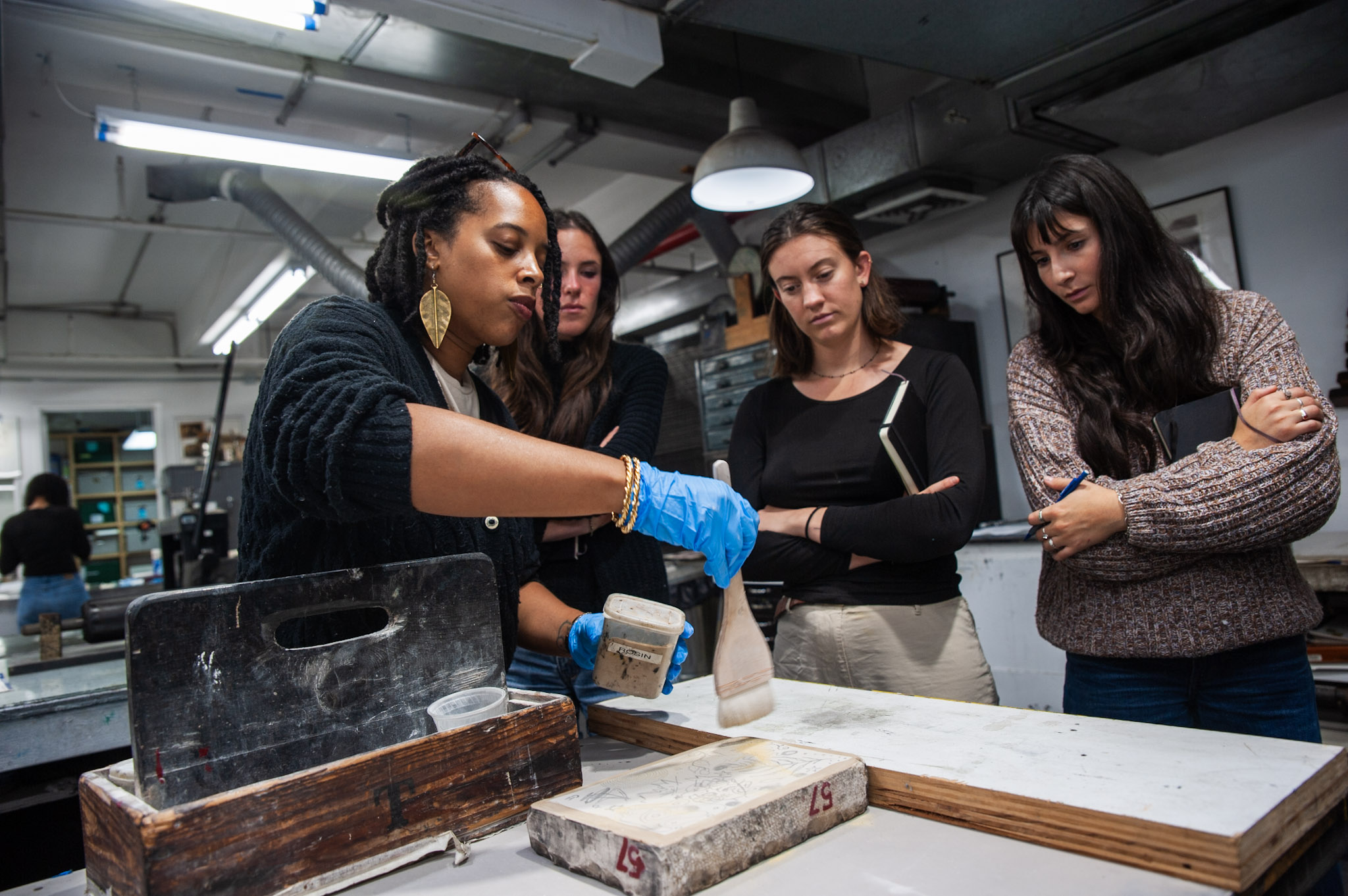
The week in New York was filled with trips to museums, shows, and more. Students got to visit Dieu Donné, where they saw the process of hand papermaking. They attended the Robert Blackman Printmaking Workshop, where Artistic Director and Master Printer Jazmine Catasús walked students through the process of working with a lithographic stone. Students also got to spend time discussing their specific interests in small group sessions led by experts in the field.
On the second day in New York, students visited The Metropolitan Museum of Art (the MET) and divided into four small groups: The Print Room, Islamic Art, Impressionism & Post Impressionism, and Asian Art.
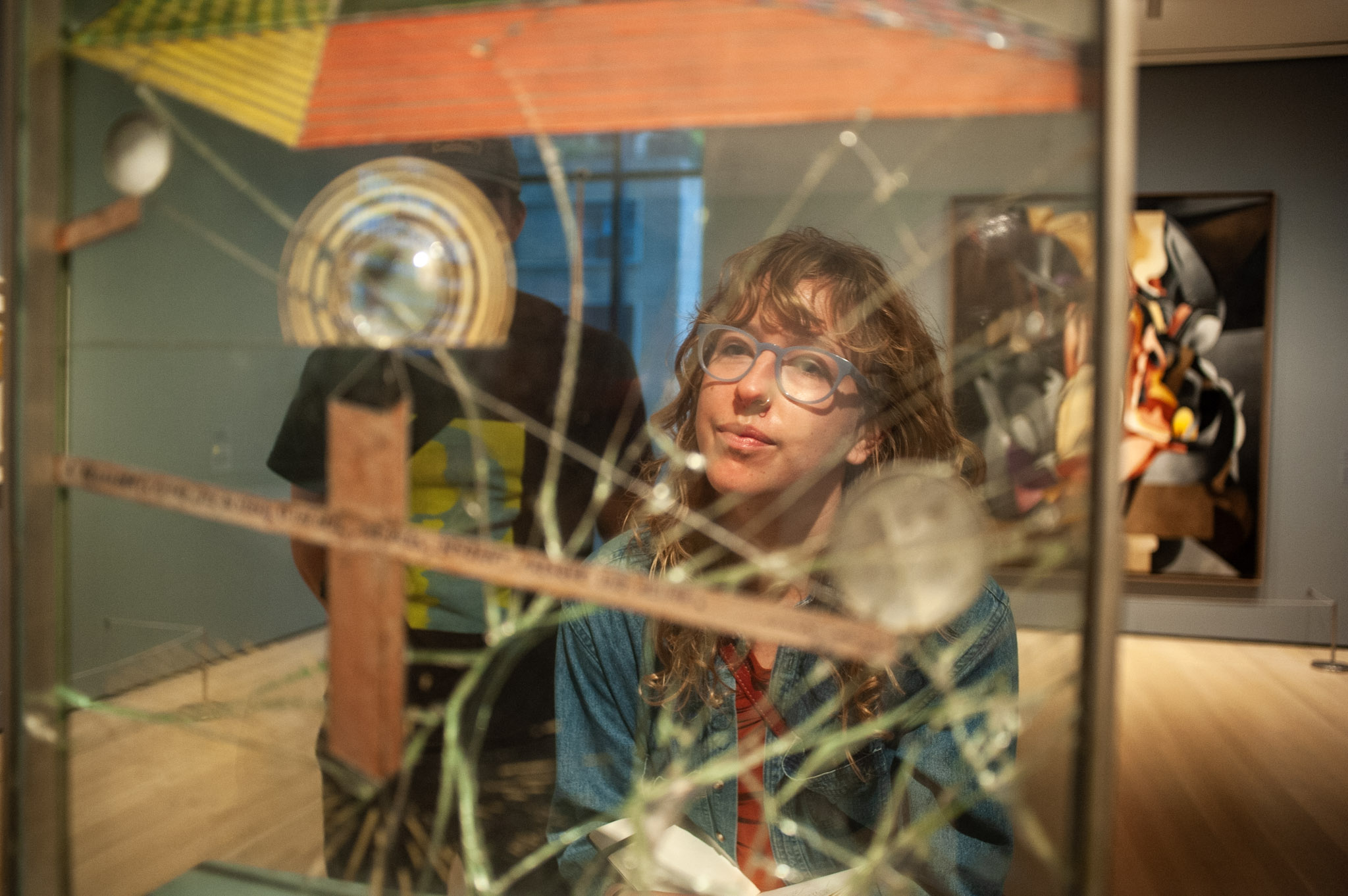
Students also spent time at the Museum of Modern Art (MoMA), the Guggenheim Museum, the Architecture Research Office, and the Brooklyn Botanic Gardens. At the MoMA, students got to pick a time they were especially interested in and attend a session focused on that period. Quilter-Vagts was in Group 3, which focused on art from 1980s through today.
President Dr. Manya Whitaker was in New York and attended the class session at the MoMA, which students say was an exciting moment on top of an already incredible experience.
“I was lucky enough to get to speak with President Whitaker a little bit while she was with us,” Quilter-Vagts says. “It was really nice to get to discuss not only art but also our experiences of CC, athletics, and passions with her! She was very kind and engaged with us. It was great to get to chat with her on a more personal level.”
Quilter-Vagts hopes to continue making art and says it was really inspiring to get to speak with a variety of different artists working in the field.
“This class gave me the opportunity to connect with working artists, to receive thoughtful, personal feedback regarding my work, and allowed me to take in so much amazing art,” Quilter-Vagts adds.
Networking and meeting CC alumni working as artists gave students the chance to visualize that success for themselves.
“The New York Trip was truly incredible; I was able to get closer with many art majors I hadn’t known well beforehand and immerse myself entirely in an artist headspace,” says Clara Hartman ’26, an Art and Political Science double major. “I learned so much about how CC grads have been able to create lives for themselves post grad, about community printshops, and how I want to structure my practice in a year.”
Hartman never expected to study art, but after taking Introduction to Drawing in her sophomore year, she was hooked. “In the past three years, my life has been entirely transformed by my artistic practice,” Hartman says. “This course was the beginning of my senior thesis, a time to experiment with techniques I may want to pursue in my work, and as a glimpse into the world of art in a post-grad environment.”
Hartman knows she wants to continue a life in art alongside another career path. She is interested in art education and working with elementary and middle school students through the arts.
“This course helped me see how alumni have continued their art practices while also working other jobs to support themselves, and knowing that’s the direction I’m headed, I really appreciated this,” Hartman says.
In the weeks leading up to the New York trip, Hartman spent a lot of time experimenting with oil paintings in her studio and teasing out potential thesis ideas. “In class, we also discussed major museums such as the MET and MoMA, and I planned which exhibitions or pieces I was most interested in seeing, as there is just so much content in each,” she adds.
Many sudents appreciated the journal assignment, as it made them be more deliberate with the programs and exhibits they attended.
“I loved the journal requirement; it helped me be much more intentional with how I interacted with museum spaces and the city itself,” Hartman says. “It gave me a purpose which I was grateful for, and I know in years to come, having this sketchbook to look back on will mean a lot. I used the journal to create sketches in down time, take notes at museums, or write down my thoughts about my work, and the art I was interacting with.”
Hartman says although her thesis project is currently unclear and she is still experimenting with different ideas, the class gave her dedicated time to think through her thesis goals and project.
Lucia Hoskins ’26 is still finalizing her senior thesis direction, but it involves an aesthetic exploration of the panorama.
“Panorama is a Greek word meaning to ‘see all,’ which will tie into my conceptual framework driving my exploration—the ethos of ‘narrative medicine’, in short—an emerging philosophy urging physicians to see their patients as nuanced stories, not just a list of symptoms,” Hoskins says. “In other words, to ‘see all’ of their patients.”
“One of the ways in which I might achieve this synthesis between narrative medicine ideas and panorama framework is by rendering humans in a panorama-like frame, instead of the typical landscape panorama, urging viewers to ‘see all’ of the human subject,” says Hoskins, a Studio Art major who is on the pre-med track and minoring in Human Biology and Kinesiology.
Hoskins plans to use mixed media, such as cyanotype, painting, and sewing and drawing on a variety of canvases, to tie together these themes and ideas.
“I was inspired during this class by experimenting with cyanotype printing on ACE bandage strips, and falling in love with how their horizontal, narrow orientation supports the panoramic format,” Hoskins says. “Then, during our New York trip I did some more investigation into the experience of viewing a panorama by sitting in front of John Vanderlyn's ‘Panoramic View of the Palace and Gardens of Versailles’ in the MET for a long time.”
One of Hoskins’ favorite parts of the trip was the visit to the Robert Blackman Printmaking Workshop, where she says there was an overwhelming sense of community, integral to the formation of the workshop.
“Shared art spaces between diverse minds are what drive innovative ideas and ease the difficult parts of art making,” Hoskins says. “One thing I love about printmaking is that it’s more conducive to being done with a partner or group than alone. I feel like a lot of our experiences during the New York trip underscored this idea of community building community among our senior art class while exploring NYC together, visiting community spaces like Robert Blackman’s studio as well as the Dieu Donne studio, seeing the sustained connections among alumni and getting to forge new connections at the alumni dinner, and hearing personal accounts of how different artists ‘made it,’ most of whom relied on having a strong community of fellow artists.”
Walker McCormick ’26 is designing and shaping two surfboards for his senior capstone project, which is something he’s wanted to pursue for a long time.
“I’m really happy to have the opportunity, time, and studio space to fully pursue my ideas, as well as the guidance from my professors,” says McCormick, an Art Studio Design and Business, Economics, and Society double major.
One of McCormick’s favorite parts of the trip was attending the Rashid Johnson show at the Guggenheim Museum, which he called insightful and inspiring. McCormick was also thrilled to visit the Guggenheim Museum, which he’s never been to before.
“Frank Lloyd Wright is one of my favorite architects,” McCormick says. “Johnson did an amazing job organizing his life’s work throughout the museum. I think he’s an amazing storyteller and artist. One thing I truly loved was how he juxtaposed found objects from his home —his sculptures, paintings, and short films—in conversation with each other. Experiencing this layout, especially in a museum like the Guggenheim, really made me rethink my creative processes, and I want to present my work and tell a story.”
McCormick says that one aspect that really stood out to him was Johnson’s short films, and McCormick is hoping to document his creative process for his thesis in a similar way and incorporate that into the final show.
Hunter Dewell ’26, a Design major with a focus in Architecture, spent the weeks leading up to New York making colored pencil drawings of chickens, which would later be the guides for screen prints. When screen-printing, he placed the colored pencil drawing underneath the silk screen and then used the drawing as a guide for what he should block out with screen filler. Once he was done with that, he ran the next color. During this course, Dewell created several screen-printing guides, which he may use in his final thesis project this spring.
On their second day in New York, Bentley and Johnson led several students through a tour of the MET, where they had three items on the agenda: The Gubbio Studiolo, the Chapel from Le Château de la Bastie d'Urfé, and the Chinese Gardens exhibit.
“Along the way the teachers highlighted work that seemed to be on the periphery of the museum,” says Dewell, who works at CC’s Honnen woodshop. “For example, Fine China is placed along the corridor that leads visitors to European sculptures. The museum's layout dictates which work is more valuable, and in turn places cultures in a pecking order. In the MET, Asian work is second to European. That order is seen throughout history as well, especially during the Renaissance. There was a clear divide between ‘fine arts,’ such as painting, sculpture, and architecture, and ‘decorative arts,’ like ceramics, textiles, and furniture. Porcelain fell into the latter and was not given the same intellectual value.”
Visiting the three exhibits with Bentley and Johnson was one of Dewell’s favorite parts of the trip.
“We peered into the Gubbio Studiolo, a 15th-century Italian room decorated with detailed wood inlay that creates realistic illusions of shelves and objects,” Dewell says. “We slid into the Chapel from Le Château de la Bastie d'Urfé as a large tour group crowded in front of the Gubbio Studiolo. Two rows of three seats were placed in the center to mimic an actual church. As Scott and Tamara riffed off each other, we pulled the chairs into a circle and continued to discuss how museums give art value as other visitors streamed between us and the artwork.”
The group then headed to the Chinese Gardens, where Bentley led the group’s discussion on Taihu stones, which are naturally eroded limestone that are revered for their dramatic holes and twisting forms.
“As we wrapped up the tour, I remember thinking: this is exactly what a Colorado College education should look like,” Dewell says. “The tour really emphasized how much hidden information there is in art. Now, before visiting a museum, I’ll always do some research because that will personalize and enrich my own experience, and it’s just a more fun way to do it.”
The Art Department has been teaching this Senior Seminar and trip to New York block since 1986, and it’s made possible by the Berg Endowment. In 1985, the Getty Trust donated to the Art Department in honor of Harold E. Berg '36, and because of the generous donation, the department was able to develop this research opportunity in New York.