


Roxaneh Khorsand
she/her/hers
Assistant Professor
Organismal Biology & Ecology
Research Interests
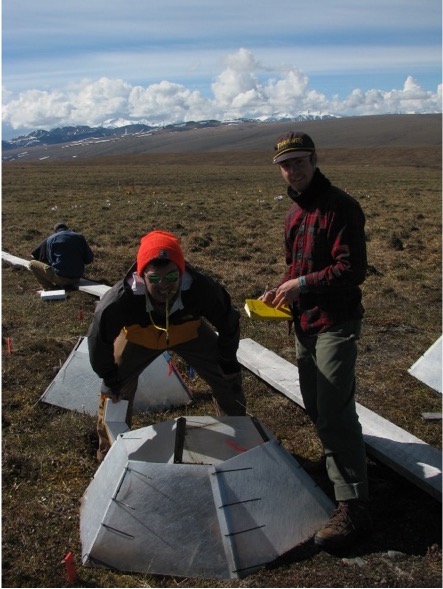
My research investigates Arctic plant phenology, plant-pollinator networks, floral rewards, and breeding systems in the context of a changing climate. My students and I test questions such as:
- How do floral rewards and plant-pollinator network structure change spatially and temporally?
- How does warming affect nectar resources and are responses species-specific?
- Do we find evidence for plant-pollinator synchrony in response to warming and what are the implications for plant reproductive success?
Answers to these questions will allow us to predict shifts in Arctic community composition and biological interactions. Although I currently focus on Arctic plant ecology, my previous research took place in the Brazilian Amazon, south Florida pine rocklands, and Colorado Rockies.
Students in the Khorsand lab create the first pollen reference library for tundra species on Alaska’s North Slope:
Arctic Pollen Reference Library
Activities & Interests
Dancing and being outside…tele skiing, hiking, paddle boarding, ultimate frisbee, gardening…
Publications
(* indicates student co-author)
Khorsand, R.., Ginn, Z.R.*, and Sancier-Barbosa, F. 2025. Spatio-temporal patterns in floral resources and plant-pollinator network structure in the Alaskan Arctic. Frontiers in Plant Science 16: 1552422. https://doi.org/10.3389/fpls.2025.1552422
Khorsand, R., Sancier-Barbosa, F., May, J.F., Høye, T.T, and Oberbauer, S.F. 2024. The effects of experimental warming on plant-pollinator interactions and floral rewards in the Low Arctic. Arctic Science 00: 1–19. https://doi.org/10.1139/as-2022-0034.
Khorsand, R. and Awolaja, F*. 2020. Pollination and breeding system of Thermopsis divaricarpa (Fabaceae: Papilionoideae) in the southern Rockies. Western North American Naturalist 80: 509–520. https://doi.org/10.3398/064.080.0408
Koptur, S. and Khorsand, R. 2018. Pollination ecology of three sympatric palms of southern Florida pine rocklands. Natural Areas Journal 38: 15-25. https://doi.org/10.3375/043.038.0104
Khorsand Rosa, R., Oberbauer, S.F., Starr, G. Parker LaPuma, I., Pop, E., Ahlquist, L., and Baldwin, T. 2015. Plant phenological responses to a long-term experimental extension of growing season and soil warming in tussock tundra of Alaska. Global Change Biology 21: 4520–4532. https://doi.org/10.1111/gcb.13040
Khorsand Rosa, R., Imbrozio Barbosa, R., and Koptur, S. 2014. Which factors explain reproductive output of Mauritia flexuosa (Arecaceae) in forest and savanna habitats of northern Amazonia? International Journal of Plant Sciences 175(3):307-318. https://doi.org/10.1086/674446
Khorsand Rosa, R. 2014. A review of the pollination biology of Mauritia flexuosa. Palms 58(2): 77-82.
Khorsand Rosa, R. and Koptur, S. 2013. New findings on the pollination biology of Mauritia flexuosa (Arecaceae) in Roraima, Brazil: linking dioecy, wind, and habitat. American Journal of Botany 100(3): 613-621. https://doi.org/10.3732/ajb.1200446
Khorsand Rosa, R., Imbrozio Barbosa, R., and Koptur, S. 2013. How do habitat and climate variation affect phenology of the Amazonian palm, Mauritia flexuosa? Journal of Tropical Ecology 29(3): 255-259. https://doi.org/10.1017/S0266467413000242
Khorsand Rosa, R. 2011. Bees collect resin from Mauritia flexuosa in Roraima, Brazil. Palms 55(4): 200-203.
Khorsand Rosa, R. and Koptur, S. 2009. Preliminary observations and analyses of pollination in Coccothrinax argentata: Do insects play a role? Palms 3(2): 75-83.
Regular Classes
-
Biology of Plants (BE105)
-
Ecology (BE208)
-
Ecology and the Environment (EV209)
-
Biostatistics and Experimental Design (BE220)
-
Ecology and Biogeography of Patagonia (BE390)
-
Advanced Ecology (BE308)
-
Independent Research Blocks (BE309/409)
- Methods in Pollination Ecology (BE440)
Featured Articles
Organismal Biology and Ecology Students Spend Summer Researching in the Arctic
Students Conduct Plant-Pollinator Research in Alaska
NSF Grant Sends Professor, 2 Students to Alaskan Arctic
Breaking New Ground: Professor Adapts to Teaching Biology of Plants During the Pandemic
Research Photos

Sabrina Ng (’27) measures sucrose concentration in a sample of floral nectar using a refractometer.

Jane Watson (’27) and Sabrina Ng (’27) monitor floral phenology and density in an experimentally warmed plot.
Zach Ginn ’23 and Luca Keon ’25 record floral phenology in warmed and control plots (summer 2023).

Ian Hauver-Radloff (’26) helps set up field sites at the beginning of the growing season.



Education
Ph.D. Biology, Florida International University, 2013
B.S. Biology, University of Colorado, Boulder, 2003
B.A. Spanish Literature, University of Colorado, Boulder, 2003
View CV